

6060 Trauma Suspension Ladder, 4-Pack
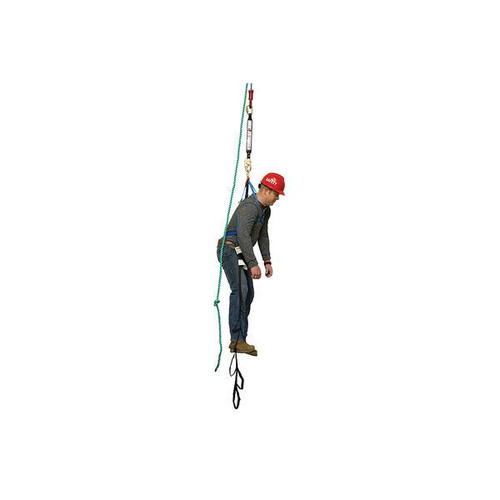
The Super Anchor 6060 Trauma Suspension Ladder is a self deployed rescue device that relieves suspension trauma after an arrested fall. The 62 inch polypropylene web ladder with 8 steps stows in a 4 by 7-1/2 inch pouch on the harness leg or shoulder strap; after a fall, the worker deploys the ladder, steps into a loop, and stands to take body weight off the harness leg straps until rescue arrives.
What is included: 4 trauma suspension ladders, each in its own storage pouch with cinch strap and hook and loop attachment. Emergency instructions in English, French, and Spanish are sewn to the ladder webbing. The 6060 supports the prompt rescue provisions of OSHA 1926.502(d)(20) and the rescue planning sections of ANSI Z359.1-07 and Z359.2-07.
Who Needs This Product
Every worker who hangs in a harness needs a plan for the minutes after a fall. Suspended in leg straps, blood pools in the legs and orthostatic intolerance can turn survivable falls into medical emergencies before a ladder or lift arrives. The 6060 gives the fallen worker a self rescue tool: stand in the ladder loops, restore circulation, alternate legs, and wait for help safely. At 3.5 ounces it disappears onto the harness until needed. Employers filling the OSHA prompt rescue requirement outfit entire crews, which is why this listing is a 4-pack. It is a rescue relief device only, not fall protection, and not for hoisting or lifting.
Features
Self deployed rescue
The suspended worker opens the pouch, unfurls the ladder, and steps in without outside help.
8 steps of adjustment
Choose the step height that lifts body weight off the leg straps; use both legs across two steps to reduce fatigue.
Feather weight
3.5 ounces and a palm sized pouch add nothing noticeable to the harness.
Universal harness attachment
Cinch strap mounts to leg strap or shoulder strap webbing, with hook and loop straps securing the pouch.
Trilingual sewn instructions
Emergency steps in English, French, and Spanish are stitched to the ladder webbing where the worker will see them.
Reusable after inspection
A deployed ladder returns to service after passing a damage inspection and re-bundling per the manual.
Technical Specifications
| Model | 6060 |
|---|---|
| Package | 4-pack |
| Function | Self deployed suspension trauma relief device |
| Material | Polypropylene webbing |
| Webbing Width | 3/4 inch (19 mm) |
| Webbing Strength | 1,760 lb (7.8 kN) |
| Deployed Length | 62 inches (1.6 m) |
| Ladder Steps | 8, approximately 10-1/2 inches (26 cm) apart |
| Device Weight | 3.5 oz (100 g) |
| Storage Pouch | 4 x 7-1/2 inches, cinch strap plus hook and loop attachment |
| Attachment | Full body harness leg strap or shoulder strap webbing |
| User Weight | Not to exceed the personal energy absorber maximum user weight |
| Non-Specified Use | Not a fall protection device; not for body belts, hoisting, or lifting |
| References | OSHA 1926.502(d)(20); ANSI Z359.1-07 Sec. 7.3.2; ANSI Z359.2-07 Sec. 5.5 and 6; CSA Z259.10-06 Annex A |
You must be rescued promptly to avoid serious injury or death. The trauma ladder relieves suspension pressure; it does not lower or free the worker. If help is not immediately available, remain calm, call out, use a cell phone, or phone 911. Deploy the ladder, jettison heavy tools if possible, and alternate legs frequently to reduce fatigue while waiting.
Compliance Standards
OSHA 1926.502(d)(20)
Employers shall provide for prompt rescue of employees in the event of a fall or assure employees are able to rescue themselves.
ANSI Z359.1-07 Sec. 7.3.2
Post-fall protection of the user and emergency rescue planning provisions referenced by the 6060 manual.
ANSI Z359.2-07 Sec. 5.5/6
Inspection, maintenance, and rescue procedure requirements for rescue devices in a managed program.
CSA Z259.10-06 Annex A
Recommends a device be used to reduce injury from suspension trauma to a minimum.
Typical Applications
Installation Overview
Attachment figures for continuous loop shoulder straps and leg straps are in the 6060 manual linked below. The basics:
- Attach the cinch strap to the harness leg strap webbing or shoulder strap webbing as shown in the manual figures.
- Feed the storage pouch through the cinch strap and tighten.
- Secure the pouch to the harness webbing with the hook and loop straps to prevent movement.
- After a fall, deploy the ladder from the pouch and place one foot into the loop that lets you raise yourself and relieve your body weight.
- Jettison tools, nail bags, or other equipment if possible to reduce suspended weight, and alternate legs frequently.
- Call for help immediately; if no one can perform a rescue, phone 911 and remain in the ladder until rescued.
Inspection and Retirement
Inspect before installation and each use, with documented annual inspections. Remove the equipment from service when any of the following apply:
- Webbing or stitching is cut, abraded, or damaged.
- PID or inspection labels are missing or not readable.
- Evidence of mildew, UV degradation, vermin, or water damage is present.
- The ladder was deployed in a fall and has not yet passed a post-use damage inspection.
- The pouch or attachment straps no longer secure the bundle to the harness.
- The annual inspection is overdue; inspect and return to service.
Tag equipment removed from service to prevent further use until inspected by a qualified or competent person.
 Fall Protection
Distributors, LLC Free Tool · No Signup · OSHA 1926.502 Free Interactive Tool Fall Protection Calculator Pick your system. Run the math. Generate a plan. 1Pick Your SystemDetermine fall restraint vs. fall arrest based on your work surface, edge access, and clearance. 2Run the MathCalculate exact fall clearance required below the work surface for your SRL or lanyard setup. 3Generate a PlanGet a printable OSHA-compliant Fall Protection Plan structured around 29 CFR 1926.502(k).
Frequently Asked Questions
Super Anchor 6060 Submittals and Documentation
Trauma Suspension Ladder 6060 Instruction Manual (PDF)Deployment steps, harness attachment methods, compliance references, and inspection requirements. Super Anchor Warranty and Compliance Statement (PDF)Manufacturer warranty terms and compliance statement for Super Anchor Safety products.Compatible and Related Products
- Super Anchor 6101GH Deluxe Harness. Deluxe harness with leg strap mounting shown in the manual.
- Super Anchor 6151-GH Tool Bag Harness. Hi-viz tool bag harness for production crews.
- Super Anchor 4021-50V Lifeline + ValueGrab Combo. Rope system the ladder backs up after a fall.
- Super Anchor 2904K Sidewinder SRL. Leading edge SRL for harness-based systems.
Does Every Harness on Your Crew Have a Rescue Plan?
Tell us how many workers you put at height and we will match trauma ladder packs to your harness count, with lifelines and absorbers in the same order and accurate freight, based on the delivery location.
Call 863-703-4522 to talk to a fall protection specialist.
Super Anchor Safety Manufacturer Warranty
Super Anchor Safety (SAS) warrants to the purchaser that all products are free from defect in material and workmanship at the time of shipment. This warranty is limited to product replacement for a period of one (1) year from the date of installation or use by the owner, provided that this period shall not exceed two (2) years from the date of shipment. This warranty only covers defects in material and workmanship. It does not cover conditions resulting from normal wear, neglect, abuse, or accident. This product warranty does not cover oxidation of zinc, dacromet, or powder coatings used on permanent and temporary anchors that results from connector abrasion unless the coating can be shown to be defective at the time of purchase. This warranty is non-transferable. Any unused defective product will be replaced at no charge by returning the product to Super Anchor Safety or to the distributor the product was purchased from.
Permanent Anchor Warranty
Super Anchor Safety warrants to the purchaser that all anchors sold as a permanent fixture with Hot Dip Galvanizing, Stainless Steel, and Thermo-Plastic finishes are fully warranted against failure due to defects in materials or workmanship for a period of five (5) years from the date of initial installation. SAS does not warranty the installation or flashing system used to waterproof the anchors. The SAS factory warranty is void if the product has been modified or has not been used in accordance with SAS specifications and instructions for that product. Anchors that have been removed from service due to re-roofing or remodel of the structure they were originally attached to must be inspected by an SAS factory representative or a competent person before being reinstalled.
See the Super Anchor Warranty and Compliance Statement (PDF) for the full manufacturer document.