



The Ideal Tool for SSRA1 Seam Anchor Installation
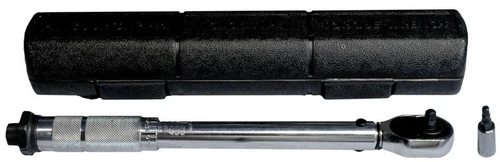
The 1/4" drive Torque Wrench is the perfect companion for users of the SSRA1 Seam Anchor, ensuring precise torque application for optimal safety and performance. This torque wrench is perfect for torqueing the set screws and top bolts of the SSRA1 Standing Seam Roof Anchor. With its adjustable IN/LBS settings, users can quickly achieve the correct torque, enhancing the stability and security of the anchor. The wrench's click-type design guarantees an accuracy of within +/- 4%, providing peace of mind for installers.
Heavy-Duty Construction
Built to last, the 1/4" drive Torque Wrench features a heavy-duty cam and pawl mechanism, making it durable and reliable for repeated use. The reversible design adds versatility, allowing for both tightening and loosening operations. With a torque range of 20–200 in/lbs., this tool meets the demands of various installation scenarios.
Comprehensive Kit Inclusion
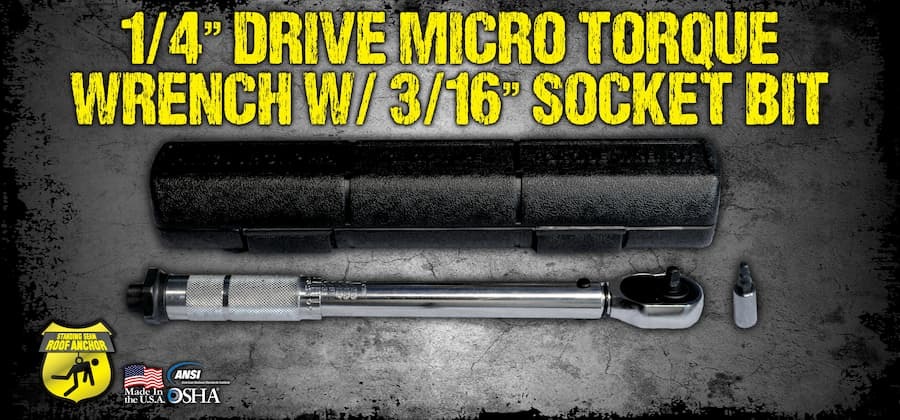
The 1/4" drive Torque Wrench comes with a 3/16" socket bit, ideal for torqueing the set screws on the SSRA1 Standing Seam Roof Anchor. This combination ensures that users have everything they need for proper installation. Our comprehensive kits, including the SSRA 4 Piece Pro Pack, Roof Jack Pro Pack, Ultimate Pro Pack, SSRA1 Deluxe, and SSRA1 Deluxe "Stay Safe" bundle, come equipped with the 1/4" drive Torque Wrench/socket bit combo.
Convenient and Easy to Use
This torque wrench is not only precise but also user-friendly. Its reversible mechanism and clear torque settings make it straightforward, even for those new to torque tools. Additionally, it comes with a hard case for easy storage and transportation, ensuring that the tool remains in excellent condition and is ready for use whenever needed. With these features and inclusions, the 1/4" drive Torque Wrench is an indispensable tool for anyone working with the SSRA1 Seam Anchor. It combines precision, durability, and convenience in one package.
Micro Torque Wrench Frequently Asked Questions
Why is an Inch-Pound wrench required instead of a Foot-Pound wrench?
Standard Foot-Pound wrenches are designed for heavy machinery and are not sensitive enough for the precision required for the SSRA1 anchor. The SSRA1 requires settings between 90 and 200 inch-pounds; using a Foot-Pound wrench could lead to overtightening, stripping the aluminum threads of the anchor body.
Does this wrench come with the correct bit for the SSRA1 set screws?
Yes. This kit includes the required 3/16" hex bit socket. This bit fits all SSRA1 cupped-tip and nylon-tipped set screws perfectly, preventing "rounding out" of the screw heads during installation.
What torque setting should I use for 22-gauge steel roofs?
For 22-gauge steel using cupped-tip set screws, the wrench should be set to 90 in-lbs. This provides a certified 5,000-lb hold without crushing the roof seam.
What torque setting is required for Nylon-Tipped screws on 24-gauge steel?
When using nylon-tipped screws, the wrench must be set to 180-200 in-lbs. The higher torque is necessary to achieve the required friction for a certified hold on thinner steel panels.
How accurate is this torque tool?
The wrench is a precision click-type tool calibrated to an accuracy of +/- 4%. This level of precision is mandatory for documenting code-compliant safety installations on commercial jobsites.
Can I use this wrench to remove the set screws as well?
Yes. The wrench features a reversible head, making it suitable for both tightening to spec and loosening for anchor removal. However, it is primarily a calibration tool; for high-volume removal, a standard 1/4" ratchet can also be used.
How do I avoid common problems with torque wrench maintenance?
To ensure your tool stays in calibration and functions safely, follow these three rules:
- 1. Zero the Wrench: After each day of use, always dial the torque setting back down to its lowest value. Leaving it under tension can cause the internal spring to take a "set," ruining the calibration.
- 2. Listen for the Click: Stop pulling immediately when you hear or feel the "click." Continuing to pull after the click will over-torque the hardware.
- 3. Use the Case: Always store the wrench in the provided hard case to protect the precision mechanism from drops and moisture on the jobsite.


