

Fall Protection Strategies For DMI Standing Seam Roofs
Posted by Howie Scarboro - CEO Fall Protection Distributors, LLC on Mar 17th 2026
See the Roof Anchor Compatibility Chart for Dimensional Metals Standing Seam Panels.

Who Is Dimensional Metals, Inc. (DMI)?
Dimensional Metals, Inc. began in 1988 when Phil and Steve Gastaldo needed better metal panels than what the market offered. Instead of settling, they purchased their first rollformer in the mid-1980s and manufactured panels for their own projects. The results exceeded their expectations, and the demand for higher-quality panels pushed them to launch DMI as a standalone company.
Growth accelerated when the Wissman family invested in the company in 1996. Steve Wissman stepped in as CEO in 1998 and moved to Columbus to guide operations. The company now works from its headquarters in Reynoldsburg, Ohio, supplying high-end architectural metal roofing and wall systems for commercial and residential projects.
Non-Penetrating Fall Protection Solutions Are Critical For Dimensional Metals Standing Seam Systems
Safe work on DMI standing seam systems starts with anchors that match the seam shape and protect the weather-tight panel design. Fall protection is essential on every project, but it is even more critical when crews work on DMI's standing-seam panels. These systems rely on precise seam engagement and concealed clips that support the roof and maintain its weather-tight seal. When workers attach equipment that crushes the seam or pierces the metal, the roof can lose that protective integrity.
Choosing non-penetrating fall protection is the only responsible option for Dimensional Metals' standing-seam profiles. This guide walks safety managers, installers, and building owners through each panel, explaining which fall protection systems best match the seam shape and substrate.
- SSRA1 Standing Seam Roof Anchor: A universal non-penetrating anchor that attaches to the seam using 12 stainless-steel set screws, providing a 5,000-lb certified tie-off point without drilling.
- SSRA2 Adjustable Roof Jack Adapters: Adapters that mount to SSRA1 anchors to support a 2x10 walk board, allowing workers to stand on a level surface on steep-slope roofs.
- SSRA3 Anchor Plate: A heavy-duty aluminum plate that spans two SSRA1 anchors to create a certified attachment point for horizontal lifeline systems.
- SSRA HLL 100-foot Temporary Horizontal Lifeline Kit: A complete, portable lifeline system for up to two workers that allows safe lateral movement across wide roof sections without panel penetrations.
- Super Anchor 120-foot Permanent Horizontal Lifeline Kit: A long-term safety solution featuring galvanized steel cables and non-penetrating riser posts for facilities requiring frequent maintenance access.
- Ridge Pro Steep Assist Anchor: A ridge-mounted anchorage device that hooks over the peak to provide safe vertical lifeline access on pitches from 6:12 to 12:12.
Proper Attachment: Set-Screws and Torque Requirements
- Cupped-Tip Stainless Steel Set-Screws: Use these screws exclusively on 22-gauge steel panels. Torque these screws to 90 inch-pounds.
- Nylon-Tipped Set-Screws: Apply these tips to 22-gauge or 24-gauge steel panels to achieve certified holding power without marking the finish. Torque these screws to 180-200 inch-pounds.
- Maintenance: Treat nylon tips as consumables. Replace these tips every 3 to 5 uses to maintain maximum grip strength.
CRITICAL WARNING: NO IMPACT GUNS
Never use an impact gun to install set-screws. Over-torquing with an impact driver crushes the standing-seam rib, causing permanent panel deformation and compromising the anchor's certified holding power. This error damages the anchor hardware, compromises worker safety, and voids Dimensional Metals' manufacturer's warranty. Always use a calibrated torque wrench for final installation.
Dimensional Metals DMI Span-Lock SL25 Mechanical Panel (SSRA Compatible 22/24 ga. Steel)
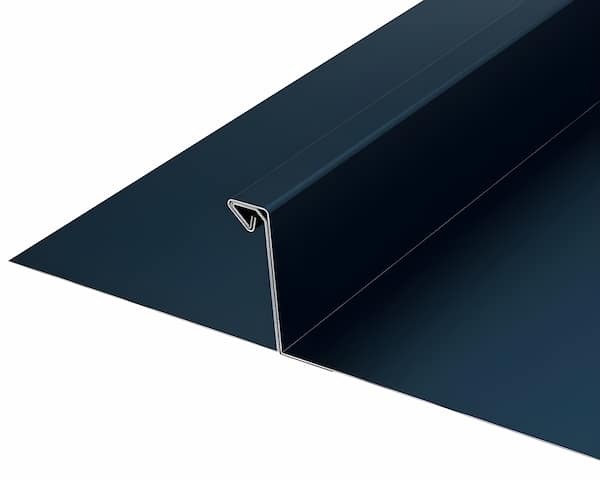
The Span-Lock SL25 is a structural standing seam system used for roofs, vertical fascia, and equipment screens. It adapts to various substrates, including open framing and corrugated steel decks. The SL25 is available in 12-inch and 16-inch widths in 22-gauge and 24-gauge steel, as well as aluminum. It features factory-applied sealant and expansion clips that manage thermal movement, allowing installation on slopes as low as 1/2:12. See the Roof Anchor Compatibility Chart for Dimensional Metals 22 Gauge and 24 Gauge Span-Lock SL25 Standing Seam Panels.
Fall Protection For Span-Lock SL25 Panels
- SSRA1 Standing Seam Roof Anchor: Provides the most secure non-penetrating tie-off for 22-gauge and 24-gauge steel panels.
- SSRA2 Adjustable Roof Jack Adapter: Mounts on top of SSRA1 anchors to support a 2x10 walkboard on steep panel runs.
- SSRA3 Anchor Plates: Attaches to SSRA1 anchors to create connection points for temporary horizontal lifelines.
- SSRA HLL 100-foot Temporary Horizontal Lifeline Kit: Protects multiple workers simultaneously across large roof spans.
- Super Anchor 120-foot Permanent Horizontal Lifeline Kit: A year-round tie-off solution for maintenance crews on steel roofs.
- Ridge Pro Steep Assist Anchor: The required non-penetrating solution for aluminum SL25 panels on slopes from 6:12 to 12:12.
Dimensional Metals DMI Span-Lock SL20 Mechanical Panel (SSRA Compatible 22/24 ga. Steel)
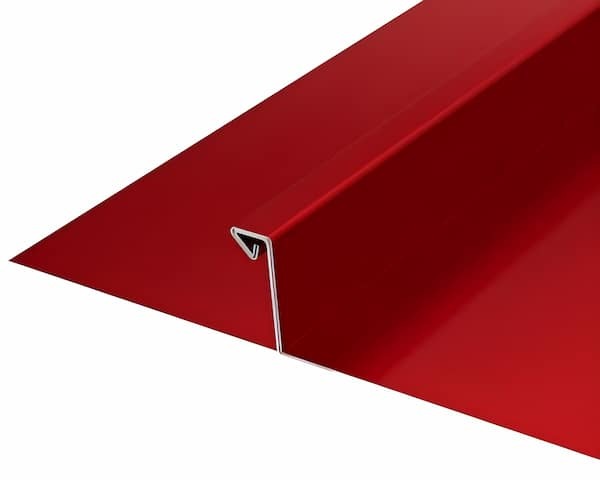
The Span-Lock SL20 delivers structural performance for low-slope and steep-slope applications. It features a 2-inch rib height and is available in 12-inch, 16-inch, and 17.625-inch widths. DMI forms the SL20 in 22-gauge and 24-gauge steel, aluminum, and copper. Continuous roll-formed lengths eliminate lap joints, while mechanical seaming allows for use on pitches as low as 1/2:12. See the Roof Anchor Compatibility Chart for Dimensional Metals 22 Gauge and 24 Gauge DMI Span-Lock SL20 Mechanical Standing Seam Panels.
Fall Protection For Span-Lock SL20 Panels
- SSRA1 Standing Seam Roof Anchor: Clamps to 22-gauge or 24-gauge steel seams without drilling, preserving the watertight seal.
- SSRA2 Adjustable Roof Jack Adapters: Mounts atop SSRA1 anchors to provide a stable 2x10 walkboard platform.
- SSRA3 Anchor Plates: Attaches to SSRA1 anchors to serve as a base for temporary horizontal lifelines.
- SSRA HLL 100-foot Temporary Horizontal Lifeline Kit: Extends coverage for multi-worker protection on large roof areas.
- Super Anchor 120-foot Permanent Horizontal Lifeline Kit: Provides a permanent, ready-to-use tie-off corridor for facility maintenance.
- Ridge Pro Steep Assist Anchor: Required for aluminum and copper SL20 panels on pitches between 6:12 and 12:12.
Dimensional Metals DMI Tee-Lock TL25 T-Seam Panel (SSRA Compatible 22/24 ga. Steel)
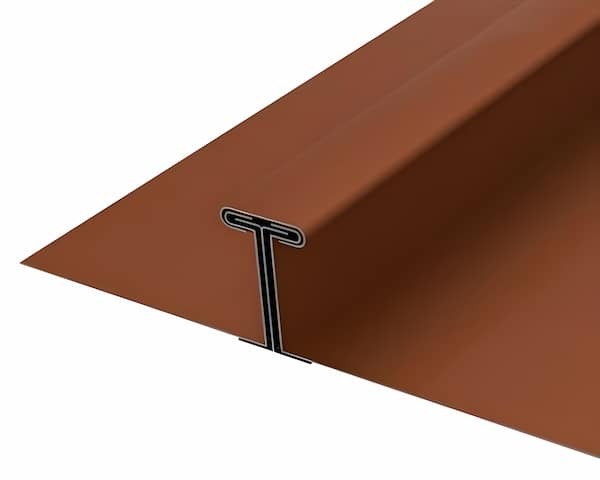
The Tee-Lock TL25 is a bi-directional structural panel with a 2.5-inch T-shaped seam profile. It is available in 12-inch, 16-inch, and 17.625-inch widths. Formed from 22-gauge or 24-gauge steel and aluminum, the TL25 uses a hydrostatic seam and a hot-melt sealant to perform on slopes as low as 1:12. Its unique one-piece clip accommodates unlimited thermal movement and allows for individual panel replacement. See the Roof Anchor Compatibility Chart for Dimensional Metals 22 Gauge and 24 Gauge DMI Tee-Lock TL25 T-Seam Standing Seam Panels.
Fall Protection For Tee-Lock TL25 Panels
- SSRA1 Standing Seam Roof Anchor: Clamps to 22-gauge and 24-gauge steel T-seams without penetrating the metal.
- SSRA2 Adjustable Roof Jack Adapter: Mounts to SSRA1 anchors to support a 2x10 walkboard, creating a level work surface.
- SSRA3 Anchor Plates: Attaches to SSRA1 anchors to create mounting points for temporary horizontal lifelines.
- Super Anchor 120-foot Permanent Horizontal Lifeline Kit: The preferred long-term solution for maintenance access on steel TL25 roofs.
- Ridge Pro Steep Assist Anchor: The required option for aluminum TL25 panels on slopes from 6:12 to 12:12.
Dimensional Metals DMI Inter-Lock IL20 Snaplock Panel (SSRA Compatible 22/24 ga. Steel)
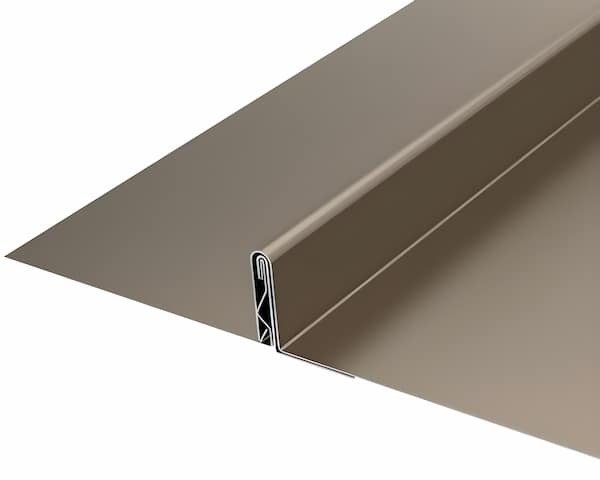
The Inter-Lock IL20 is a structural snap-together system with a 1.75-inch rib height. Available in widths up to 17.75 inches, the DMI IL20 is produced in 22-gauge and 24-gauge steel, aluminum, and copper. This system is designed for fast installation and can be roll-formed in continuous lengths up to 70 feet. See the Roof Anchor Compatibility Chart for Dimensional Metals 22 Gauge and 24 Gauge DMI Inter-Lock IL20 Snaplock Standing Seam Panels.
Fall Protection For Inter-Lock IL20 Panels
- SSRA1 Standing Seam Roof Anchor: Clamps to 22-gauge and 24-gauge steel standing seams without piercing the metal.
- SSRA2 Adjustable Roof Jack Adapters: Mounts atop SSRA1 anchors to support a 2x10 walkboard for tools and material staging.
- SSRA3 Anchor Plates: Attaches to SSRA1 anchors to provide a base for temporary horizontal lifelines.
- SSRA HLL 100-foot Temporary Horizontal Lifeline Kit: Protects multiple workers along long IL20 roof sections.
- Super Anchor 120-foot Permanent Horizontal Lifeline Kit: Creates a permanent tie-off route for future maintenance inspections.
- Ridge Pro Steep Assist Anchor: Required for aluminum and copper IL20 panels on slopes from 6:12 to 12:12.
Dimensional Metals DMI Double-Lock DL25 Mechanical Panel (SSRA Compatible 22/24 ga. Steel)

The Double-Lock DL25 is a 2.5-inch mechanically seamed profile designed for high-performance, watertight performance. It works on slopes as low as 1/2:12 in 22-gauge or 24-gauge steel and aluminum. Expansion clips and non-curing sealant ensure the roof moves naturally and remains dry over time. See the Roof Anchor Compatibility Chart for Dimensional Metals 22 Gauge and 24 Gauge DMI Double-Lock DL25 Mechanical Standing Seam Panels.
Fall Protection for Double-Lock DL25 Panels
- SSRA1 Standing Seam Roof Anchor: Provides a dependable tie-off for steel DL25 panels while maintaining weather-tight performance.
- SSRA2 Adjustable Roof Jack Adapters: Mounts to SSRA1 anchors to support a 2x10 walkboard on steep runs.
- SSRA3 Anchor Plates: Attaches to SSRA1 anchors to support temporary horizontal lifelines.
- Super Anchor 120-foot Permanent Horizontal Lifeline Kit: A non-penetrating permanent solution that reduces setup time for future service visits.
- Ridge Pro Steep Assist Anchor: Required for aluminum DL25 panels on slopes from 6:12 to 12:12.
Dimensional Metals DMI Double-Lock DL20 Mechanical Panel (SSRA Compatible 22/24 ga. Steel)
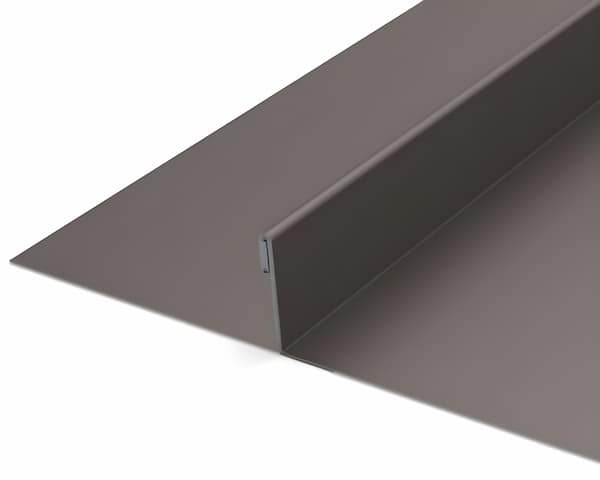
The Double-Lock DL20 is a structural standing seam panel suitable for low-slope, steep-slope, and curved applications. It features a 2-inch rib height and is available in steel (22- or 24-gauge), aluminum, copper, and zinc. See the Roof Anchor Compatibility Chart for Dimensional Metals 22 Gauge and 24 Gauge DMI Double-Lock DL20 Mechanical Standing Seam Panels.
Fall Protection For Double-Lock DL20 Panels
- SSRA1 Standing Seam Roof Anchor: Provides the strongest tie-off for 22-gauge and 24-gauge steel DL20 panels.
- SSRA2 Adjustable Roof Jack Adapter: Mounts to SSRA1 anchors to support a 2x10 walkboard for steep slope staging.
- SSRA3 Anchor Plates: Attaches to SSRA1 anchors to provide attachment points for temporary horizontal lifelines.
- Super Anchor 120-foot Permanent Horizontal Lifeline Kit: Gives maintenance teams a ready-made tie-off point without penetrating the standing seam.
- Ridge Pro Steep Assist Anchor: Required for aluminum, copper, and zinc DL20 panels on slopes from 6:12 to 12:12.
Dimensional Metals DMI Ultra-Lock UL20 Snaplock Panel (SSRA Compatible 22/24 ga. Steel)
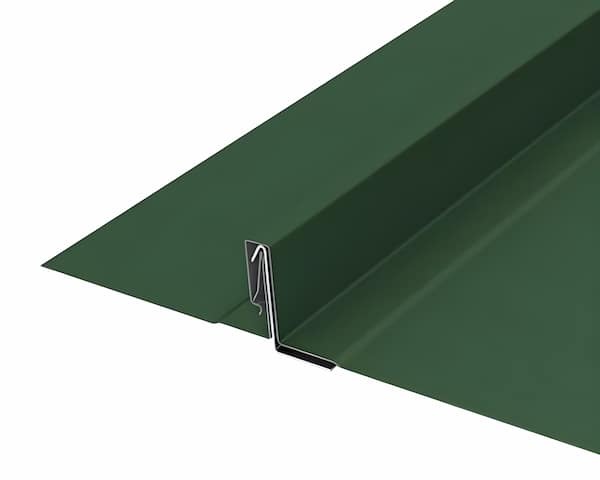
The Ultra-Lock UL20 is a 1-3/4 inch snap-together architectural panel designed for fast, secure installation. It is available in 22-gauge and 24-gauge steel and aluminum in multiple widths. See the Roof Anchor Compatibility Chart for Dimensional Metals 22 Gauge and 24 Gauge DMI Ultra-Lock UL20 Snaplock Standing Seam Panels.
Fall Protection For Ultra-Lock UL20 Panels
- SSRA1 Standing Seam Roof Anchor: Grips 22-gauge and 24-gauge steel UL20 seams without compromising the weather-tight design.
- SSRA2 Adjustable Roof Jack Adapter: Mounts atop SSRA1 anchors to support 2x10 walkboard planks.
- SSRA3 Anchor Plates: Attaches to SSRA1 anchors to provide the base for temporary horizontal lifelines.
- SSRA HLL 100-foot Temporary Horizontal Lifeline Kit: Extends multi-worker mobility across long UL20 spans.
- Super Anchor 120-foot Permanent Horizontal Lifeline Kit: Provides long-term maintenance access without interrupting the standing seam roof.
- Ridge Pro Steep Assist Anchor: Required for aluminum UL20 panels on slopes from 6:12 to 12:12.
Dimensional Metals DMI Double-Lock DL15 Mechanical Panel (SSRA Compatible 24 ga. Steel)
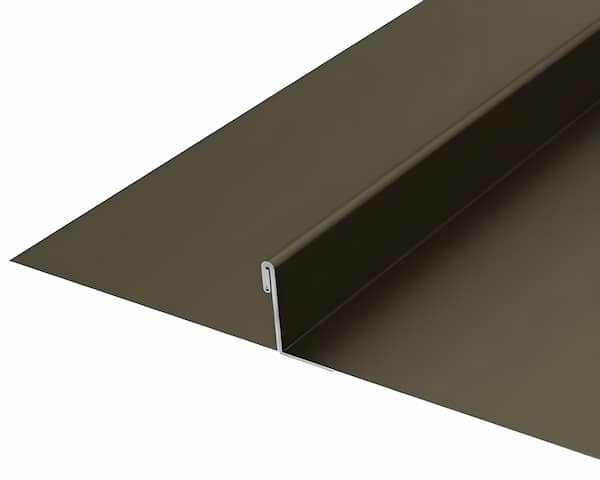
The Double-Lock DL15 offers builders a dependable structural standing-seam option suitable for low- to high-slope roofs, vertical fascia, and curved or tapered areas. This panel features a 1.5-inch rib height and uses hidden clips to manage thermal movement. Material choices include 24-gauge steel, .032- and .040-inch aluminum, and copper and zinc, with seam spacings of 12, 17, and 20 inches on-center. See the Roof Anchor Compatibility Chart for Dimensional Metals DL15 Standing Seam Panels.
- SSRA1 Standing Seam Roof Anchor: Provides a secure tie-off for 24-gauge steel versions without piercing the metal.
- SSRA2 Adjustable Roof Jack Adapter: Mounts to SSRA1 anchors on 24-gauge steel to support 2x10 walkboards.
- SSRA3 Anchor Plate: Attaches to SSRA1 anchors on 24-gauge steel for temporary horizontal lifeline connection points.
- Super Anchor 120-foot Permanent Horizontal Lifeline Kit: A non-penetrating permanent solution for long-term maintenance on 24-gauge steel.
- Ridge Pro Steep Assist Anchor: The required solution for aluminum, copper, or zinc DL15 panels on slopes from 6:12 to 12:12.
Dimensional Metals DMI Snap-On-Seam SS10 Batten-Cover Panel (Ridge Pro Only)
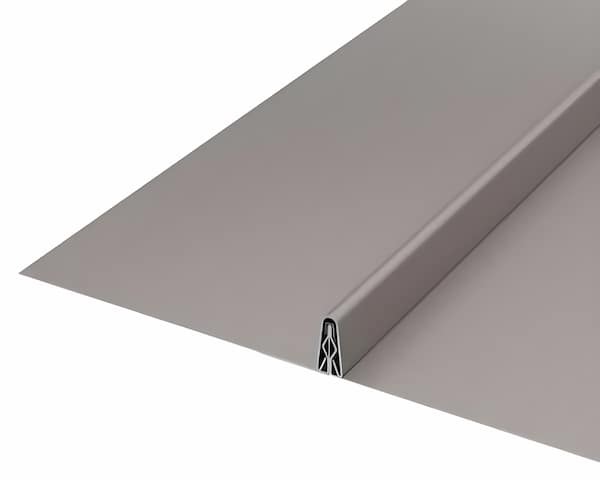
The SS10 is a non-structural two-piece design featuring a pan and a snap-on seam cover. It is available in 22-gauge and 24-gauge steel, .032- and .040-inch aluminum, and 16-ounce and 20-ounce copper, with widths of 12", 16", and 18", and a 7/8" seam height. See the Roof Anchor Compatibility Chart for DMI Snap-On-Seam SS10 Batten-Cover Standing Seam Panels.
Dimensional Metals DMI Snap-On-Seam SS15 Panel (Ridge Pro Only)
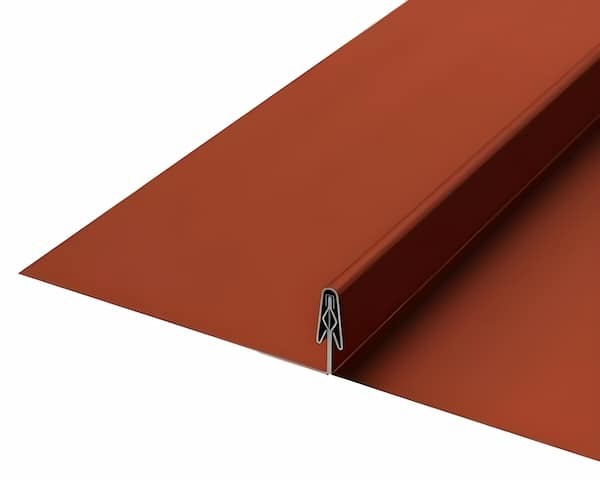
The SS15 delivers a clean architectural look with a concealed-fastener snap-on seam cover. It is a versatile choice for vertical fascia, mansards, and curved transitions. Contractors can choose 22-gauge or 24-gauge steel, .032- or .040-inch aluminum, or 16- or 20-ounce copper in widths of 12, 16, and 18 inches. See the Roof Anchor Compatibility Chart for DMI Snap-On-Seam SS15 Standing Seam Panels.
Dimensional Metals DMI Batten-Seam BS15 (Box-Batten) Panel (Ridge Pro Only)
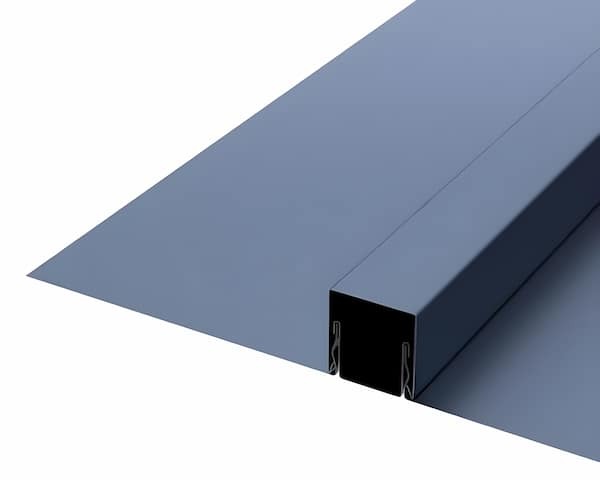
The BS15 is a non-structural box-batten system consisting of a continuous panel and a snap-on batten cap. Its bi-directional installation makes it a popular choice for symmetrical architectural designs. Material options include 22-gauge and 24-gauge steel, aluminum, and copper, available in widths of 12, 16, and 18 inches, with a 1.5-inch seam height. See the Roof Anchor Compatibility Chart for DMI Batten-Seam BS15 (Box-Batten) Standing Seam Panels.
Dimensional Metals DMI Nail-Strip NS15 Panel (Ridge Pro Only)
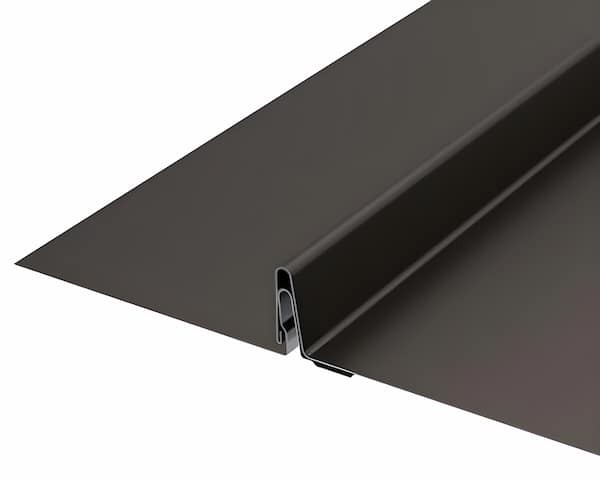
The NS15 offers a crisp, modern profile with a snap-together design that eliminates the need for mechanical seaming. This non-structural panel requires a solid substrate for support. It is available in 24-gauge steel or .032 aluminum, with widths of 10-5/8 and 18 inches, and a 1.5-inch seam height. See the Roof Anchor Compatibility Chart for DMI Nail-Strip NS15 Standing Seam Panels.
Dimensional Metals DMI Nail-Strip NS10 Panel (Ridge Pro Only)
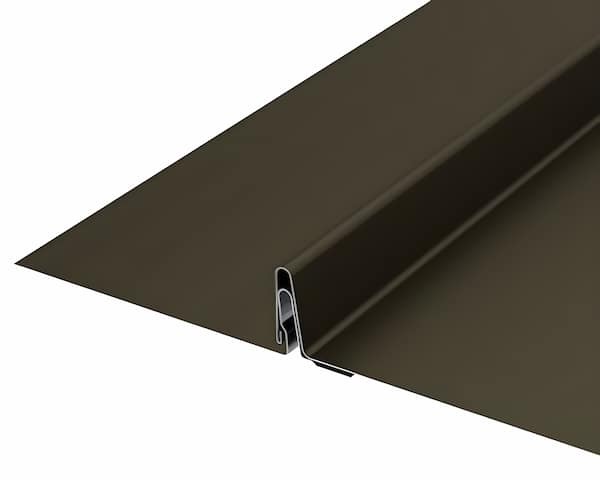
The NS10 features a continuous interlocking seam that snaps into place for a smooth, finished appearance over solid substrates. It is available in 24-gauge steel or .032 aluminum, in 11.625- and 18-inch widths, with a 1-inch rib height. See the Roof Anchor Compatibility Chart for DMI Nail-Strip NS10 Standing Seam Panels.
Dimensional Metals DMI Dome & Compound Curve CC10 Panel (Inspection Required)

The Dome & Compound Curve CC10 from Dimensional Metals, Inc. provides a specialty solution for projects that require panels shaped for spherical domes, rounded canopy edges, and other tight-radius architectural features. This system gives designers the freedom to follow complex curves without sacrificing durability or weather performance. DMI offers the CC10 in 24-gauge and 22-gauge steel, .032 and .040 aluminum, and 16-oz and 20-oz copper. The snap-together design allows installers to work the panels into tight curves while keeping the system secure once locked in place. Radius capability varies by material; .032 aluminum, for example, can be bent to a minimum convex radius of 2 feet 6 inches. See the Roof Anchor Compatibility Chart for DMI Dome & Compound Curve CC10 Standing Seam Panels.
CRITICAL WARNING: SAFETY INSPECTION REQUIRED
Curved and compound-radius roof systems, such as the CC10, present unique fall protection challenges that prevent the safe use of standard SSRA or Ridge Pro products. Every CC10 installation requires a formal inspection and review by a trained safety expert or qualified person to determine the most suitable fall protection plan. Standard anchorage methods are not compatible with these curved surfaces and custom-fabricated contours.
Dimensional Metals DMI Curved Tee-Lock CR-TL25 Panel (Inspection Required)
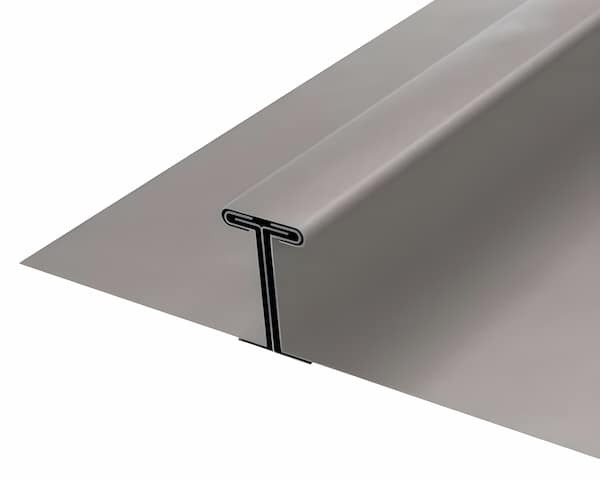
DMI offers the CR-TL25 in the same seam-spacing configurations as the straight Tee-Lock system, including 12-inch, 16-inch, or 17.625-inch on-center seams with a 2.5-inch T-shaped rib. Material choices include 24-gauge or 22-gauge steel, as well as .032- and .040-inch aluminum. A factory-applied hot-melt sealant supports water control, and the hydrostatic seam profile allows installation on slopes down to 1/2:12. The one-piece clip allows for thermal expansion and individual panel replacement. See the Roof Anchor Compatibility Chart for DMI Curved Tee-Lock CR-TL25 Standing Seam Panels.
CRITICAL WARNING: SAFETY INSPECTION REQUIRED
Curved roof systems present unique fall-protection challenges, as anchors may behave differently under load. Every CR-TL25 installation requires a formal inspection and review by a trained safety expert or qualified person to determine the most suitable fall protection plan. A custom plan tailored to the specific roof curvature is required to ensure worker safety and prevent panel damage.
Dimensional Metals DMI Curved Double-Lock CR-DL20 Panel (Inspection Required)
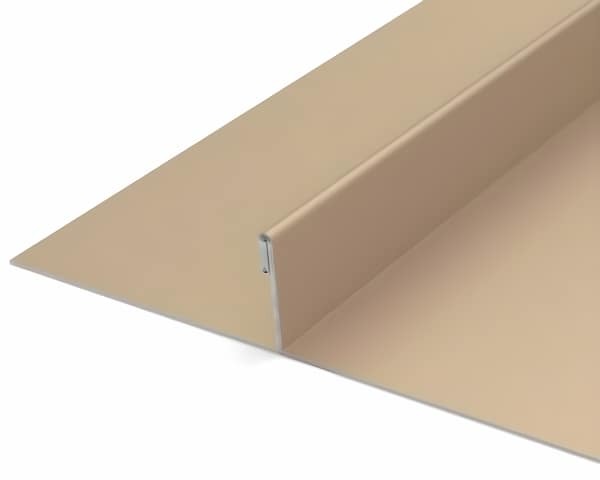
The Curved Double-Lock CR-DL20 provides strength and architectural flexibility for barrel vaults, arched canopies, and large mansards. Steel versions are available in 24-gauge and 22-gauge with widths of 12, 16, and 17.625 inches. Aluminum panels come in .032 and .040 thicknesses, while copper versions are available in 16-ounce or 20-ounce weights. All versions feature 2-inch ribs that define the roof profile and provide a stiff, uniform shape throughout the curve. See the Roof Anchor Compatibility Chart for DMI Curved Double-Lock CR-DL20 Standing Seam Panels.
CRITICAL WARNING: SAFETY INSPECTION REQUIRED
Curved CR-DL20 roofs are not compatible with SSRA seam-mounted anchors or the Ridge Pro Steep Assist. Every curved installation requires a formal inspection and review by a trained safety expert or qualified person to determine the most suitable fall protection plan. This assessment is necessary to determine if the project requires beam clamps, strap-based anchorage, or fully engineered tie-off systems.
Dimensional Metals DMI Curved Double-Lock CR-DL15 (Inspection Required)
The Curved Double-Lock CR-DL15 brings a traditional double-lock aesthetic to barrel roofs and sweeping canopies. This panel is available in widths of 12.5, 17, and 20 inches with a 1.5-inch rib height. It can maintain a minimum radius of 12 feet, allowing for expressive architectural shapes. Material choices include 24-gauge steel, .032 aluminum, and 16-ounce or 20-ounce copper, to suit various design budgets and service-life requirements. See the Roof Anchor Compatibility Chart for DMI Curved Double-Lock CR-DL15 Standing Seam Panels.
CRITICAL WARNING: SAFETY INSPECTION REQUIRED
Curved roof systems like the CR-DL15 require a site-specific evaluation to ensure anchorage does not deform or overload the curved metal. Every installation requires a formal inspection and review by a trained safety expert or qualified person to determine the most suitable fall protection plan. A tailored plan is essential to determine safe access and movement paths across each curved section.
Dimensional Metals DMI Curved Snap-On-Seam CR-SS10 (Inspection Required)

The Curved Snap-On-Seam CR-SS10 is a great choice for barrel vaults and curved soffit work. The system uses a two-piece configuration with a structural base and a snap-on seam cover. DMI offers seam spacing of 12, 16, or 18 inches with a 1-inch rib height. Panels are available in 24-gauge and 22-gauge steel, aluminum, and copper. This system requires a solid deck for attachment, such as plywood or nail base insulation. See the Roof Anchor Compatibility Chart for DMI Curved Snap-On-Seam CR-SS10 Standing Seam Panels.
CRITICAL WARNING: SAFETY INSPECTION REQUIRED
Curved Snap-On-Seam panels require a specialized approach to fall protection to maintain the integrity of the two-piece seam. Every CR-SS10 installation requires a formal inspection and review by a trained safety expert or qualified person to determine the most suitable fall protection plan. A qualified evaluator must determine if the job requires engineered lifelines, overhead systems, or other specialized methods.
Avoid Failing Anchors: The Risks of Using Generic Imports on DMI Roofs
Selecting unbranded, low-cost standing-seam anchors poses a significant risk to both worker safety and project liability. While these generic imports may resemble professional-grade hardware, they often lack the traceable engineering and rigorous third-party laboratory testing needed to verify their structural integrity. Substandard alloys used in budget alternatives are prone to fracture or slip under the extreme dynamic forces of a fall.
Every SSRA product in our system is engineered in the USA and verified by ISO 17025-accredited laboratories to exceed the 5,000-lb load requirement. By choosing anchorage backed by authentic lab reports, you protect your crew, your company, and the long-term performance of the DMI roof system.
Standing Seam Roof Anchor Compatibility For Dimensional Metals 22 Ga. Panel
| SL25 (22 Ga.) | SL20 (22 Ga.) | TL25 (22 Ga.) | IL20 (22 Ga.) | DL25 (22 Ga.) | DL20 (22 Ga.) | UL20 (22 Ga.) | |
|---|---|---|---|---|---|---|---|
SSRA 1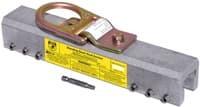 |
YES | YES | YES | YES | YES | YES | YES |
SSRA1 Nylon Tip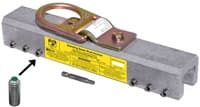 |
YES | YES | YES | YES | YES | YES | YES |
SSRA2 Roof Jack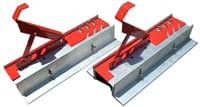 |
YES | YES | YES | YES | YES | YES | YES |
SSRA3 Anchor Plate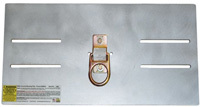 |
YES | YES | YES | YES | YES | YES | YES |
The Ridge Pro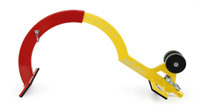 |
YES | YES | YES | YES | YES | YES | YES |
Standing Seam Roof Anchor Compatibility For Dimensional Metals 24 Ga. Panel
| SL25 (24 Ga.) | SL20 (24 Ga.) | TL25 (24 Ga.) | IL20 (24 Ga.) | DL25 (24 Ga.) | DL20 (24 Ga.) | UL20 (24 Ga.) | DL15 (24 Ga.) | |
|---|---|---|---|---|---|---|---|---|
| SSRA 1 |
NO | NO | NO | NO | NO | NO | NO | NO |
| SSRA1 Nylon Tip |
YES | YES | YES | YES | YES | YES | YES | YES |
| SSRA2 Roof Jack |
YES | YES | YES | YES | YES | YES | YES | YES |
| SSRA3 Anchor Plate |
YES | YES | YES | YES | YES | YES | YES | YES |
| The Ridge Pro |
YES | YES | YES | YES | YES | YES | YES | YES |
Standing Seam Roof Anchor Panel Compatibility Charts For Dimensional Metals (RidgePro Only)
| SS10 Batten-Cover | SS15 Snap-On-Seam | BS15 Batten-Seam | NS15 Nail-Strip | NS10 Nail-Strip | |
|---|---|---|---|---|---|
| SSRA 1 |
NO | NO | NO | NO | NO |
| SSRA1 Nylon Tip |
NO | NO | NO | NO | NO |
| SSRA2 Roof Jack |
NO | NO | NO | NO | NO |
| SSRA3 Anchor Plate |
NO | NO | NO | NO | NO |
| The Ridge Pro |
YES | YES | YES | YES | YES |
Standing Seam Roof Anchor Panel Compatibility Charts For Dimensional Metals (Inspection Required)
| CC10 Curved | CR-TL25 Curved | CR-DL20 Curved | CR-DL15 Curved | CR-SS10 Curved | |
|---|---|---|---|---|---|
| SSRA 1 |
NO | NO | NO | NO | NO |
| SSRA1 Nylon Tip |
NO | NO | NO | NO | NO |
| SSRA2 Roof Jack |
NO | NO | NO | NO | NO |
| SSRA3 Anchor Plate |
NO | NO | NO | NO | NO |
| The Ridge Pro |
NO | NO | NO | NO | NO |
Contact Us for Expert Standing Seam Fall Protection Advice
For expert guidance on standing-seam roof anchors, lifeline kits, and fall-protection systems that protect both your crew and your panels, contact us today at 863-703-4522 or visit www.StandingSeamRoofAnchor.com. Our safety specialists can help you match the right non-penetrating anchor to your specific roof profile and slope. Let's make your next metal roofing project safe, compliant, and built to last. For continued learning, download OSHA's 48-page Fall Protection Manual and our free Anchor Inspection Form once you've selected the ideal anchors for your roof system. Together, we'll help you stay ahead of OSHA standards while preserving your roof's weather-tight seal.
Safety Tips For Standing Seam Roofs
- Promote a Culture of Safety: A strong safety culture makes every DMI roof project run smoothly. A quick huddle before anyone climbs a ladder gives crews a chance to talk through the day's plan, review roof access routes, and flag anything unusual in the panel layout or weather.
- Install Permanent Roof Anchor Systems: Facilities roofed with DMI's structural standing-seam systems often require repeated access for HVAC, solar maintenance, or equipment checks. A permanent horizontal lifeline provides technicians with a reliable, ready-made tie-off point whenever someone steps onto the roof.
- Equip Workers with High-Quality Safety Gear: OSHA requires workers to have gear that fits well and performs properly. Harnesses, connectors, and SRLs like the Malta Dynamics Pygmy Hog or Edgehog give workers confidence on steeper pitches or long spans.
- Consult Experts for Curved Metal Panels: Curved DMI panels introduce unique challenges. A trained fall-protection specialist should evaluate the roof system, panel material, and access areas in person to determine the safest approach.
- Develop OSHA-Compliant Safety Plans: A written safety plan gives workers a roadmap long before the first anchor touches metal. Updating the plan as weather shifts or access paths change keeps everyone aligned.
- Use Specialized Anchor Systems for Standing Seam Roofs: Steel versions of DMI's mechanical-lock and snaplock profiles are compatible with seam-mounted anchors. For systems where these are not compatible—such as aluminum, copper, or batten-style systems—crews rely on ridge-mounted systems like the Ridge Pro.
- Encourage the Use of Trauma Straps: Suspension trauma can set in quickly. Trauma straps give a suspended worker a way to stand, shift weight, and restore leg circulation long enough for rescue.
- Ensure Proper Footwear for Stability: Safe footing is critical on DMI's smooth surfaces. Roofing-grade boots with firm ankle support and slip-resistant soles help workers stay stable on steeper pitches or during early-morning dew.
- Prioritize Ladder Safety Training: Teaching crews to set a proper 4-to-1 ladder angle, tie off at the landing, and inspect rungs and rails before climbing helps prevent most accidents.
- Set Up Protective Guardrail Barriers for Work Zones: Guardrails create a strong layer of passive fall protection on large DMI roof systems, defining clear work areas around skylights, eaves, or staging zones.
Disclaimer: The views, recommendations, and information presented in this blog are solely those of the author and do not necessarily reflect the opinions or positions of the featured panel manufacturer, its brands, subsidiaries, or parent companies. Customers are strongly encouraged to contact the roof panel manufacturer directly for inquiries regarding fall protection compatibility with their products and to address any potential warranty issues that may arise after installing our products.