Fall Protection For Fortify Standing Seam Roof Systems
Posted by Howie Scarboro - CEO Fall Protection Distributors, LLC on Jan 29th 2026
See the Roof Anchor Compatibility Chart for Fortify Building Solutions Standing Seam Panels.

Who Is Fortify Building Solutions?
Fortify Building Solutions is a premier brand within the Cornerstone Building Brands family. Fortify unites the legendary expertise of Heritage Building Systems, Metal Depots, and Reed's Metals into a single, unified powerhouse. By combining over 90 years of collective industry experience, Fortify delivers a massive North American distribution network serving residential, commercial, industrial, agricultural, and recreational markets.
Specializing in high-performance metal roofing systems, wall panels, pole barns, and custom steel buildings, Fortify Building Solutions bridges the gap between local market expertise and national-scale manufacturing.
Why Are Compatible Fall Protection Anchors Critical for Fortify Standing Seam Roofs?
The precision engineering behind Fortify's standing seam profiles creates a sleek, weather-resistant barrier that lasts for decades. However, maintaining this performance requires fall protection hardware that respects the panels' "floating" nature. Using incompatible anchors is a critical error that undermines the roof's primary functions.
Traditional fall protection anchors often require drilling through the panel and into the substrate. On a high-end Fortify standing seam system, this creates three immediate risks:
- Destruction of the Watertight Barrier: Every puncture creates a potential hidden leak point that invites moisture ingress, leading to internal rot and corrosion.
- Warranty Invalidation: Most manufacturer warranties for weather-tightness are voided the moment non-approved fasteners breach the panel surface, leaving owners with 100% of the liability for repairs.
- Thermal Expansion Interference: Standing seam panels must expand and contract with temperature changes. Penetrating anchors "pin" the panels to the structure, causing buckling, oil canning, and eventual seam failure.
The Solution: Non-Penetrating Seam Clamps
Non-penetrating anchor systems provide a safer, more efficient alternative. These systems clamp directly onto the vertical seams or roof ridge without puncturing the metal, preserving the roof's structural integrity and aesthetic. By establishing OSHA-compliant tie-off points that do not damage the panels, contractors can safely navigate the roof while protecting the building owner's long-term investment. When integrated with horizontal lifelines and walkboards, these anchors provide a comprehensive safety solution for even the most challenging Fortify Building Solutions projects.
Proper Attachment: Set Screws and Torque Requirements
Your safety and the SSRA1 anchor's certified holding power depend on the correct set screw application. We provide specialized fastening options based on the material gauge of your Fortify steel panels:
- Cupped-Tip Stainless Steel Set Screws: Use these exclusively on 22-gauge steel panels. Torque these to 90 inch-pounds for a secure, non-destructive lock.
- Nylon-Tipped Set Screws: Designed specifically for 22- or 24-gauge steel panels. Torque these to 180–200 inch-pounds to achieve full holding strength.
Maintenance Note: Treat nylon tips as consumables. Replace them every 3 to 5 uses to ensure they maintain the necessary coefficient of friction.
Important Note on Aluminum and Copper: Do not use nylon-tipped or cupped-tip set screws on copper or aluminum panels. For these softer architectural metals, use The Ridge Pro Steep Assist, which hooks over the ridge to provide a non-penetrating tie-off point without risking crushing or puncturing the seams.
CRITICAL WARNING: Never use an impact gun to install set screws. Over-torquing with an impact driver can crush the standing seam, damage the anchor hardware, and void the roof warranty. Always use a calibrated torque wrench for final installation.
The SSRA Component System & Expansion Tools
The SSRA system is a modular platform designed to adapt the SSRA1 to any Fortify Building Solutions job site:
- SSRA1 Seam Anchor: The foundation of the system. This patented, non-penetrating anchor provides a 5,000-pound certified tie-off point and is compatible with nearly all mechanical and snap-seam profiles.
- SSRA2 Adjustable Roof Jack Adapter: Mounts directly to the SSRA1 to support 10-foot wooden walk-boards. These are fully adjustable to match the roof pitch, providing a level, stable work surface.
- SSRA3 Anchor Plates: These heavy-duty aluminum spanner plates connect two SSRA1 anchors and serve as the structural mounting interface for horizontal lifeline systems for multiple users.
- 100-Foot SSRA Temporary HLL Kit: A complete, non-penetrating solution that includes the SSRA1 anchors and SSRA3 plates needed for a 100-foot lifeline.
- 120-Foot Super Anchor Permanent HLL Kit: Engineered for long-term facility maintenance, this kit provides a permanent horizontal safety installation. It utilizes non-penetrating riser posts that clamp securely to the seams for long-term building access.
- The Ridge Pro Steep Assist: The premier "First-Man-Up" tool for pitches between 6:12 and 12:12. This is the required choice for aluminum and copper panels to ensure safety without damaging the softer metal seams.
Double-Lok Mechanical Trapezoidal Panels (SSRA Compatible — 22/24 ga. Steel)
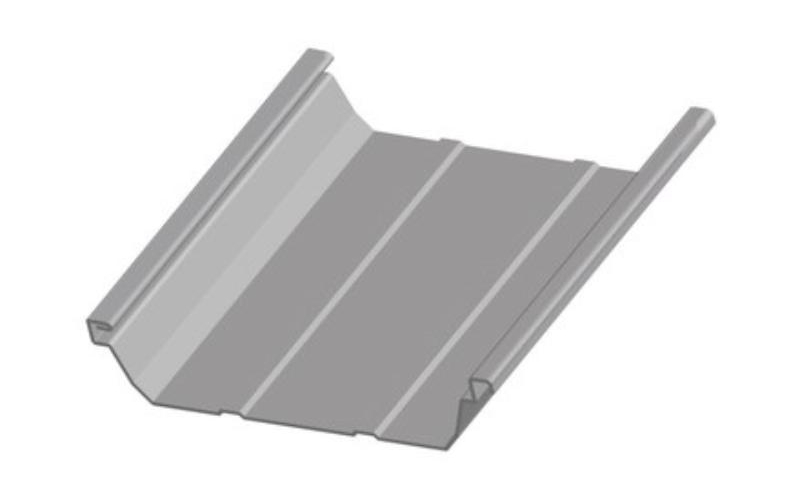
Double-Lok panels represent a premium standing seam solution engineered to withstand the rigorous demands of industrial, commercial, and large-scale architectural projects. Featuring a high-profile 3-inch-tall trapezoidal seam, these panels offer unmatched structural stability and water-shedding capabilities. Available in 18- and 24-inch widths and manufactured in 22-, 24-, and 26-gauge steel, the Double-Lok system provides the versatility required for both modern new construction and complex retrofit applications. See the Roof Anchor Compatibility Chart for Fortify Building Solutions 22 Gauge and 24 Gauge Double-Lok Mechanical Trapezoidal Standing Seam Panels.
A key advantage of the Double-Lok profile is its performance in low-pitch environments; with a minimum slope requirement of just 1/4:12, it is an ideal choice for expansive, low-slope industrial facilities where drainage and weather-tightness are critical.
Fall Protection Strategy for Double-Lok Panels
For 22 and 24-Gauge Steel Substrates: The SSRA1 Seam Anchor is the foundation for safety on these standard steel thicknesses. This anchor provides a 5,000-lb certified tie-off point by clamping securely to the trapezoidal rib, preserving the weather-tight mechanical seam.
- Staging & Access: The SSRA1 integrates seamlessly with the SSRA2 Adjustable Roof Jack Adapter to support 10-foot walk-boards, creating a stable work surface for long-term maintenance.
- Large Area Mobility: For extensive roof areas, SSRA3 Anchor Plates allow for the installation of temporary horizontal lifelines, such as the Malta Dynamics HLL3001, ensuring 100% tie-off across the entire project area.
For 26-Gauge Steel Substrates: On lighter-gauge steel, the Ridge Pro Steep Assist is the recommended safety solution.
Peak-Mounted Security: Designed for roof pitches between 6:12 and 12:12, the Ridge Pro hooks securely over the peak. This device provides a non-penetrating tie-off point that eliminates the risk of crushing or damaging the 26-gauge ribs while ensuring full OSHA compliance.
LokSeam Snaplock Panels (SSRA Compatible — 22/24 ga. Steel)
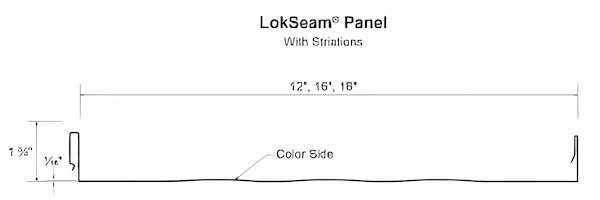
LokSeam panels deliver a sleek, efficient, and high-performance solution for modern architectural needs. Engineered with a 1-3/4-inch vertical rib and a user-friendly snaplock seam, these panels combine exceptional durability with streamlined installation. LokSeam is available in versatile widths of 12-, 16-, and 18-inches, making it a go-to choice for residential, commercial, and industrial applications. See the Roof Anchor Compatibility Chart for Fortify Building Solutions 22 Gauge and 24 Gauge LokSeam Snaplock Standing Seam Panels.
With a minimum slope requirement of 3:12, LokSeam is adaptable to various roof styles and allows for seamless transitions from roof to fascia with the addition of specialized rib covers. Manufactured in 22-, 24-, and 26-gauge steel, these panels support installation over both open framing and solid substrates. The snap-lock design is particularly valuable for reducing on-site labor costs, as it eliminates the need for mechanical seaming tools while still ensuring a clean, watertight finish and robust weather resistance.
Fall Protection Strategy for LokSeam Panels
For 22 and 24-Gauge Steel Substrates: The SSRA1 Seam Anchor provides a non-penetrating, OSHA-compliant solution for standard steel LokSeam installations. By clamping securely to the 1.75-inch seams, the anchor establishes a 5,000-lb certified tie-off point without breaching the panel surface.
- Stable Staging: The SSRA2 Adjustable Roof Jack Adapter works in tandem with the SSRA1 to support 10-foot walkboards, creating a level, stable working surface even on steep architectural pitches.
- Multi-User Safety: For larger roof areas, SSRA3 Anchor Plates allow the deployment of temporary horizontal lifelines, such as the Malta Dynamics HLL3001. This configuration permits up to two workers to maintain continuous tie-off while navigating the roof field, significantly boosting productivity and safety compliance.
For 26-Gauge Steel Substrates: The Ridge Pro Steep Assist is the required safety alternative.
Peak-Mounted Reliability: Specifically designed for pitches between 6:12 and 12:12, this anchor hooks securely over the roof ridge. This peak-mounted approach provides a reliable tie-off point that avoids any clamping pressure on the 26-gauge ribs, ensuring the worker is safe and the architectural integrity of the roof remains intact.
By integrating these tailored fall protection solutions, contractors and building owners prioritize crew safety while preserving the aesthetic and structural performance of the LokSeam system.
BattenLok HS Mechanical Panels (SSRA Compatible — 22/24 ga. Steel)
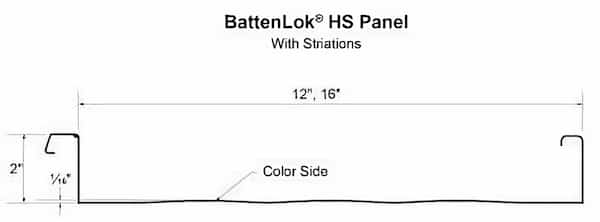
BattenLok HS panels offer a mechanically seamed panel for the most demanding standing seam roofing applications. Featuring a robust 2-inch vertical seam and available in 12-inch and 16-inch widths, these panels deliver exceptional structural integrity and architectural appeal. With a minimum slope requirement of 1/2:12, BattenLok HS is an ideal choice for low-slope roofs, offering the flexibility needed for complex commercial, industrial, and architectural designs. See the Roof Anchor Compatibility Chart for Fortify Building Solutions 22 Gauge and 24 Gauge BattenLok HS Mechanical Standing Seam Panels.
Manufactured in 22-, 24-, and 26-gauge steel, these panels can be installed directly over purlins or bar joists, eliminating the need for a solid substructure in many structural applications. The system also supports field-curving for radius designs and offers optional striations or embossing to minimize "oil canning." Whether used for functional industrial coverage or high-end architectural fascia transitions, BattenLok HS provides a dependable, weather-tight finish.
Fall Protection Strategy for BattenLok HS Panels
For 22 and 24-Gauge Steel Substrates: The SSRA1 Seam Anchor provides the ideal non-penetrating solution for standard steel gauges. By clamping securely to the 2-inch standing seams, the anchor creates a 5,000-lb certified tie-off point that preserves the roof's watertight seal and manufacturer's warranty.
- Mobility and Staging: The SSRA2 Adjustable Roof Jack Adapter mounts directly to the SSRA1 to support 10-foot walkboards, creating a stable work platform. Its adjustable design ensures a level work surface regardless of the roof's pitch and seam height.
- Horizontal Safety: For large-scale projects, the SSRA3 Anchor Plates can be integrated with the SSRA1 to support temporary horizontal lifelines, such as the Malta Dynamics HLL3001. This setup allows two workers to maintain continuous 100% tie-off while navigating the field, boosting productivity without compromising the roof's structural integrity.
For 26-Gauge Steel Substrates: On lighter-gauge 26-gauge steel, where clamping pressure could cause seam deformation or "rib crushing," The Ridge Pro Steep Assist is the mandatory safety alternative.
Peak-Mounted Protection: Designed for roof pitches between 6:12 and 12:12, this anchor hooks securely over the ridge. This peak-mounted approach provides a reliable, non-penetrating tie-off point that eliminates contact with the 26-gauge ribs, keeping the worker safe while preserving the panel's finish and performance.
Ultra-Dek Snaplock Trapezoidal Panels (SSRA Compatible — 22/24 ga. Steel)
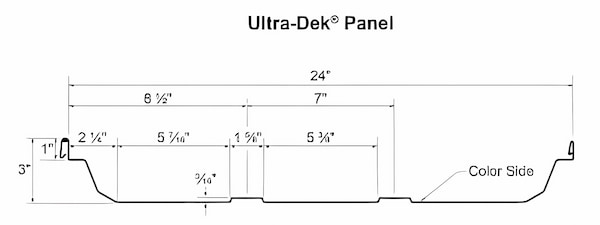
Ultra-Dek panels offer unmatched adaptability and structural performance, making them a premier choice for industrial, commercial, and large-scale architectural roofing projects. Their specialized snaplock trapezoidal leg design eliminates the need for mechanical seaming tools, resulting in a significantly streamlined, cost-effective installation process. See the Roof Anchor Compatibility Chart for Fortify Building Solutions 22 Gauge and 24 Gauge Ultra-Dek Snaplock Trapezoidal Standing Seam Panels.
Manufactured from 22-, 24-, and 26-gauge steel, Ultra-Dek panels are available in 18-inch and 24-inch widths. The system is designed with versatility in mind, offering both high and low clip options to accommodate various insulation thicknesses between the panels and purlins. With a 3-inch-tall seam and a minimum slope requirement of just 1/4:12, these panels excel in low-slope applications. Whether installed over open framing or solid substructures, Ultra-Dek delivers a reliable, weather-tight barrier for a wide range of construction needs.
Fall Protection Strategy for Ultra-Dek Panels
For 22 and 24-Gauge Steel Substrates: The SSRA1 Seam Anchor provides a secure, non-penetrating solution for standard steel thicknesses. These anchors clamp firmly onto the 3-inch standing seams, establishing an OSHA-compliant tie-off point that preserves the roof's watertight seal and long-term performance.
- Stable Staging: The SSRA2 Adjustable Roof Jack Adapter enhances safety by supporting 10-foot walkboards, providing workers with a stable platform for navigating the roof. Its adjustable height ensures seamless compatibility with the Ultra-Dek's 3-inch rib height.
- Expansive Mobility: For large projects, the SSRA3 Anchor Plates work in tandem with the SSRA1 to support temporary horizontal lifelines, such as the Malta Dynamics HLL3001. This system allows up to two workers to remain continuously tied off while moving horizontally across the roof field, maximizing both safety and efficiency.
For 26-Gauge Steel Substrates: On lighter 26-gauge steel Ultra-Dek panels, where clamping pressure may cause rib deformation, the Ridge Pro Steep Assist is the mandatory safety alternative.
Ridge-Mounted Protection: Specifically designed for roof pitches between 6:12 and 12:12, this anchor hooks securely over the ridge. This peak-mounted approach provides a 100% tie-off point that avoids all contact with the 26-gauge trapezoidal ribs, ensuring the safety of the workforce without compromising the structural integrity of the roofing system.
By integrating these specialized fall protection systems, contractors and building owners protect their crews while maintaining the exceptional performance and warranty of the Ultra-Dek system.
Slimline Nailstrip Panel (Ridge Pro Only)
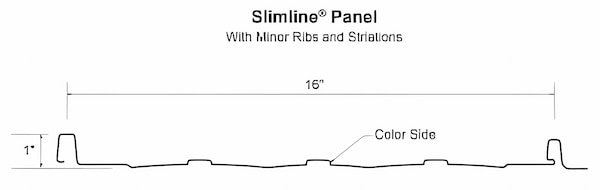
Slimline panels represent the peak of contemporary residential roofing, offering a clean, minimalist profile that enhances modern home designs. These concealed-fastener panels feature a 16-inch width and a subtle 1-inch tall seam, creating a smooth, high-end appearance without the industrial look of larger ribs. >See the Roof Anchor Compatibility Chart for Fortify Building Solutions Slimline Nailstrip Standing Seam Panels.
Manufactured in 26 and 29-gauge steel, Slimline requires a minimum slope of 3:12; these panels are well-suited for a variety of residential roof pitches. Because Slimline uses lighter-gauge steel to achieve its sleek look, it requires a specialized fall protection strategy that avoids direct attachment to the seam.
Fall Protection Strategy for Slimline Panels
Nailstrip panels are not compatible with seam-mounted anchors. The Required Solution: The Ridge Pro Steep Assist For Slimline roofs with pitches between 6:12 and 12:12, The Ridge Pro Steep Assist is the mandatory fall protection solution.
The Ridge Pro hooks securely over the roof ridge, providing a 100% tie-off point without contacting the delicate 1-inch seams.
- Preserving Aesthetics: This peak-mounted approach ensures OSHA-compliant safety while protecting the flawless, contemporary finish that Slimline homeowners expect.
- First-Man-Up Safety: The lightweight design allows the first worker on the roof to establish a secure anchor point from the ladder, ensuring safety during the most dangerous part of the transition.
By utilizing the Ridge Pro Steep Assist, contractors can deliver high-performance safety that respects the engineering limits of the Slimline® system, ensuring a successful project that protects both the crew and the client's investment.
The High Cost of Cheap Hardware
In recent years, the fall protection market has seen an influx of low-cost, imported "knockoff" seam anchors that prioritize a lower price point over verifiable safety. While these products may visually resemble professional-grade hardware, many lack the rigorous third-party certified testing required to meet OSHA 1926.502 and ANSI Z359 standards. For a contractor or building owner, the "savings" on these uncertified imports can quickly vanish when faced with the potential liability of a system failure or the significant fines associated with using non-compliant equipment during a safety audit.
Choosing SSRA products eliminates these risks by providing a transparent, domestic supply chain. SSRA components are developed, tested, manufactured, and supported right here in the USA. This process ensures that the equipment you trust with your crew's lives is manufactured under strict quality control standards and backed by domestic customer service.
Standing Seam Roof Anchor Panel Compatibility For 22 Gauge Fortify Building Solutions
| Double-Lok (22 Ga.) | LokSeam (22 Ga.) | BattenLok HS (22 Ga.) | Ultra-Dek (22 Ga.) | |
|---|---|---|---|---|
SSRA 1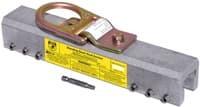 |
YES | YES | YES | YES |
SSRA1 Nylon Tip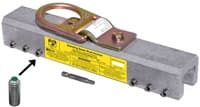 |
YES | YES | YES | YES |
SSRA2 Roof Jack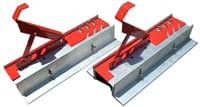 |
YES | YES | YES | YES |
SSRA3 Anchor Plate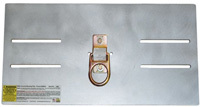 |
YES | YES | YES | YES |
The Ridge Pro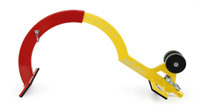 |
YES | YES | YES | YES |
Standing Seam Roof Anchor Panel Compatibility For 24 Gauge Fortify Building Solutions
| Double-Lok (24 Ga.) | LokSeam (24 Ga.) | BattenLok HS (24 Ga.) | Ultra-Dek (24 Ga.) | Slimline Nailstrip | |
|---|---|---|---|---|---|
| SSRA 1 |
NO | NO | NO | NO | NO |
| SSRA1 Nylon Tip |
YES | YES | YES | YES | NO |
| SSRA2 Roof Jack |
YES | YES | YES | YES | NO |
| SSRA3 Anchor Plate |
YES | YES | YES | YES | NO |
| The Ridge Pro |
YES | YES | YES | YES | YES |
Contact Us For More Information
For further details on roofing solutions and fall protection systems, contact us at 863-703-4522 or www.StandingSeamRoofAnchor.com. Let's work together to make your roofing projects safe, beautiful, and built to last. For more safety tips, check out OSHA's 48-page fall protection manual. Once you have determined the most suitable anchors for your roof system, download our free Anchor Inspection Form.
10 Pro Safety Tips for Fortify Building Solutions Metal Roof Projects
- Deploy "Leading Edge" SRLs for Sharp Seams
Fortify's high-performance mechanical and snap-lock seams, such as BattenLok® HS, feature vertical ribs that can abrade ropes. Traditional lanyards can be severed if a worker falls over these sharp metal transitions. Pro Tip: Always equip your crew with Leading Edge (LE) rated SRLs. - Prevent Seam Damage During Anchor Installation
Select non-penetrating anchors for floating standing seam roofs to avoid oil-canning" of the panels. Pro Tip: Use a calibrated torque wrench for every installation. For SSRA1 anchors on 22/24-gauge steel, tighten cupped-tip screws to 90 inch-pounds and nylon-tipped screws to 180–200 inch-pounds. Never use an impact gun. - Treat Nylon Tips as Critical Consumables
Replace Nylon-Tipped Set Screws every 3 to 5 installations to maintain maximum holding power. You must replace these soft tips as they deform and wear down during tightening. - Factor "Dynamic Sag" into Fall Clearance
Account for "Dynamic Sag" in your fall clearance calculations to ensure worker safety. The physical stretch of a horizontal lifeline during a fall can increase the total distance a worker travels before coming to a stop. Pro Tip: Always add a 2-to-3-foot safety margin to your Total Fall Clearance (TFC) calculation. This extra buffer accounts for line stretch and ensures the system arrests the worker well before they impact the ground or lower-level structures. - Implement a "First-Man-Up" Procedure
The "First Man Up" should use the Ridge Pro to reach the peak while remaining secured to the ridge. Once safely at the peak, additional anchors can be setup for other workers. - Combat Suspension Trauma with Relief Straps
If a worker falls on a steep LokSeam roof, the harness leg straps can cut off circulation and trigger life-threatening suspension trauma in just a few minutes. Pro Tip: Pre-install trauma relief straps on every harness. These allow a suspended worker to "stand up," relieving pressure on the femoral arteries while they await rescue. - Choose Stainless Set Screws
Using the wrong set screw material can trigger galvanic corrosion, a chemical reaction that "eats" through metal panels where the anchor meets the seam. This issue is especially critical in high-end Fortify projects that use substrates such as aluminum or copper. For copper roofing, never use steel or aluminum components; use specialized copper-compatible hardware or peak-mounted systems like The Ridge Pro to avoid direct contact and preserve the roof's integrity. - Strict Gauge-Specific Anchor Selection
Pro Tip: Never use seam-mounted anchors on Fortify panels made of 26-gauge steel, aluminum, or copper. For these softer or lighter materials, The Ridge Pro is the best choice, as it hooks over the peak without stressing the ribs. - Enforce the 30-Degree "Swing Fall" Rule
Working too far to the left or right of your anchor creates a pendulum effect. If a worker falls, they will swing across the roof, potentially hitting a gable end. Pro Tip: Mark a 30-degree "Safe Zone" arc from the anchor point. - Secure the Ladder-to-Peak Transition
The transition from the ladder onto a slick metal surface is the most dangerous part of the job. Pro Tip: Extend your ladder 3 feet (1 meter) above the eave and use a stabilizer. Secure the ladder at the eave before stepping off to prevent the ladder from "kicking out" on the metal edge.
Disclaimer
The views, recommendations, and information presented in this blog are solely those of the author and do not necessarily reflect the opinions or positions of the featured panel manufacturer, its brands, subsidiaries, or parent companies. Customers are strongly encouraged to reach out directly to the roof panel manufacturer for inquiries regarding fall protection compatibility with their products and to address any potential warranty issues that may arise following the installation of our products.