

Fall Protection Solutions For Western States Metal Roofing Panels
Posted by Howie Scarboro - CEO Fall Protection Distributors, LLC on Mar 18th 2026
See the Roof Anchor Compatibility Chart for Western States Metal Roofing Standing Seam Panels.

Who Is Western States Metal Roofing?
The company was founded in 1996 as Western States Decking, distributing Verco metal decking to the construction industry. Over time, customers started asking for more than decking. They wanted roofing panels, custom trims, and colors that matched the architectural style of their projects. Western States answered by transitioning to full-panel manufacturing and later rebranding as Western States Metal Roofing.
The company now operates several manufacturing and distribution centers across Arizona, Nevada, Texas, and Washington. Their catalog includes corrugated roofing, concealed-fastener wall systems, metal siding, trim, accessories, and one of their signature offerings: the Western Lock standing-seam panel.
What Are the Most Compatible Fall Protection Anchors for Western States Standing Seam Roofs?
Working on Western States standing seam panels requires a fall-protection strategy that works with the seams, concealed clips, and floating mechanism. Non-penetrating fall protection is the only approach that preserves the standing-seam profile and its warranty. For Western States, standing seam panels in 22-gauge and 24-gauge steel, the SSRA1 Standing Seam Roof Anchor provides a solid, seam-mounted connection point without puncturing the metal.
This anchor grips the seam with stainless-steel set screws that apply low-torque pressure across it, distributing the load safely without crushing the profile.
- SSRA1 Standing Seam Roof Anchor: A universal non-penetrating anchor that attaches to the seam using 12 stainless-steel set screws, providing a 5,000-pound certified tie-off point without drilling.
- SSRA2 Adjustable Roof Jack Adapters: Adapters that mount to SSRA1 anchors to support a 2x10 walk board, allowing workers to stand on a level surface on steep-slope roofs.
- SSRA3 Anchor Plate: A heavy-duty aluminum plate that spans two SSRA1 anchors to create a certified attachment point for horizontal lifeline systems.
- SSRA HLL 100-foot Temporary Horizontal Lifeline Kit: A complete, portable lifeline system for up to two workers that allows safe lateral movement across wide roof sections without panel penetrations.
- Super Anchor 120-foot Permanent Horizontal Lifeline Kit: A long-term safety solution featuring galvanized steel cables and non-penetrating riser posts for facilities requiring frequent maintenance access.
- Ridge Pro Steep Assist Anchor: A ridge-mounted anchorage device that hooks over the peak to provide safe vertical lifeline access on pitches from 6:12 to 12:12.
Proper Attachment: Set-Screws and Torque Requirements
- Cupped-Tip Stainless Steel Set-Screws: Use these screws exclusively on 22-gauge steel panels. Torque these screws to 90 inch-pounds.
- Nylon-Tipped Set-Screws: Apply these tips to 22-gauge or 24-gauge steel panels to achieve certified holding power without marking the finish. Torque these screws to 180-200 inch-pounds.
- Maintenance: Treat nylon tips as consumables. Replace these tips every 3 to 5 uses to maintain maximum grip strength.
CRITICAL WARNING: NO IMPACT GUNS
Never use an impact gun to install set-screws. Over-torquing with an impact driver crushes the standing-seam rib, causing permanent panel deformation and compromising the anchor's certified holding power. This error damages the anchor hardware, compromises worker safety, and voids Western States Metal Roofing's manufacturer's warranty. Always use a calibrated torque wrench for final installation.
Western States MS2 Mechanically Seamed Panels (SSRA Compatible 22/24 gauge Steel)
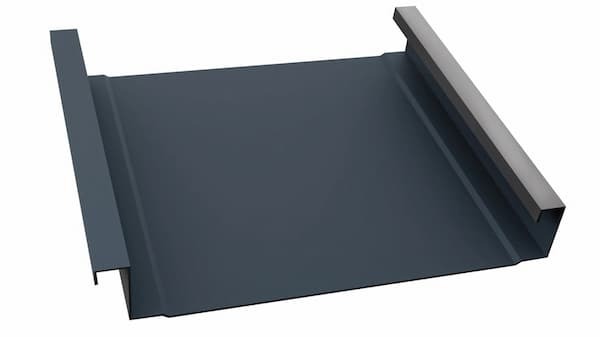
The MS2 panel provides Western States customers with a dependable mechanical system that performs well on low-slope roofs and in harsh weather conditions. The 2-inch seam sheds water quickly and holds up during high-wind events. Contractors can order the MS2 profile in 22-gauge or 24-gauge steel, in standard widths of 12, 14, 16, or 18 inches, with custom options available up to 24 inches. That flexibility makes the panel a strong fit for commercial buildings, agricultural projects, and long roof runs where strength and weather performance matter most. See the Roof Anchor Compatibility Chart for Western States MS2 Standing Seam Panels.
Fall Protection For Western States MS2 Panels
- SSRA1 Standing Seam Roof Anchor: Clamps directly to the MS2 seam using stainless steel set screws to grip without piercing the metal or disturbing the mechanical seam.
- SSRA2 Adjustable Roof Jack Adapter: Mounts atop the SSRA1 anchors and supports a 2x10 walkboard, allowing workers to move safely along long roof runs.
- SSRA3 Anchor Plate: Connects to SSRA1 and serves as the attachment point for a temporary horizontal lifeline system.
- SSRA HLL 100-foot Temporary Horizontal Lifeline Kit: Provides a custom lifeline for two workers to maintain high productivity on large MS2 roofs.
- Super Anchor 120-foot Permanent Horizontal Lifeline Kit: Stays in place year-round for buildings requiring regular maintenance or equipment checks.
- Ridge Pro Steep Assist: Provides an additional layer of protection for slopes between 6:12 and 12:12, hooking over the ridge to assist with ladder transitions and inspections.
Western States Snap Lock Panels (SSRA Compatible 22/24 gauge Steel)
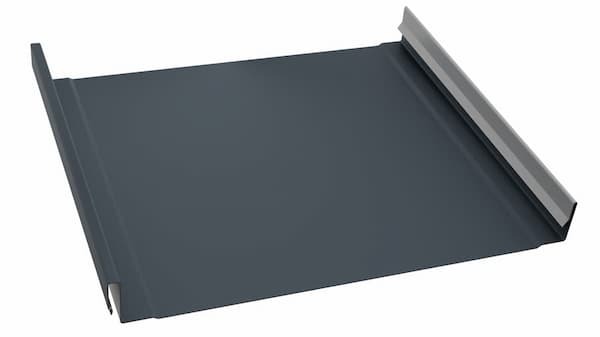
Western States Snap Lock standing-seam panels offer a clean architectural look and a simple installation process for residential and light-commercial roofs. Its 1.75-inch seam gives the roof a taller visual line than many other snaplock profiles, helping designers create depth without shifting to a mechanical seam. The concealed clip system hides the attachment points and keeps the surface uninterrupted. Western States produces the Snap Lock panel in 24-gauge and 22-gauge steel in 18-inch widths, with custom widths available from 12 to 20 inches. See the Roof Anchor Compatibility Chart for Western States Snap Lock Standing Seam Panels.
Fall Protection for Western States Snap Lock Panels
- SSRA1 Standing Seam Roof Anchor: Attaches directly to the 22/24-gauge steel seam using 12 stainless steel set screws, preserving snaplock engagement and concealed clip movement.
- SSRA2 Adjustable Roof Jack Adapters: Mount on top of the SSRA1 anchors and support a 2x10 walkboard for consistent footing and material staging.
- SSRA3 Anchor Plate: Expands the system by providing a mounting point for temporary horizontal lifelines.
- SSRA HLL 100-foot Temporary Horizontal Lifeline Kit: Creates a smooth workflow for multiple workers across the roof area.
- Ridge Pro Steep Assist: A brilliant addition for slopes between 6:12 and 12:12, providing a solid tie-off option without touching the snap lock seam.
Western States Western Seam 1-Inch Nailstrip Panel (Ridge Pro Only)
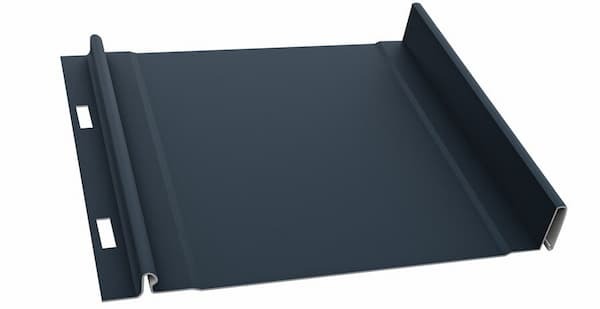
The Western Seam 1-inch Nailstrip panel uses a fastening flange instead of clips, allowing installers to secure the flange directly to the deck before snapping the next panel into place. This simplified approach makes the system appealing for residential work where budget and schedule are critical. The 1-inch seam height offers a subtle architectural line for cabins, ranch houses, and light commercial structures. Western States provides the panel in 24-gauge steel as the standard option, with 22-gauge steel available as a custom order. See the Roof Anchor Compatibility Chart for Western States 1-inch Nailstrip Standing Seam Panels.
Fall Protection for Western Seam 1-Inch Nailstrip Panels
- Ridge Pro Steep Assist: The safest approach for this panel style, providing a stable, non-penetrating tie-off point for roofs with a slope of 6:12 to 12:12. The Ridge Pro hooks over the ridge and stays clear of the nailstrip connection, protecting the panel from deformation and preserving the warranty.
Western States 1.5-Inch Nailstrip Panel (Ridge Pro Only)
The Western Seam 1.5-inch Nailstrip panel fastens directly to the deck through the slotted male flange. It does not require clips, special tools, or a mechanical seamer. Standard coverage is 18 inches, and Western States offers custom widths from 12 to 20 inches. With a minimum roof pitch of 3:12, the panel is suitable for many residential and light commercial buildings. See the Roof Anchor Compatibility Chart for Western States 1.5-inch Nailstrip Standing Seam Panels.
Fall Protection for Western Seam 1.5-Inch Panels
- Ridge Pro Steep Assist: The correct fall protection method for 6:12 to 12:12 slopes. The Ridge Pro sits over the ridge and keeps workers tied off without touching the panel seam, preventing deformation and avoiding the risk of compromising the nailstrip engagement.
Prioritize Proven Performance: The Risk of Uncertified Import Anchors
Saving money on fall protection by choosing unbranded, low-cost import anchors can lead to catastrophic failures and massive liability. These generic imitations often lack the structural testing, material certifications, and engineering oversight required to meet rigorous American safety standards. SSRA components are American-engineered and tested at ISO 17025-accredited laboratories to a breaking strength of 5,000 pounds. When lives are on the line, "looking like" a safety anchor isn't enough; you need the peace of mind that comes with a documented paper trail. You can view our laboratory test reports to see the data that separates our professional-grade hardware from unverified substitutes.
Standing Seam Metal Roof Anchor Panel Compatibility Chart For Western States
| MS2 (22 Ga.) | MS2 (24 Ga.) | Snap Lock (22 Ga.) | Snap Lock (24 Ga.) | 1-Inch Nailstrip | 1.5-Inch Nailstrip | |
|---|---|---|---|---|---|---|
SSRA 1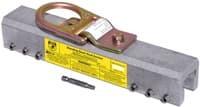 |
YES | NO | YES | NO | NO | NO |
SSRA1 Nylon Tip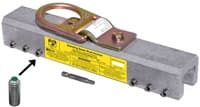 |
YES | YES | YES | YES | NO | NO |
SSRA2 Roof Jack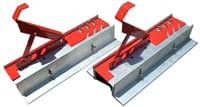 |
YES | YES | YES | YES | NO | NO |
SSRA3 Anchor Plate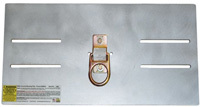 |
YES | YES | YES | YES | NO | NO |
The Ridge Pro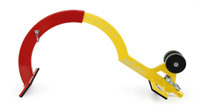 |
YES | YES | YES | YES | YES | YES |
Contact Us for Expert Standing Seam Fall Protection Advice
For expert guidance on standing-seam roof anchors, lifeline kits, and fall-protection systems that protect both your crew and your panels, contact us today at 863-703-4522 or visit www.StandingSeamRoofAnchor.com. Our safety specialists can help you match the right non-penetrating anchor to your specific roof profile and slope. Let's make your next metal roofing project safe, compliant, and built to last. For continued learning, download OSHA's 48-page Fall Protection Manual and our free Anchor Inspection Form once you've selected the ideal anchors for your roof system. Together, we'll help you stay ahead of OSHA standards while preserving your roof's weather-tight seal.
Safety Guidelines for Standing Seam Roofs
- Utilize Specialized Roof Anchor Systems: Workers should stick with systems that clamp to MS2 or Western Lock ribs without having to locate hidden clips or drive fasteners into the metal. The right anchor grips the seam with consistent pressure.
- Foster a Safety-First Workplace Culture: A quick talk about weather, material handling, or roof pitch keeps everyone engaged. Preventing minor oversights stops them from turning into bigger problems later.
- Ensure Safe Ladder Procedures: Ladders should be set on firm ground, follow the 4-to-1 angle, and be tied into the structure. Good ladder habits prevent half the accidents on metal roofing jobs.
- Establish OSHA-Compliant Safety Plans: A written safety plan should define anchor locations, walkboard placement, and lifeline paths. The plan should adapt when the weather shifts or the crew size changes.
- Equip Workers with High-Quality Safety Gear: Harnesses should fit snugly, and SRLs like the Malta Dynamics Pygmy Hog or Edgehog should retract smoothly. Daily inspections are required.
- Secure Work Areas with Protective Barriers: Guardrails and warning lines give crews breathing room around skylights and perimeter edges, reducing reliance on personal fall arrest alone.
- Encourage Regular Use of Trauma Straps: Trauma straps allow a suspended worker to stand and restore circulation while awaiting rescue. They should be standard equipment on every project.
- Wear Appropriate Footwear: Roofing boots with firm ankle support and a grippy tread help workers stay balanced on Western States panels, which can be slick when dusty or wet.
- Take Precautions for Curved Metal Panels: A fall protection expert should inspect curved roofs to determine whether ridge-mounted anchors or specialized engineered solutions are the right match.
- Implement Permanent Roof Anchor Systems: Installing a Super Anchor 120-foot Permanent Horizontal Lifeline Kit gives maintenance teams a ready-to-use tie-off path for repeated service visits.
Disclaimer: The views, recommendations, and information presented in this blog are solely those of the author and do not necessarily reflect the opinions or positions of the featured panel manufacturer, its brands, subsidiaries, or parent companies. Customers are strongly encouraged to contact the roof panel manufacturer directly for inquiries about fall protection compatibility with their products and to address any potential warranty issues that may arise after installation of our products.