
Fall Protection Strategies For Agway Standing Seam Roofs
Posted by Howie Scarboro - CEO Fall Protection Distributors, LLC on Mar 18th 2026
See the Roof Anchor Compatibility Chart for Agway Metals Standing Seam Panels.

Who Is Agway Metals?
Agway Metals Inc. is a trusted leader in the steel building products industry, renowned for its premium-quality standing-seam metal roofing systems. Since its founding in 1979, Agway has expanded its reach from serving Ontario's agricultural market to providing innovative solutions across residential, commercial, industrial, and institutional sectors. With over 40 years of expertise, Agway Metals has earned a reputation for combining craftsmanship, innovation, and customer service to deliver roofing products that excel in performance and design.
One of the company's standout offerings is its standing seam metal roofing systems, known for their strength, durability, and clean, modern appearance. These systems feature concealed fasteners, enhancing the roof's aesthetic appeal while providing superior weather resistance and longevity. Agway's standing seam roofs meet the demands of various architectural styles and environmental conditions, making them a go-to choice for high-performance roofing solutions.
What Are the Most Compatible Anchors for Agway Standing Seam Roofs?
Standing seam metal roofs require specialized fall protection systems to ensure worker safety without compromising the roof's structural integrity. The key challenge is the concealed-fastener design; traditional fall protection systems that require drilling can cause leaks or void warranties. Using non-penetrating fall protection strategies is essential to preserve the roof's watertight design.
- SSRA1 Standing Seam Roof Anchor: A universal non-penetrating anchor that attaches to the seam using 12 stainless-steel set screws, providing a 5,000-lb certified tie-off point without drilling.
- SSRA2 Adjustable Roof Jack Adapters: Adapters that mount to SSRA1 anchors to support a 10-foot walk board, allowing workers to stand on a level surface on steep-slope roofs.
- SSRA3 Anchor Plate: A heavy-duty aluminum plate that spans two SSRA1 anchors to create a certified attachment point for horizontal lifeline systems.
- SSRA HLL 100-foot Temporary Horizontal Lifeline Kit: A complete, portable lifeline system for up to two workers that allows safe lateral movement across wide roof sections without panel penetrations.
- Super Anchor 120-foot Permanent Horizontal Lifeline Kit: A long-term safety solution featuring galvanized steel cables and non-penetrating riser posts for facilities requiring frequent maintenance access.
- Ridge Pro Steep Assist Anchor: A ridge-mounted anchorage device that hooks over the peak to provide safe vertical lifeline access on pitches from 6:12 to 12:12.
Proper Attachment: Set-Screws and Torque Requirements
- Cupped-Tip Stainless Steel Set-Screws: Use these screws exclusively on 22-gauge steel panels. Torque these screws to 90 inch-pounds.
- Nylon-Tipped Set-Screws: Apply these tips to 22-gauge or 24-gauge steel panels to achieve certified holding power without marking the finish. Torque these screws to 180-200 inch-pounds.
- Maintenance: Treat nylon tips as consumables. Replace these tips every 3 to 5 uses to maintain maximum grip strength.
CRITICAL WARNING: NO IMPACT GUNS
Never use an impact gun to install set-screws. Over-torquing with an impact driver crushes the standing-seam rib, causing permanent panel deformation and compromising the anchor's certified holding power. This error damages the anchor hardware, compromises worker safety, and voids Agway Metals' manufacturer's warranty. Always use a calibrated torque wrench for final installation.
Agway Metals AR Standing Seam Panel (SSRA Compatible 22/24 ga. Steel)
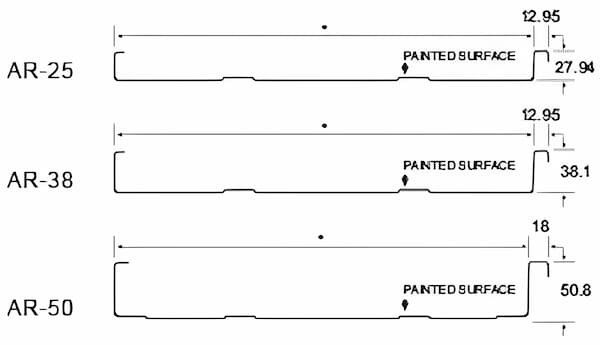
Agway Metals' AR Standing Seam Series gives builders a dependable, architectural-grade panel that adapts easily to a wide range of designs. The system comes in 1-inch, 1.5-inch, and 2-inch seam heights, allowing architects to scale the profile to match the building's proportions. The panels are available in 24-gauge and 22-gauge steel, with coverage widths of 18.5, 20, and 21 inches. Agway designed the AR series for mechanical seaming at 90 or 180 degrees. Agway also offers the option to curve the AR panel for creative architectural shapes. See the Roof Anchor Compatibility Chart for Agway Metals AR Standing Seam Panels.
Fall Protection for Agway AR Standing Seam Panels
- SSRA1 Standing Seam Roof Anchor: Clamps to 22-gauge and 24-gauge straight AR seams without piercing the metal, preserving the weather-tight seal.
- SSRA2 Adjustable Roof Jack Adapter: Mounts to SSRA1 anchors to support a 10-foot walkboard across the slope for a level working platform.
- SSRA3 Anchor Plate: Connects to SSRA1 anchors to provide certified attachment points for temporary horizontal lifelines.
- SSRA HLL 100-foot Temporary Horizontal Lifeline Kit: Protects multiple workers along long panel runs, providing maximum mobility.
- Super Anchor 120-foot Permanent Horizontal Lifeline Kit: A non-penetrating, year-round solution for maintenance crews that eliminates the need for repeated hardware setup.
- Ridge Pro Steep Assist: Provides a reliable ridge-based tie-off for slopes from 6:12 to 12:12. It hooks securely over the peak without touching or stressing the seams.
Critical Warning:
Curved AR Panels are not compatible with SSRA products or seam-mounted anchors. A trained fall-protection expert must evaluate curved systems and determine the safest method via an in-person inspection.
Agway Metals SL Snaplock Panels (SSRA Compatible 24 ga. Steel)
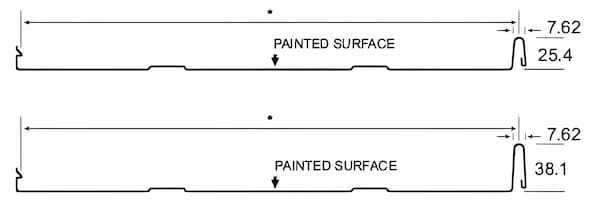
Agway Metals' SL Snaplock panels deliver a sharp architectural look for homes, cottages, and commercial buildings without mechanical seaming. The profile uses hidden clips and a snap-together design that engages with a simple downward push. Agway produces these panels in 24-gauge steel with widths of 19.5 inches (1-inch seam) for pitches down to 3:12, or 20.5 inches (1.5-inch seam) for pitches down to 1.5:12. The floating panel design reduces stress on the seams. It can help prevent oil canning during thermal shifts. See the Roof Anchor Compatibility Chart for Agway Metals SL Snaplock Standing Seam Panels.
Fall Protection for Agway SL Snaplock Panels
- SSRA1 Standing Seam Roof Anchor: Connects to 24-gauge SL Snaplock seams using stainless steel set screws to provide a dependable tie-off without crushing the rib.
- SSRA2 Adjustable Roof Jack Adapter: Mounts atop the SSRA1 to support a 10-foot walkboard, allowing workers to navigate steep panels on a level surface.
- SSRA3 Anchor Plate: Serves as the connection point for a temporary horizontal lifeline when mounted to SSRA1 anchors.
- SSRA HLL 100-foot Temporary Horizontal Lifeline Kit: Allows up to two workers to stay tied off anywhere along the span of the lifeline.
- Super Anchor 120-foot Permanent Horizontal Lifeline Kit: Recommended for structures requiring regular maintenance, such as seasonal HVAC checks.
- Ridge Pro Steep Assist: The preferred choice for steeper slopes between 6:12 and 12:12. It hooks over the ridge to eliminate the risk of seam deformation on Snaplock profiles.
Agway Metals NS Nailstrip Panel (Ridge Pro Only)
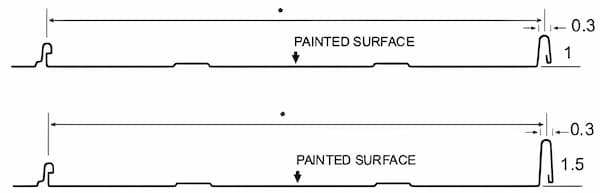
The NS Nailstrip Panel from Agway Metals is an economical, modern standing-seam option that installs quickly with a continuous nail strip. This design eliminates the need for a mechanical seamer and creates smooth lines with no exposed fasteners. Agway forms the NS Nailstrip from 24-gauge steel in seam heights of 1 inch and 1.5 inches, with widths of 18.5 and 19.5 inches. This system is lightweight and ideal for residential and commercial structures that require a sharp appearance with a simplified installation process. See the Roof Anchor Compatibility Chart for Agway Metals NS Nailstrip Standing Seam Panels.
Fall Protection for Agway NS Nailstrip Panels
- Ridge Pro Steep Assist: The safest and only recommended approach for tie-off points on NS Nailstrip panels.
- Compatibility: The Ridge Pro hooks over the ridge on slopes from 6:12 to 12:12, providing a stable, predictable connection from the ladder to the peak without ever contacting the seam.
Avoid Failing Anchors: The Risks of Using Generic Imports on Agway Metals Roofs
Choosing generic, low-cost standing-seam anchors may seem budget-friendly, but it can introduce significant risks to worker safety and project liability. These unbranded imports frequently lack the verified engineering, high-grade alloys, and rigorous third-party testing required to guarantee structural integrity during a fall. We eliminate this uncertainty by providing a premium, American-made solution in which every anchor is engineered in the USA and verified by ISO 17025-accredited laboratories to meet 5,000-lb load requirements.
Standing Seam Metal Roof Anchor Panel Compatibility Chart For Agway Metals Inc.
| AR Standing Seam 22 Ga | AR Standing Seam 24 Ga. | SL Snaplock 24 Ga. | NS Nailstrip | |
|---|---|---|---|---|
SSRA 1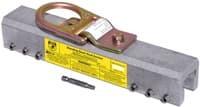 |
YES | NO | NO | NO |
SSRA1 Nylon Tip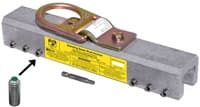 |
YES | YES | YES | NO |
SSRA2 Roof Jack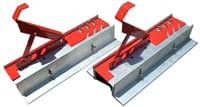 |
YES | YES | YES | NO |
SSRA3 Anchor Plate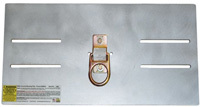 |
YES | YES | YES | NO |
The Ridge Pro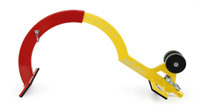 |
YES | YES | YES | YES |
Contact Us for Expert Standing Seam Fall Protection Advice
For expert guidance on standing-seam roof anchors, lifeline kits, and fall-protection systems that protect both your crew and your panels, contact us today at 863-703-4522 or visit www.StandingSeamRoofAnchor.com. Our safety specialists can help you match the right non-penetrating anchor to your specific roof profile and slope. Let's make your next metal roofing project safe, compliant, and built to last. For continued learning, download OSHA's 48-page Fall Protection Manual and our free Anchor Inspection Form once you've selected the ideal anchors for your roof system. Together, we'll help you stay ahead of OSHA standards while preserving your roof's weather-tight seal.
Metal Roof Safety Tips For Standing Seam Roofs
- Equip Workers with High-Quality Safety Gear: Crews step onto Agway standing-seam roofs with far more confidence when their gear fits correctly and moves as it should. Use SRLs like the Malta Dynamics Pygmy Hog or Edgehog for clean retraction.
- Develop OSHA-Compliant Safety Plans: A written safety plan keeps everyone on the same page. AR panels need different safety procedures than Snaplock or nailstrip profiles; the plan must match the exact seam style.
- Promote a Culture of Safety: Five minutes spent talking about wind, trip hazards, and tie-off points on Agway roofs always pays off. Prevention starts with communication.
- Use Anchor Systems Built for Standing-Seam Roofs: Agway's standing-seam systems rely on concealed clips and engineered seams. The SSRA1 clamps to the seam without drilling or interrupting thermal movement on 22 or 24-gauge AR or SL profiles.
- Install Permanent Roof Anchor Systems: For recurring HVAC or inspection work, a permanent horizontal lifeline, such as the Super Anchor 120-foot kit, turns visits into predictable routines and reduces long-term wear.
- Set Up Protective Guardrails Near Hazards: Guardrails provide passive protection around skylights and eaves, keeping crews focused on their tasks rather than their footing.
- Ensure Proper Footwear for Stability: Grippy soles and firm ankle support provide workers with a stable platform on slick metal surfaces.
- Prioritize Ladder Safety Training: Confirm a solid foundation and follow the 4-to-1 setup rule. Starting strong on the ladder reduces risks before anyone even reaches the roof.
- Encourage the Use of Trauma Straps: Trauma straps enable a suspended worker to stand and restore circulation while awaiting rescue. They should be considered standard equipment.
- Consult Experts for Curved Metal Panels: A professional should evaluate curved roof systems in person to determine whether ridge-mounted anchors or engineered solutions are required.
Disclaimer: The views, recommendations, and information presented in this blog are solely those of the author and do not necessarily reflect the opinions or positions of the featured panel manufacturer, its brands, subsidiaries, or parent companies. Customers are strongly encouraged to contact the roof panel manufacturer directly for inquiries regarding fall protection compatibility with their products and to address any potential warranty issues that may arise after installing our products.