Fall Protection Strategies For CBC Steel Buildings by Nucor
Posted by Howie Scarboro - CEO Fall Protection Distributors, LLC on Dec 30th 2025
See the Roof Anchor Compatibility Chart for CBC Steel Buildings Standing Seam Panels.

Who Is CBC Steel Buildings?
CBC Steel Buildings ranks among the most prominent metal building manufacturers in the western U.S., supplying pre-engineered metal building systems for commercial, industrial, agricultural, and architecturally demanding projects.
Founded in 1984, CBC operates a full-scale manufacturing facility in Central California, where it produces custom-engineered building systems that meet strict structural and performance requirements.
CBC built its reputation by solving complex design challenges rather than offering one-size-fits-all buildings. That approach has made the company a preferred partner for projects that require precision engineering, dependable lead times, and consistent quality. Over the decades, CBC has remained focused on manufacturing buildings that perform in demanding environments while meeting evolving code and design expectations.
In 2007, CBC became a subsidiary of Nucor Corporation, the largest steel producer in the United States. This relationship provides CBC with a stable, domestic supply of high-quality steel and supports efficient production schedules. As an MBMA-certified manufacturer, CBC meets rigorous quality standards and incorporates sustainability into its operations by using steel that contains more than 70 percent recycled content. Today, CBC continues to push innovation in the metal building industry while maintaining the manufacturing discipline that contractors and building owners rely on.
Compatible Fall Protection for CBC Standing Seam Roofs
CBC standing seam roof systems require non-penetrating fall protection that protects workers without compromising roof performance.
Standing seam roof systems manufactured by CBC deliver long-term durability, weather resistance, and clean architectural lines. Traditional anchors that rely on drilling or through-panel fasteners can damage roof panels, restrict thermal movement, and introduce hidden water leaks.
Non-penetrating fall protection systems solve that issue by attaching to the seam rather than the roof surface. Seam-mounted anchors, such as the SSRA1 Standing Seam Roof Anchor clamp, securely clamp to compatible steel seams without piercing the panel. When additional functionality is required, SSRA2 Adjustable Roof Jack Adapters mount on top of SSRA1 anchors to support 10-foot walkboards. The SSRA3 Anchor Plates for standing seam roofs install over SSRA1 anchors to provide attachment points for horizontal lifelines.
For projects that require better worker mobility, horizontal lifeline systems offer a practical solution. The SSRA HLL 100-foot Temporary Horizontal Lifeline Kit provides short-term protection for two workers. The Super Anchor 120-foot Permanent Horizontal Lifeline Kit establishes a long-term tie-off system for buildings that will see ongoing rooftop access.
On steeper slopes or panel types where seam-mounted anchors are not appropriate, the Ridge Pro Steep Assist offers a ridge-mounted tie-off option. Hooking over the roof peak without penetrations allows workers to establish a tie-off before stepping from the ladder onto the roof surface.
In the sections that follow, we will review CBC's standing seam roof panels and identify which fall protection system works best for each profile. Matching the fall protection method to the specific panel helps protect workers while preserving the integrity of the roof system.
CFR-IMP Concealed Fastener Roof Insulated Metal Panels (SSRA Compatible)
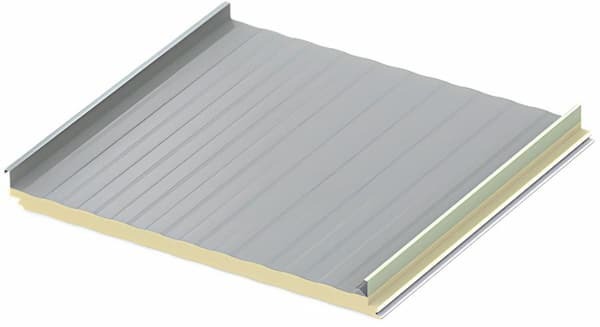
The CBC CFR-IMP insulated roof panel combines thermal efficiency, structural capacity, and concealed attachment in a single roofing system.
CBC specifies the CFR-IMP concealed fastener insulated metal panel for projects that demand energy efficiency alongside long-term roof performance. These panels use a polyisocyanurate foam core to deliver strong thermal resistance, with R-values ranging from R-8 to R-32 depending on panel thickness. The exterior steel face is available in 22-gauge or 24-gauge, and the interior face is available in 24-gauge or 26-gauge, allowing designers to balance durability and cost. The CFR-IMP mechanical panel has a 2-inch seam height. They can be installed on minimum roof slopes as low as ½:12, providing a complete insulated roofing solution for low-slope applications. See the Roof Anchor Compatibility Chart for CBC Steel Buildings CBC CFR-IMP insulated 22 Gauge and 24 Gauge Standing Seam Panels.
CFR-IMP panels meet stringent fire and performance standards, including FM 4880, FM 4471, and UL 263. Load span tables address wind, snow, and live loads, making the system suitable for commercial, industrial, and institutional buildings. Panel thicknesses range from 2 to 6 inches, with a standard 42-inch coverage width and an optional 36-inch width. Custom lengths typically range from 8 to 53 feet, enabling efficient installation with fewer joints.
Durable PVDF (Kynar 500®) and SMP finishes protect the exterior surface and maintain color stability over time. Concealed fasteners preserve the roof's clean appearance, while factory-applied sealant at the side joints reinforces weather resistance.
Fall Protection for CFR-IMP Panels
CFR-IMP panels introduce additional fall protection considerations due to their insulated core and concealed attachment method.
SSRA1 Standing Seam Roof Anchors clamp directly to the seam, creating a non-penetrating tie-off point. This approach protects the exterior face without penetrating the insulated core. When crews need improved access or staging, SSRA2 Adjustable Roof Jack Adapters mount on top of SSRA1 anchors and support 10-foot walkboards, giving workers a level surface for tools and materials during installation or maintenance. The SSRA2 Roof Jacks adjust for various seam heights nd roof pitches.
Projects that require workers to travel longer distances across the roof benefit from horizontal lifeline systems. SSRA3 Anchor Plates install over SSRA1 anchors and provide attachment points for lifelines without compromising the panel surface. CFR-IMP panels work with the SSRA HLL 100-foot Temporary Horizontal Lifeline Kit for construction-phase work and the Super Anchor 120-foot Permanent Horizontal Lifeline Kit when buildings require ongoing rooftop access for service and inspections.
On steeper roof slopes between 6:12 and 12:12, the Ridge Pro Steep Assist offers an alternative tie-off method. By hooking over the roof peak without fasteners, workers can establish a tie-off before stepping onto the roof and remain protected without applying clamp pressure to the panel seams.
SSII Standing Seam Roof Panel (SSRA Compatible)
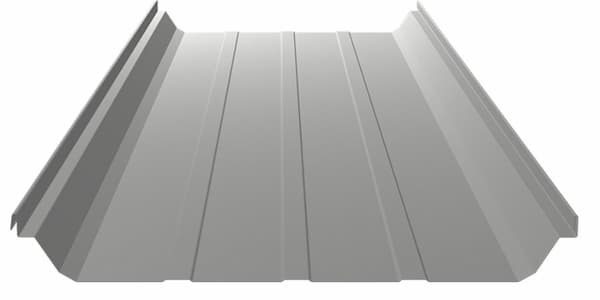
The SSII standing seam roof system delivers proven performance on low-slope commercial and industrial buildings.
The SSII roof panel uses a raised-seam profile with a floating clip design that allows controlled movement as temperatures change. This approach reduces stress on the panel system over time, helping the roof maintain its seal and structural integrity through seasonal expansion and contraction. See the Roof Anchor Compatibility Chart for CBC Steel Buildings SSII 22 Gauge and 24 Gauge Standing Seam Panels.
Testing and approvals play a significant role in the SSII system's reputation. The panel meets ASTM E108 Class A fire requirements for wind uplift. Additional testing includes ASTM E1646 and E2140 for water penetration, along with ASTM E1680 for air leakage. UL 580 Class 90 approval, State of Florida Product Approval, Miami-Dade County approval, and SSTD-97 impact testing round out a robust list of third-party validations.
SSII panels use a 3-inch seam height and are available with Roll Lock, Vise Lock, or Vise Lock 360 seam styles. Hidden clips allow the panels to float while maintaining a tight seal. The system installs on roof slopes as low as ¼:12. Panels are roll-formed from 22- and 24-gauge steel, measure 24 inches wide, and can be produced up to 55 feet long. One notable advantage is installation flexibility. Crews can set panels in place and return later to complete the mechanical seaming process, which helps staging and scheduling on large jobs.
Fall Protection for SSII Panels
SSII panels require non-penetrating fall protection that works with floating clips and low-slope seam styles.
Because the SSII system relies on concealed clips, fall protection must secure workers without interfering with seam function or panel performance. Seam-mounted solutions that clamp without drilling provide the safest approach.
For compatible 22- and 24-gauge steel SSII panels, SSRA1 Standing Seam Roof Anchors attach directly to the seam, providing a dependable tie-off point without penetrating the panel surface. This anchor allows crews to work confidently while preserving the roof's weather-tight seal and movement capability. Twelve non-penetrating stainless-steel set screws grip the seam without crushing it.
When projects call for improved access across the roof, SSRA2 Adjustable Roof Jack Adapters mount atop SSRA1 anchors and support 10-foot walkboards. This setup provides workers with a stable platform for material handling, staging, and longer-duration tasks without requiring penetrations through the panels.
For maximum mobility, SSRA3 Anchor Plates are installed over SSRA1 anchors and serve as connection points for horizontal lifelines. SSII panels work with both the SSRA HLL 100-foot Temporary Horizontal Lifeline Kit for construction-phase work and the Super Anchor 120-foot Permanent Horizontal Lifeline Kit when buildings require routine rooftop access for maintenance, inspections, or equipment service.
On roof slopes between 6:12 and 12:12, the Ridge Pro Steep Assist offers an alternative non-penetrating tie-off method. Hooking over the roof peak allows workers to establish a tie-off before stepping onto the roof and remain protected without clamping to the seam.
SS360 Standing Seam Mechanical Panel (SSRA Compatible)
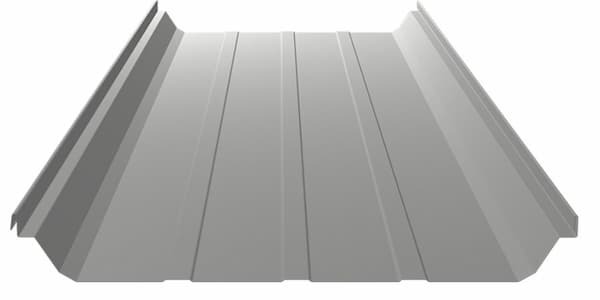
The SS360 standing seam roof system delivers enhanced wind resistance and long-term performance for demanding building environments.
Built with 3-inch seam heights and a 24-inch panel width, this system uses 22- or 24-gauge steel to deliver rigidity where it matters most. The panel clips allow thermal expansion as temperatures change. See the Roof Anchor Compatibility Chart for CBC Steel Buildings SS360 22 Gauge and 24 Gauge Standing Seam Panels.
Testing includes ASTM E108 Class A fire resistance, FM 4471 Class 1 Approval, and UL 580 Class 90 wind uplift certification. Additional evaluations under ASTM E1592, E1646, E1680, and E2140 confirm resistance to wind pressure, air infiltration, and water penetration. State of Florida and Miami-Dade approvals further reinforce the system's suitability for high-wind and coastal environments.
A key distinction of the SS360 system is its enhanced seaming profile. The seam style increases resistance to uplift forces once mechanically locked, making the panel a common choice for large commercial and industrial roofs exposed to sustained wind loads. Panels can be manufactured up to 55 feet long and installed on roof slopes as low as ¼:12, giving designers flexibility without sacrificing performance.
Fall Protection for SS360 Panels
SS360 panels require non-penetrating fall protection that protects the seam while allowing full worker mobility.
Because SS360 panels rely on raised mechanical seams and concealed clips, fall protection must secure workers without interfering with panel movement or seam integrity. Seam-mounted systems that clamp rather than penetrate offer the most reliable approach.
For individual tie-off needs, SSRA1 Standing Seam Roof Anchors clamp directly to compatible SS360 seams and provide a stable attachment point without drilling into the panel. This approach preserves the roof's weather-tight seal while giving workers a dependable connection point during installation or service work.
When crews need improved access across the roof surface, SSRA2 Adjustable Roof Jack Adapters install over SSRA1 anchors and support 10-foot wooden walkboards. This setup creates a stable working platform for material staging, detailing, or extended work periods while keeping all attachments above the seam.
Projects that require continuous movement benefit from SSRA3 Anchor Plates, which mount atop SSRA1 anchors and serve as connection points for horizontal lifelines. SS360 panels are compatible with both the SSRA HLL 100-foot Temporary Horizontal Lifeline Kit for temporary setups and the Super Anchor 120-foot Permanent Horizontal Lifeline Kit for buildings that require routine rooftop access.
On roof slopes ranging from 6:12 to 12:12, the Ridge Pro Steep Assist provides an alternative non-penetrating solution. By hooking securely over the roof peak, workers can establish a tie-off before stepping onto the metal surface and remain protected throughout their work without contacting the seam.
Loc Seam Standing Seam Roof System (SSRA Compatible)
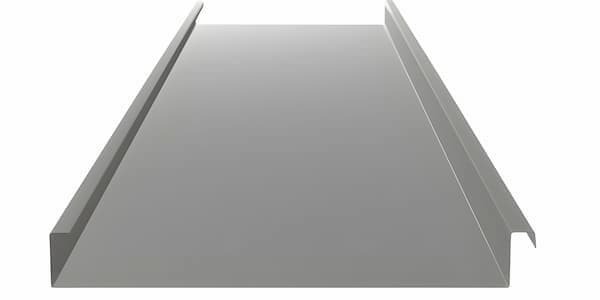
The Loc Seam standing seam roof system combines mechanical seam strength with proven performance on complex commercial roof layouts.
The Loc Seam roof system delivers a refined balance of structural capacity and installation flexibility for commercial and industrial buildings. Its vertical rib profile and flat pan design create clean roof lines while allowing controlled movement as temperatures change. Contractors can choose between a 90-degree single-lock seam or a fully rolled 360-degree mechanical seam, depending on project requirements for weather resistance and uplift performance. See the Roof Anchor Compatibility Chart for CBC Steel Buildings Loc Seam 22 Gauge and 24 Gauge Standing Seam Panels.
Fabricated from 22- or 24-gauge steel with a 50 ksi yield strength, Loc Seam panels bring serious strength to demanding applications. The 2-inch seam height and 16-inch panel width provide a compact profile that performs well around hips, valleys, and transitions where precision matters. Concealed clips secure each panel while allowing the system to expand and contract without stressing fasteners or seams.
Loc Seam panels carry an extensive list of approvals that reflect their real-world performance. Testing includes ASTM E108 Class A fire resistance, ASTM E1592 wind uplift evaluation, FM 4471 Class 1 Approval, and UL 580 Class 90 certification. Additional approvals from the State of Florida and Miami-Dade County confirm suitability for high-wind regions. The system installs on roof slopes as low as ¼:12, giving designers flexibility without sacrificing durability.
Fall Protection for Loc Seam Panels
Loc Seam panels require seam-mounted fall protection that preserves the roof system while supporting safe, efficient movement.
The Loc Seam panels rely on raised mechanical seams and concealed attachment; therefore, fall protection must secure workers without introducing penetrations or restricting panel movement. Seam-mounted systems provide the most reliable solution for this panel style.
SSRA1 Standing Seam Roof Anchors clamp directly to compatible Lok Seam seams, creating a dependable tie-off point without drilling into the roof surface. This approach protects the panel finish and maintains the system's weather-tight performance while supporting individual worker protection. Twelve non-penetrating set screws grip the standing seam without crushing it.
When crews need level working surfaces on steep roofs, SSRA2 Adjustable Roof Jack Adapters install over SSRA1 anchors and support 10-foot walkboards. This configuration gives workers a level platform for inspections, with adjustments for various roof pitches and seam heights.
For projects that require continuous mobility, SSRA3 Anchor Plates mount on top of SSRA1 anchors and serve as connection points for horizontal lifelines. Lok Seam panels work with both the SSRA HLL 100-foot Temporary Horizontal Lifeline Kit for short-term construction work and the Super Anchor 120-foot Permanent Horizontal Lifeline Kit for buildings that require repeated rooftop access.
On roof slopes between 6:12 and 12:12, the Ridge Pro Steep Assist offers a non-penetrating alternative. By hooking securely over the roof peak, workers can establish a tie-off before stepping onto the metal surface and remain protected throughout the job without contacting the seam.
SS360 Standing Seam Translucent Roof Panels
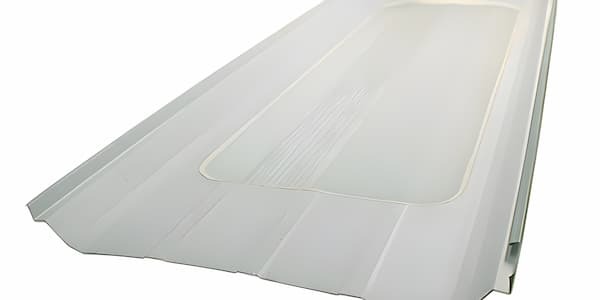
CBC Steel Buildings offers translucent SS360 standing seam roof panels to bring natural light into commercial and industrial spaces while reducing daytime lighting requirements.
These fiberglass reinforced panels share the familiar SS360 profile, measuring 24 inches wide with 3-inch-tall seams, allowing them to integrate visually with adjacent metal roof panels. The difference lies in the material itself. Translucent panels do not carry the same structural characteristics as steel, even when they match the same panel style. See the Roof Anchor Compatibility Chart for CBC Steel Buildings SS360 Standing Seam Translucent Standing Seam Panels.
Fall Protection for Translucent Roof Panels
The Ridge Pro Steep Assist Anchor provides a reliable, non-penetrating fall protection solution for CBC SS360 translucent roof panels, where traditional seam-mounted anchors are not an option.
SS360 translucent panels use light-transmitting materials rather than structural steel. While the seam shape matches the metal SS360 profile, the panel substrate does not support clamping forces from seam-mounted devices like the SSRA1, SSRA2, or SSRA3. Applying those systems to translucent panels risks surface damage, loss of panel integrity, and potential safety failures.
For steep-slope applications, the Ridge Pro Steep Assist delivers a safer approach. Workers install it from the ladder using a 16-foot extension pole, securing the unit over the roof peak before stepping onto the surface. This method establishes a tie-off point early, reducing exposure during roof access and eliminating the need to load the translucent panels.
Designed for roof pitches between 6:12 and 12:12, the Ridge Pro Steep Assist keeps workers protected while preserving the clarity, structure, and performance of SS360 translucent roof systems. It works especially well for inspections, service work, and limited maintenance where protecting the panel material matters just as much as protecting the crew.
Standing Seam Metal Roof Anchor Panel Compatibility Chart For 22 Ga. CBC Steel Buildings
| CFR-IMP (22 Ga.) | SSII (22 Ga.) | SS360 (22 Ga.) | Loc Seam (22 Ga.) | |
|---|---|---|---|---|
SSRA 1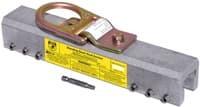 |
YES | YES | YES | YES |
SSRA1 Nylon Tip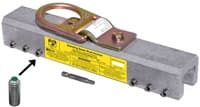 |
YES | YES | YES | YES |
SSRA2 Roof Jack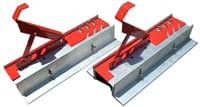 |
YES | YES | YES | YES |
SSRA3 Anchor Plate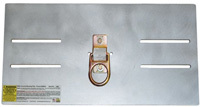 |
YES | YES | YES | YES |
The Ridge Pro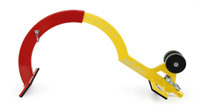 |
YES | YES | YES | YES |
Standing Seam Metal Roof Anchor Panel Compatibility Chart For CBC Steel Buildings Cont.
| CFR-IMP (24 Ga.) | SSII (24 Ga.) | SS360 (24 Ga.) | Loc Seam (24 Ga.) | SS360 Translucent | |
|---|---|---|---|---|---|
| SSRA 1 |
NO | NO | NO | NO | NO |
| SSRA1 Nylon Tip |
YES | YES | YES | YES | NO |
| SSRA2 Roof Jack |
YES | YES | YES | YES | NO |
| SSRA3 Anchor Plate |
YES | YES | YES | YES | NO |
| The Ridge Pro |
YES | YES | YES | YES | YES |
Contact Us for Expert Standing Seam Fall Protection Advice
For expert guidance on standing seam roof anchors, lifeline kits, and fall protection systems that protect both your crew and your panels, contact us today at 863-703-4522 or visit www.StandingSeamRoofAnchor.com. Our safety specialists can help you match the right non-penetrating anchor to your specific roof profile and slope. Let's make your next metal roofing project safe, compliant, and built to last. For continued learning, download OSHA's 48-page Fall Protection Manual and our free Anchor Inspection Form once you've selected the ideal anchors for your roof system. Together, we'll help you stay ahead of OSHA standards while preserving your roof's weather-tight seal.
Safety Tips For Standing Seam Roofs
Use Specialized Anchor Systems for Standing Seam Roofs
Fall protection systems that clamp to the seam without penetrating the panel protect workers while preserving thermal expansion and panel performance. Choosing anchors built for standing seam roofs helps avoid crushed seams, compromised roof systems, and problems that may not surface until years later, such as hidden water leaks and oil canning.
Prioritize Ladder Safety Training
Uneven ground, old er ladders, or an unsecured ladder top can turn roof access into one of the most dangerous moments of the day. Reviewing the 4-to-1 ladder angle, footing, tie-off, and three points of contact reduces risk during the transition from ground to roof, where many preventable incidents occur.
Equip Workers with High-Quality Safety Gear
Harnesses that fit correctly and SRLs that deploy and retract smoothly allow workers to move efficiently across metal roof surfaces. Poorly fitted gear creates discomfort and distraction, which increases risk on slick metal panels. OSHA reinforced in 2025 that employers must provide appropriately sized equipment for each worker, making gear fit a safety requirement.
Develop OSHA-Compliant Safety Plans
CBC projects often involve large roof areas, varying elevations, and multiple access points. A written safety plan outlines anchor and lifeline locations, establishes how crews move across the roof, and assigns responsibility in the event of a rescue. As weather changes or work progresses, updating the plan keeps everyone aligned and prevents confusion when timing matters most.
Ensure Proper Footwear for Stability
Metal roof surfaces can change quickly with morning dew, wind-blown dust, or temperature swings. Boots with aggressive tread, firm ankle support, and stable soles help workers maintain balance while carrying tools or transitioning between tie-off points. Footwear plays a critical role in slip prevention for all workers on metal roofs.
Install Permanent Roof Anchor Systems
Many CBC buildings require ongoing roof access for HVAC service, inspections, or future modifications. Permanent horizontal lifeline systems provide consistent tie-off locations every time crews return. These systems reduce setup time, limit repeated handling of temporary equipment, and support safer long-term maintenance practices across the life of the building.
Set Up Protective Guardrail Barriers for Work Zones
Guardrails create passive protection that works without constant worker input. When installed around skylights, roof edges, or equipment zones, they establish clear boundaries that crews respect naturally. Guardrails help workers avoid high-risk areas and focus on their tasks rather than fall hazards.
Promote a Culture of Safety
The most reliable safety programs start with communication. Brief discussions about roof layout, wind conditions, access routes, and tie-off plans help crews anticipate hazards before work begins. When workers feel comfortable speaking up, crews address minor concerns early, preventing them from escalating into serious incidents.
Encourage the Use of Trauma Straps
Once a PFAS (Personal Fall Arrest System) successfully prevents a fall, suspension trauma becomes the next risk. Trauma straps allow a suspended worker to shift weight, reduce leg pressure, and maintain circulation while rescue procedures are underway. Lightweight and easy to carry, they provide critical protection when response time matters.
Consult Experts for Curved Metal Panels
Curved standing seam roofs introduce attachment challenges that standard anchorage methods may not address. A fall protection professional familiar with curved metal systems can evaluate the roof system and provide critical information regarding compatible fall protection equipment. That assessment protects workers, preserves the roof system, and prevents costly mistakes tied to improper anchor selection.
Disclaimer
The views, recommendations, and information presented in this blog are solely those of the author and do not necessarily reflect the opinions or positions of the featured panel manufacturer, its brands, subsidiaries, or parent companies. Customers are strongly encouraged to contact the roof panel manufacturer directly for inquiries regarding fall protection compatibility with their products and to address any potential warranty issues that may arise after installing our products.