
Fall Protection Strategies For Extreme Metal Fabricators Roof Systems
Posted by Howie Scarboro - CEO Fall Protection Distributors, LLC on Mar 23rd 2026
See the Roof Anchor Compatibility Chart for Extreme Metal Fabricators (EMF) Standing Seam Panels.

Who Is Extreme Metal Fabricators?
Extreme Metal Fabricators, often called EMF, entered the metal roofing industry in 2013 and wasted no time earning a reputation for precision and performance. Based in Palm City, Florida, EMF focuses on manufacturing high-quality metal roofing systems that withstand some of the country's harshest weather conditions. Coastal exposure, high winds, and heavy rain shape how their panels are designed, tested, and produced.
EMF's management, estimating, production, and sales teams add another 200-plus years of hands-on experience in contracting and roofing. That background shows up in practical panel designs, accurate lead times, and guidance that reflects how roofs actually get installed in the field. EMF operates as a privately owned manufacturer serving contractors throughout Florida, southern Georgia, Puerto Rico, the Caribbean, the Bahamas, and surrounding regions. Every panel undergoes testing for wind uplift, water penetration, and structural integrity, because coastal performance is not optional. The company offers more than 70 metal roofing options, including sleek standing seam profiles and striated designs. Material options include Maxalume and Revere Copper.
What Is the Most Compatible Fall Protection for EMF Standing Seam Roofs?
Non-penetrating, seam-mounted fall protection systems protect most EMF standing seam roofs while keeping crews OSHA-compliant. Extreme Metal Fabricators' standing-seam roofs utilize concealed fasteners and structural seam designs to achieve weather resistance. That design works exceptionally well in coastal environments; however, it also eliminates the option of traditional fall protection anchors that require drilling. Once a panel gets punctured, leaks, corrosion, and warranty issues often follow.
Seam-mounted fall protection systems solve that problem by clamping directly to the standing seam without damaging the panel surface. For steel 22-gauge and 24-gauge standing seam profiles that accept seam-mounted anchorage, the following products provide a complete safety solution:
- SSRA1 Standing Seam Roof Anchor: A universal non-penetrating anchor providing a 5,000-pound certified tie-off point.
- SSRA2 Adjustable Roof Jack Adapters: Brackets that support walk boards to provide a level working surface on sloped metal.
- SSRA3 Anchor Plate: A heavy-duty aluminum plate that spans two SSRA1 anchors to create an attachment point for horizontal lifelines.
- SSRA HLL 100-foot Temporary Horizontal Lifeline Kit: A portable, multi-worker lifeline system for up to two workers.
- Super Anchor 120-foot Permanent Horizontal Lifeline Kit: A galvanized steel cable system for facilities requiring frequent maintenance access.
- Ridge Pro Steep Assist Anchor: Peak-mounted anchorage for vertical lifelines on pitches from 6:12 to 12:12.
Proper Attachment: Set-Screws and Torque Requirements
- Cupped-Tip Stainless Steel Set-Screws: Use these screws exclusively on 22-gauge steel panels. Torque these screws to 90 inch-pounds.
- Nylon-Tipped Set-Screws: Apply these tips to 22-gauge or 24-gauge steel panels to achieve certified holding power without marking the finish. Torque these screws to 180-200 inch-pounds.
- Maintenance: Treat nylon tips as consumables. Replace these tips every 3 to 5 uses to maintain maximum grip strength.
CRITICAL WARNING: NO IMPACT GUNS
Warning: Always use a calibrated torque wrench for final installation. Never use an impact gun, as it will crush the standing-seam rib, deform the panel, and compromise worker safety. This error damages the anchor hardware and voids the manufacturer's warranty.
EMF PeakMax 1.5-Inch Mechanical Panel (SSRA Compatible 22/24 gauge Steel)
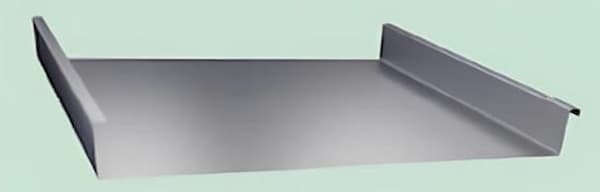
The PeakMax panel is a 1.5-inch mechanically seamed standing-seam panel that balances architectural detail with long-term performance. Available in 12-inch, 16-inch, and 20-inch widths, PeakMax creates crisp visual lines. The system supports both 90-degree and 180-degree mechanical seaming. With a minimum slope of 2:12, PeakMax is ideal for projects that require high weather resistance. Material options include 22, 24, and 26-gauge steel, aluminum, and copper. It also accommodates curved profiles. See the Roof Anchor Compatibility Chart for Extreme Metal Fabricators (EMF) 22 Gauge and 24 Gauge PeakMax 1.5-Inch Mechanical Standing Seam Panels.
Fall Protection for PeakMax Panels
- SSRA1 Standing Seam Roof Anchor: Provides a direct tie-off point on 22-gauge or 24-gauge steel by gripping the seam without drilling.
- SSRA2 Adjustable Roof Jack Adapters: Mount atop SSRA1 anchors to support 2x10 walkboards.
- SSRA3 Anchor Plate: Installed over SSRA1 anchors to allow non-penetrating temporary horizontal lifelines.
- SSRA HLL 100-foot Temporary Horizontal Lifeline Kit: Protects two workers without panel penetrations.
- Super Anchor 120-foot Permanent Horizontal Lifeline Kit: Permanent system including galvanized steel cable and 5-inch riser posts.
- Ridge Pro Steep Assist: Preferred for 26-gauge steel, aluminum, or copper PeakMax roofs with 6:12 to 12:12 pitches.
Critical Warning: Standard anchors are not compatible with curved PeakMax roofs. These require a job-specific safety plan developed by a professional.
EMF PlusMax 1.5-Inch SnapLock Panel (SSRA Compatible 22/24 gauge Steel)
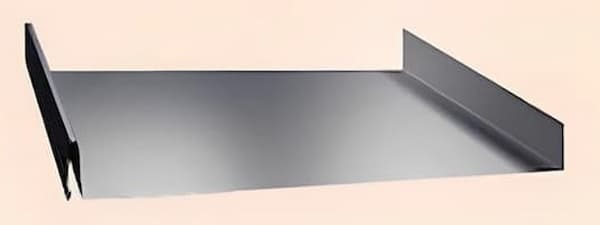
The PlusMax 1.5 SnapLock panel blends a clean standing seam profile with a snaplock seam style. This system eliminates the need for field seaming. Concealed fasteners secure the panels while allowing controlled thermal movement. PlusMax panels are installed at a minimum slope of 2:12 and are available in 22, 24, and 26-gauge steel and aluminum. Each panel measures 15.5 inches wide with more than 40 designer color options. See the Roof Anchor Compatibility Chart for Extreme Metal Fabricators (EMF) 22 Gauge and 24 Gauge PlusMax 1.5-Inch SnapLock Standing Seam Panels.
Fall Protection for PlusMax Panels
- SSRA1 Standing Seam Roof Anchor: Attaches directly to the 22-gauge or 24-gauge steel seam as the foundation for fall protection.
- SSRA2 Adjustable Roof Jack Adapters: Mount on top of SSRA1 anchors and support 10-foot adjustable walkboards.
- SSRA3 Anchor Plate: Provides attachment points for horizontal lifelines.
- SSRA HLL 100-foot Temporary Horizontal Lifeline Kit: For short-term construction use on compatible steel gauges.
- Super Anchor 120-foot Permanent Horizontal Lifeline Kit: For ongoing roof access on compatible steel gauges.
- Ridge Pro Steep Assist: Provides a non-penetrating tie-off solution for 26-gauge steel or aluminum PlusMax panels on slopes between 6:12 and 12:12.
EMF QuikMax 1.5-Inch SnapLock Panel (SSRA Compatible 22/24 gauge Steel)
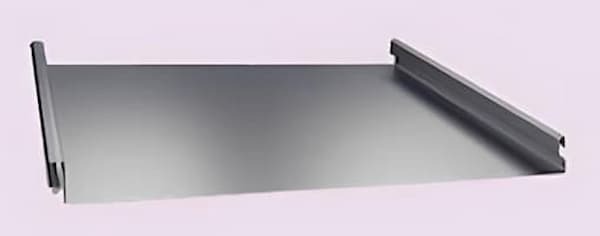
QuikMax 1.5 SnapLock panels feature a 7/16-inch seam thickness, giving the roof a strong architectural presence and enhancing its resistance to wind uplift. QuikMax panels install at a minimum slope of 2:12 and are available in 22-, 24-, and 26-gauge steel, as well as 0.032- and 0.040-inch aluminum. Panel widths include 15-inch and 19-inch options. See the Roof Anchor Compatibility Chart for Extreme Metal Fabricators (EMF) 22 Gauge and 24 Gauge QuikMax 1.5-Inch SnapLock Standing Seam Panels.
Fall Protection for QuikMax Panels
- SSRA1 Standing Seam Roof Anchor: Clamps directly to the 22-gauge or 24-gauge steel seam without puncturing the panel.
- SSRA2 Adjustable Roof Jack Adapters: Mount atop SSRA1 anchors to provide a stable working surface for tools and materials.
- SSRA3 Anchor Plate: Installed over SSRA1 anchors to serve as attachment points for horizontal lifelines.
- SSRA HLL 100-foot Temporary Horizontal Lifeline Kit: Portable lifeline protection for two workers.
- Super Anchor 120-foot Permanent Horizontal Lifeline Kit: Permanent cable system for recurring maintenance.
- Ridge Pro Steep Assist: Correct solution for 26-gauge steel or aluminum QuikMax panels on roof slopes between 6:12 and 12:12.
EMF SupremeMax 2-Inch Mechanical Panel (SSRA Compatible 22/24 gauge Steel)
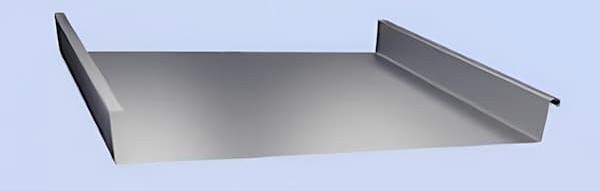
The SupremeMax mechanical panel delivers a structural 2-inch seam. It targets projects where structural capacity and long-term durability drive the specification. EMF produces SupremeMax in 22-, 24-, and 26-gauge steel, as well as 0.032- and 0.040-inch aluminum. Panel widths are available in 14-inch and 18-inch sizes. It can be field-seamed at 90 or 180 degrees. See the Roof Anchor Compatibility Chart for Extreme Metal Fabricators (EMF) 22 Gauge and 24 Gauge SupremeMax 2-Inch Mechanical Standing Seam Panels.
Fall Protection for SupremeMax Panels
- SSRA1 Standing Seam Roof Anchor: Grips the 22-gauge or 24-gauge steel seam and serves as the primary tie-off point.
- SSRA2 Adjustable Roof Jack Adapters: Mount on top of SSRA1 anchors to support 2x10 walkboards without penetrations.
- SSRA3 Anchor Plate: Installed over SSRA1 anchors to provide attachment points for horizontal lifelines.
- SSRA HLL 100-foot Temporary Horizontal Lifeline Kit: Allows crews to stay continuously tied off while moving laterally along the roof.
- Super Anchor 120-foot Permanent Horizontal Lifeline Kit: Long-term safety solution for commercial and industrial EMF roofs.
- Ridge Pro Steep Assist: Provides a non-penetrating tie-off option for 26-gauge steel or aluminum SupremeMax panels on slopes ranging from 6:12 to 12:12.
EMF UltraMax 1.75-Inch Snap-Lock Panel (SSRA Compatible 22/24 gauge Steel)
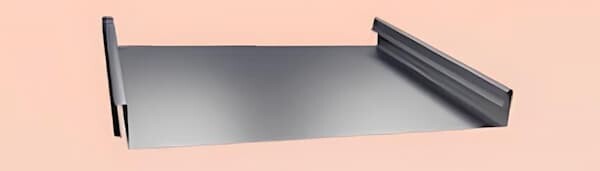
UltraMax 1.75 Snap-Lock panel provides a bold architectural look without mechanical seaming. UltraMax panels are available in 14-inch and 18-inch widths, in 22-, 24-, and 26-gauge steel, as well as in 0.032- and 0.040-inch aluminum. Custom panel lengths are available to reduce end laps. See the Roof Anchor Compatibility Chart for Extreme Metal Fabricators (EMF) 22 Gauge and 24 Gauge UltraMax 1.75-Inch Snap-Lock Standing Seam Panels.
Fall Protection for UltraMax Panels
- SSRA1 Standing Seam Roof Anchor: Clamps directly to the 22-gauge or 24-gauge steel seam without drilling.
- SSRA2 Adjustable Roof Jack Adapters: Mount on top of SSRA1 anchors to support 10-foot wooden walkboards.
- SSRA3 Anchor Plate: Installed over SSRA1 anchors for multi-worker lifeline mobility.
- SSRA HLL 100-foot Temporary Horizontal Lifeline Kit: Portable protection for rotating crews.
- Super Anchor 120-foot Permanent Horizontal Lifeline Kit: Fixed cable system for frequent roof access.
- Ridge Pro Steep Assist: Non-penetrating solution for 26-gauge steel or aluminum UltraMax panels on roof slopes ranging from 6:12 to 12:12.
EMF TopMax 1.5-Inch Nailstrip Panel (Ridge Pro Only)
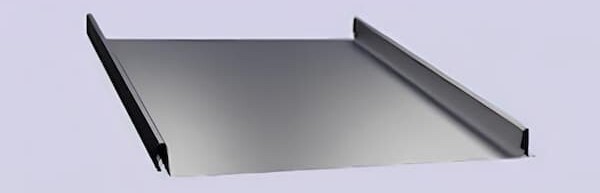
TopMax 1.5 Nailstrip panels eliminate the need for clips by fastening directly through an integrated nailstrip. Available in 15-inch and 19-inch widths, TopMax works on roofs with a minimum pitch of 2:12. It is available in 24 and 26-gauge steel and 0.032 and 0.040-inch aluminum. See the Roof Anchor Compatibility Chart for Extreme Metal Fabricators (EMF) TopMax 1.5-Inch Nailstrip Standing Seam Panels.
Fall Protection for TopMax Panels
- Ridge Pro Steep Assist: Nailstrip panels are generally not compatible with seam-mounted anchors. This ridge-mounted system is the best solution for roofs with 6:12 to 12:12 pitch.
EMF SnapMax 1-Inch Nailstrip Panel (Ridge Pro Only)
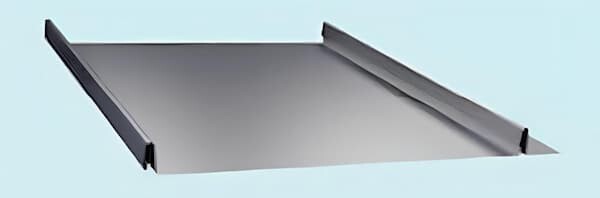
SnapMax 1-Inch nailstrip panels deliver a streamlined standing-seam appearance with an integrated nailstrip attachment. With a 16-inch panel width, the snap-lock seam eliminates the need for mechanical seaming. Available in 24 and 26-gauge steel and 0.032 and 0.040-inch aluminum. See the Roof Anchor Compatibility Chart for Extreme Metal Fabricators (EMF) SnapMax 1-Inch Nailstrip Standing Seam Panels.
Fall Protection for SnapMax Panels
EMF CopperMax 1.5-Inch Mechanical Panel (Ridge Pro Compatible)
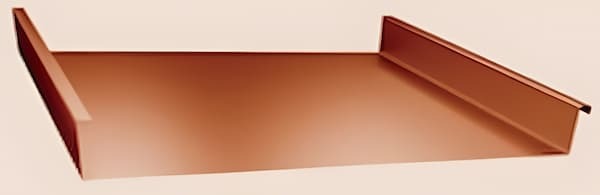
CopperMax uses 99 percent pure copper and features a 1.5-inch mechanical standing seam. These 16-inch-wide panels naturally develop a rich patina over time. The panel supports both 90-degree and 180-degree field seaming. See the Roof Anchor Compatibility Chart for Extreme Metal Fabricators (EMF) CopperMax 1.5-Inch Mechanical Standing Seam Panels.
Fall Protection for CopperMax Panels
Warning: Copper is a soft metal; seam-mounted anchors are not compatible, as they can damage the material.
EMF CurveMax 1.5-Inch Mechanical Panel (Inspection Required)
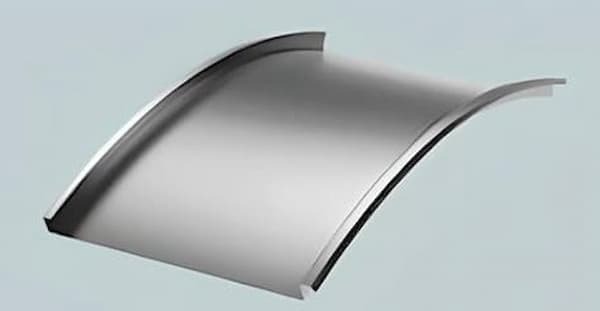
CurveMax is engineered specifically for radius and curved roof designs. It uses heavy-gauge materials and concealed fasteners to maintain durability. EMF produces CurveMax panels in 12-inch, 14-inch, and 16-inch widths. See the Roof Anchor Compatibility Chart for Extreme Metal Fabricators (EMF) CurveMax 1.5-Inch Mechanical Standing Seam Panels.
Fall Protection for CurveMax Panels
Critical Warning: Curved surfaces do not provide the consistent seam shape needed for seam-mounted anchors. SSRA1 anchors are not compatible. A site-specific inspection by a fall protection professional is required to develop a safety plan.
The Risk of Unvalidated "Alternative" Safety Hardware
When outfitting a high-performance roof system like those from EMF, it is vital to avoid the temptation of unbranded or generic safety hardware. Many low-cost imported anchors mimic the appearance of professional equipment but lack the testing documentation to back up their performance. The American-made SSRA system undergoes exhaustive destructive testing at independent ISO 17025-accredited laboratories. Choosing professional-grade hardware replaces the guesswork of "bargain" options with the data-driven reliability your crew deserves.
You can review the full evidence of our performance by visiting our independent laboratory test reports.
Standing Seam Roof Anchor Panel Compatibility For 22 Gauge Extreme Metal Fabricators
| PeakMax (22 Ga.) | PlusMax (22 Ga.) | QuikMax (22 Ga.) | SupremeMax (22 Ga.) | UltraMax (22 Ga.) | TopMax NailStrip | SnapMax NailStrip | |
|---|---|---|---|---|---|---|---|
SSRA 1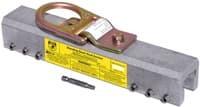 |
YES | YES | YES | YES | YES | NO | NO |
SSRA1 Nylon Tip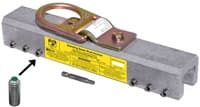 |
YES | YES | YES | YES | YES | NO | NO |
SSRA2 Roof Jack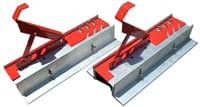 |
YES | YES | YES | YES | YES | NO | NO |
SSRA3 Anchor Plate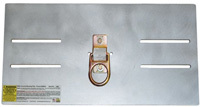 |
YES | YES | YES | YES | YES | NO | NO |
The Ridge Pro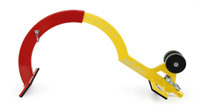 |
YES | YES | YES | YES | YES | YES | YES |
Standing Seam Roof Anchor Panel Compatibility For 24 Gauge Extreme Metal Fabricators
| PeakMax (24 Ga.) | PlusMax (24 Ga.) | QuikMax (24 Ga.) | SupremeMax (24 Ga.) | UltraMax (24 Ga.) | CopperMax Copper | CurveMax Curved | |
|---|---|---|---|---|---|---|---|
| SSRA 1 |
NO | NO | NO | NO | NO | NO | NO |
| SSRA1 Nylon Tip |
YES | YES | YES | YES | YES | NO | NO |
| SSRA2 Roof Jack |
YES | YES | YES | YES | YES | NO | NO |
| SSRA3 Anchor Plate |
YES | YES | YES | YES | YES | NO | NO |
| The Ridge Pro |
YES | YES | YES | YES | YES | YES | NO |
Contact Us for Expert Standing Seam Fall Protection Advice
For expert guidance on standing-seam roof anchors, lifeline kits, and fall-protection systems that protect both your crew and your panels, contact us today at 863-703-4522 or visit www.StandingSeamRoofAnchor.com. Our safety specialists can help you match the right non-penetrating anchor to your specific roof profile and slope. Let's make your next metal roofing project safe, compliant, and built to last. For continued learning, download OSHA's 48-page Fall Protection Manual and our free Anchor Inspection Form once you've selected the ideal anchors for your roof system. Together, we'll help you stay ahead of OSHA standards while preserving your roof's weather-tight seal.
Safety Tips For Standing Seam Roofs
- Use Specialized Anchor Systems for Standing Seam Roofs: Seam-mounted anchors, such as the SSRA1, work with compatible steel panels without crushing the seams. When seam attachment is not appropriate, ridge-mounted systems like Ridge Pro provide a secure tie-off.
- Promote a Culture of Safety: Short conversations about weather, roof access, and planned work areas help crews spot risks early. When workers feel comfortable asking questions, issues get corrected before they turn into incidents.
- Prioritize Ladder Safety Training: Taking time to get ladder access right—confirming stable footing and the correct four-to-one angle—reflects the level of discipline carried through the rest of the project.
- Equip Workers with High-Quality Safety Gear: Properly adjusted harnesses and SRLs, such as the Malta Dynamics Pygmy Hog or Edgehog, help keep attention on footing and roof transitions rather than on gear failure.
- Develop OSHA-Compliant Safety Plans: A written plan removes uncertainty by establishing where anchors and lifelines will be installed and detailing rescue procedures.
- Ensure Proper Footwear for Stability: Footwear with aggressive tread, firm ankle support, and non-slip soles helps workers maintain balance while moving between tie-off points.
- Install Permanent Roof Anchor Systems: For buildings with repeated access, the Super Anchor 120-foot permanent lifeline systems reduce setup time and create safer long-term maintenance routines.
- Set Up Protective Guardrail Barriers for Work Zones: Guardrails provide passive protection, allowing workers to focus on the task rather than constantly monitoring fall hazards.
- Encourage the Use of Trauma Straps: Trauma straps allow a suspended worker to maintain circulation while fellow workers perform rescue procedures.
- Consult Experts for Curved Metal Panels: Before work begins on curved roofs, a trained professional should evaluate the panel design and anchorage options to avoid costly mistakes.
Disclaimer: The views, recommendations, and information presented in this blog are solely those of the author and do not necessarily reflect the opinions or positions of the featured panel manufacturer, its brands, subsidiaries, or parent companies. Customers are strongly encouraged to contact the roof panel manufacturer directly for inquiries regarding fall protection compatibility with their products and to address any potential warranty issues that may arise after installing our products.