
Fall Protection Strategies For New Tech Standing Seam Roofs
Posted by Howie Scarboro - CEO Fall Protection Distributors, LLC on Mar 19th 2026
See Roof Anchor Compatibility Chart for New Tech Machinery (NTM) Standing Seam Panels.

Who Is New Tech Machinery?
Since 1991, New Tech Machinery has built the portable rollforming equipment that contractors, fabricators, and metal roofing manufacturers use every day to shape the panels that end up on homes, schools, warehouses, and architectural landmarks across the country. Contractors in more than 40 countries rely on New Tech Machinery machines because they are consistent, field-serviceable, and engineered to run long hours without the headaches associated with older fixed-line equipment.
New Tech Machinery's early SSP machine introduced many roofers to portable rollforming, but the line has evolved dramatically. Today, their flagship SSQ II MultiPro produces an impressive range of profiles that cover residential, light commercial, and structural applications. The recent addition of a board-and-batten profile shows how New Tech Machinery continues to push portable rollforming forward while maintaining backwards compatibility with earlier models. Alongside the SSQ II, the SSR MultiPro Junior and SSH MultiPro machines round out the lineup, allowing panel manufacturers to select equipment that fits their specific needs and project scales.
New Tech Machinery machines rollform everything from steel to aluminum to copper. Because the machines travel to the jobsite, they eliminate freight delays, panel damage during shipping, and long lead times. For many contractors, New Tech Machinery equipment is the backbone of their business, enabling them to produce precise standing-seam profiles when and where needed.
What are the most compatible fall protection anchors for New Tech's Standing Seam Panels?
The most compatible fall protection for panels produced on New Tech Machinery lines keeps workers tied off while protecting the seam-mounted roof systems that those machines create. New Tech Machinery sells the rollformers, not the finished roofs, which means every shop can run different coil thicknesses, materials, and dies. Two panels may share the same profile name and still come off the machine with slightly different seam styles. That variation is exactly why non-penetrating anchors and careful test-fitting matter so much on New Tech Machinery-based projects.
For traditional 22-gauge and 24-gauge steel standing seam panels, the SSRA1 Standing Seam Roof Anchor is usually the first safety tool out of the truck. It clamps directly to the seam with stainless steel set screws, providing a solid, seam-mounted tie-off point without a single hole through the panel. Once that first anchor is in place, safety managers can build out the rest of the system as the project demands:
- SSRA1 Standing Seam Roof Anchor: A universal non-penetrating anchor that attaches to the seam using 12 stainless-steel set screws, providing a 5,000-pound certified tie-off point without drilling.
- SSRA2 Adjustable Roof Jack Adapters: Adapters that mount to SSRA1 anchors to support a 10-foot walk board, allowing workers to stand on a level surface on steep-slope roofs.
- SSRA3 Anchor Plate: A heavy-duty aluminum plate that spans two SSRA1 anchors to create a certified attachment point for horizontal lifeline systems.
- SSRA HLL 100-foot Temporary Horizontal Lifeline Kit: A complete, portable lifeline system for up to two workers that allows safe lateral movement across wide roof sections without panel penetrations.
- Super Anchor 120-foot Permanent Horizontal Lifeline Kit: A long-term safety solution featuring galvanized steel cables and non-penetrating riser posts for facilities requiring frequent maintenance access.
- Ridge Pro Steep Assist Anchor: A ridge-mounted anchorage device that hooks over the peak to provide safe vertical lifeline access on pitches from 6:12 to 12:12.
Proper Attachment: Set-Screws and Torque Requirements
- Cupped-Tip Stainless Steel Set-Screws: Use these screws exclusively on 22-gauge steel panels. Torque these screws to 90 inch-pounds.
- Nylon-Tipped Set-Screws: Apply these tips to 22-gauge or 24-gauge steel panels to achieve certified holding power without marking the finish. Torque these screws to 180-200 inch-pounds.
- Maintenance: Treat nylon tips as consumables. Replace these tips every 3 to 5 uses to maintain maximum grip strength.
CRITICAL WARNING: NO IMPACT GUNS
Never use an impact gun to install set-screws. Over-torquing with an impact driver crushes the standing-seam rib, causing permanent panel deformation and compromising the anchor's certified holding power. This error damages the anchor hardware, compromises worker safety, and voids New Tech Machinery's manufacturer's warranty. Always use a calibrated torque wrench for final installation.
New Tech TRQ250 Mechanical Trapezoidal Panel (SSRA Compatible 22/24 gauge Steel)
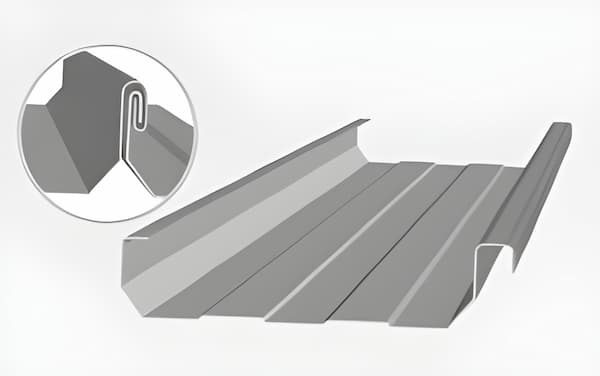
The TRQ250 from New Tech Machinery is a tall, industrial-strength profile designed for commercial projects that require long spans and structural performance. This panel stands 2.5 inches at the seam and measures 14 to 24 inches wide, giving fabricators a wide range of layout options for large roofs. The seam uses more material than the typical standing-seam profile, giving the panel a heavier, commercial look and the rigidity needed for large warehouses, plants, and storage facilities. See Roof Anchor Compatibility Chart for New Tech Machinery (NTM) 22 Gauge and 24 Gauge TRQ250 Mechanical Trapezoidal Standing Seam Panels.
Shops can run the TRQ250 in steel from 22 to 26 gauge or aluminum from .024 to .040, painted or bare, depending on the project. The SSQ II machine forms this profile using dedicated tooling and a bead rib assembly, so only fully equipped shops can produce it. Because of the profile size and the mechanical-lock detail, the TRQ250 doesn't often appear on homes or small buildings. It's a commercial panel through and through, built for low-slope roofs that need long-term strength more than decorative appeal.
Fall Protection for TRQ250 Panels
Safe work on TRQ250 roofs starts with matching the anchor system to the exact panel material so the seam stays weather-tight and crews stay tied off. For 22-gauge and 24-gauge steel TRQ250 panels, the full SSRA lineup remains the best match.
- SSRA1 Standing Seam Roof Anchor: Clamps directly to the seam with set screws rather than fasteners through the panel, providing a solid tie-off point.
- SSRA2 Adjustable Roof Jack Adapters: Mount on top of the SSRA1 and carry a 10-foot walkboard to stage tools on steep roofs.
- SSRA3 Anchor Plate: Connects to the same SSRA1 bases and serves as the attachment point for temporary lifeline systems.
- SSRA HLL 100-foot Temporary Horizontal Lifeline Kit: Keeps up to two workers tied off as they move along larger roof areas during installation or maintenance.
- Super Anchor 120-foot Permanent Horizontal Lifeline Kit: Stays in place year-round so maintenance crews can clip in without rebuilding temporary layouts.
- Ridge Pro Steep Assist Anchor: The required solution for aluminum or 26-gauge steel versions on slopes from 6:12 to 12:12.
New Tech SS100 Mechanical Panel (SSRA Compatible 22/24 gauge Steel)
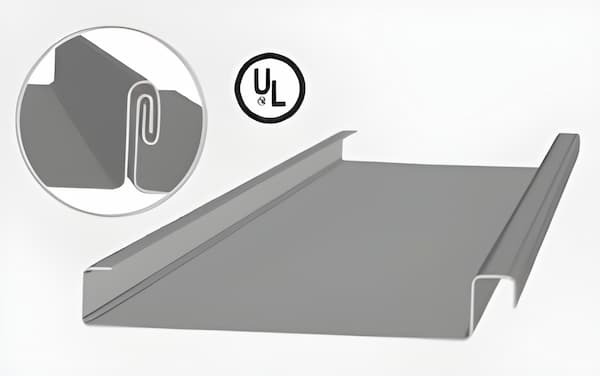
The SS100 profile from New Tech Machinery is a mechanically seamed standing-seam panel designed for a wide range of roofing applications. The seam height is 1 inch, giving the panel a low, streamlined profile while still providing solid structural performance. Panel coverage varies depending on the roll former. The SSQ II machine produces widths of 12 to 24 inches, the SSH machine forms widths of 12 to 21 inches, and the SSR machine produces widths of 12 to 17 inches. This flexibility allows panel manufacturers to match the profile to residential, light commercial, and architectural projects. See Roof Anchor Compatibility Chart for New Tech Machinery (NTM) 22 Gauge and 24 Gauge SS100 Mechanical Standing Seam Panels.
Material options include 22 through 28-gauge steel, painted aluminum, and copper. The mechanically seamed design creates a weather-tight interlock that performs well on 2:12 or shallower slopes, making the SS100 a strong choice for low-slope standing-seam roofs where long-term leak resistance is a priority.
Fall Protection for SS100 Panels
For SS100 panels made from 22-gauge and 24-gauge steel, contractors can use the full suite of SSRA equipment to protect the profile and maintain factory seam engagement.
- SSRA1 Standing Seam Roof Anchor: Attaches directly to the seam, remains non-penetrating, and provides installers with a predictable tie-off point without interrupting the weather-tight joint.
- SSRA2 Adjustable Roof Jack Adapter: Mount on top of the SSRA1 and carries a 10-foot walkboard to help crews stay safe on steep roofs.
- SSRA3 Anchor Plate: Connects to SSRA1 and serves as the attachment point for temporary lifeline systems.
- SSRA HLL 100-foot Temporary Horizontal Lifeline Kit: Provides mobility for up to two workers during installation.
- Super Anchor 120-foot Permanent Horizontal Lifeline Kit: Gives safety managers options for year-round maintenance access.
- Ridge Pro Steep Assist Anchor: The better fit for copper, aluminum, and thinner steel gauges on slopes from 6:12 to 12:12.
New Tech SS150 Mechanical Panel (SSRA Compatible 22/24 gauge Steel)
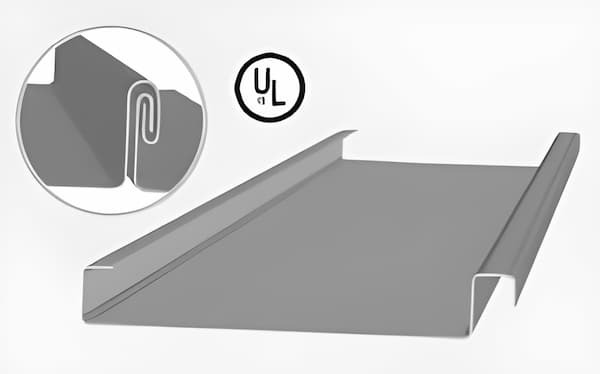
The SS150 profile from New Tech Machinery builds on the low-profile SS100 by increasing the seam height to 1.5 inches, providing the panel with added strength for demanding architectural and commercial work. The mechanically seamed design keeps the roof weather-tight on low slopes, including 2:12 conditions. Panel coverage varies with the roll-forming machine, generally ranging from 12 to 24 inches. Installers can run this profile in 22-gauge through 28-gauge steel, as well as in aluminum or copper. Its watertight seam and consistent forming make it a reliable choice for long runs, low-slope applications, and high-visibility commercial projects. See Roof Anchor Compatibility Chart for New Tech Machinery (NTM) 22 Gauge and 24 Gauge SS150 Mechanical Standing Seam Panels.
Fall Protection for SS150 Panels
The SS150 is compatible with seam-mounted anchors on 22-gauge and 24-gauge steel. For aluminum, copper, or lighter-gauge steel versions, a ridge-mounted approach is the best option.
- SSRA1 Standing Seam Roof Anchor: Creates a non-penetrating tie-off point by clamping to the seam with low-torque set screws.
- SSRA2 Adjustable Roof Jack Adapter: Mount on top of the SSRA1 and supports a 10-foot walkboard.
- SSRA3 Anchor Plate: Connects to SSRA1 and serves as the base for the 100-foot temporary lifeline kit.
- SSRA HLL 100-foot Temporary Horizontal Lifeline Kit: Allows safe lateral movement across wide commercial roof sections.
- Super Anchor 120-foot Permanent Horizontal Lifeline Kit: Stays in place year-round and provides maintenance teams with a ready-to-use lifeline.
- Ridge Pro Steep Assist Anchor: Avoids seam attachment entirely by setting over the ridge for slopes from 6:12 to 12:12.
New Tech SSQ200 Mechanical Panel (SSRA Compatible 22/24 gauge Steel)
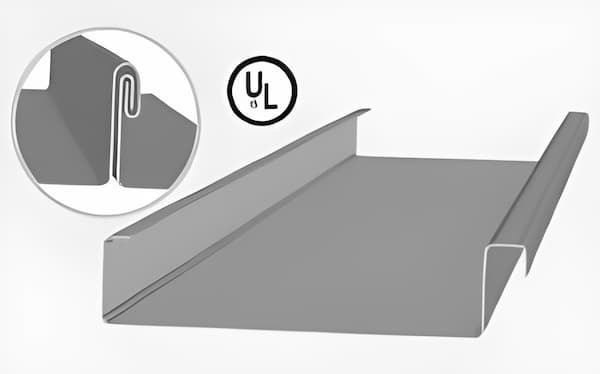
The SSQ200 profile from New Tech Machinery features a 2-inch seam height, providing the panel with the strength needed for structural work. It performs well on commercial projects where long spans, open purlin framing, or low-slope conditions demand a dependable mechanical lock. The SSQ200 profile can be made from 22-gauge through 28-gauge steel, as well as painted aluminum or copper. Coverage widths range from 12 to 24 inches. Once seamed, the interlock creates a weather-tight connection that handles low slopes down to 2:12 and provides a clean architectural appearance. See Roof Anchor Compatibility Chart for New Tech Machinery (NTM) 22 Gauge and 24 Gauge SSQ200 Mechanical Standing Seam Panels.
Fall Protection for SSQ200 Panels
Working safely on SSQ200 panels calls for anchors that grip the seam without altering its shape. Metals such as copper and aluminum require the softer touch of a ridge anchor.
- SSRA1 Standing Seam Roof Anchor: Provides a stable tie-off point on 22-gauge and 24-gauge steel that leaves the roof untouched.
- SSRA2 Adjustable Roof Jack Adapter: Mount on top of the SSRA1 and supports a 10-foot walkboard to reduce fatigue on steep runs.
- SSRA3 Anchor Plate: Pairs with the SSRA1 anchors to create the foundation for temporary or permanent lifeline kits.
- SSRA HLL 100-foot Temporary Horizontal Lifeline Kit: Keeps two workers connected while moving on bigger SSQ200 roof sections.
- Super Anchor 120-foot Permanent Horizontal Lifeline Kit: The preferred permanent solution for long-term facility maintenance tie-off.
- Ridge Pro Steep Assist Anchor: Hooks over the roof peak to avoid seam pressure on lighter substrates from 6:12 to 12:12.
New Tech SS210A Mechanical Panel (SSRA Compatible 22/24 gauge Steel)
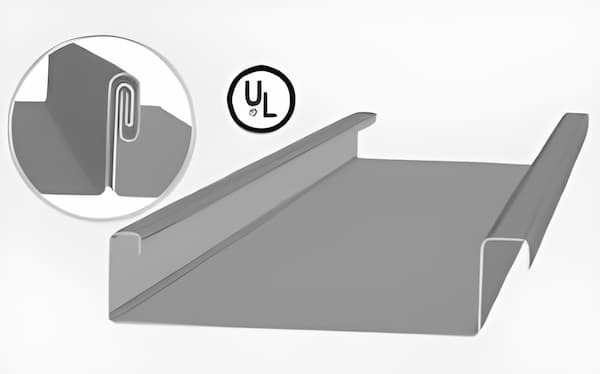
The SS210A panel from New Tech Machinery blends the structural strength of the SSQ200 profile with a modified male leg that includes a small bump-out. This feature increases stiffness and gives the finished seam a slightly different visual line while keeping the same field-proven mechanical performance. The 2-inch seam profile comes in widths from 12 to 24 inches. Material options range from 22-gauge through 28-gauge steel, painted aluminum, and copper. See Roof Anchor Compatibility Chart for New Tech Machinery (NTM) 22 Gauge and 24 Gauge SS210A Mechanical Standing Seam Panels.
Fall Protection for SS210A Panels
Choosing the correct anchoring method preserves the mechanical seam and maintains weather-tight performance. The structural seam provides sufficient rigidity in 22-gauge and 24-gauge steel for use with the SSRA system.
- SSRA1 Standing Seam Roof Anchor: Grips the seam and preserves the weather-tight joint while providing primary anchorage.
- SSRA2 Adjustable Roof Jack Adapter: Mount on top of the SSRA1 and supports a 10-foot walkboard to help installers maintain balance.
- SSRA3 Anchor Plate: Pairs with the lifeline kits, allowing two workers to move together safely.
- SSRA HLL 100-foot Temporary Horizontal Lifeline Kit: Provides mobility along the length of the mechanical runs.
- Super Anchor 120-foot Permanent Horizontal Lifeline Kit: Stays in place to give maintenance crews a predictable, ready-made tie-off path.
- Ridge Pro Steep Assist Anchor: Required for aluminum, copper, or thinner steel to avoid seam compression on 6:12 to 12:12 slopes.
New Tech SS450 Snap-Lock Panel (SSRA Compatible 22/24 gauge Steel)
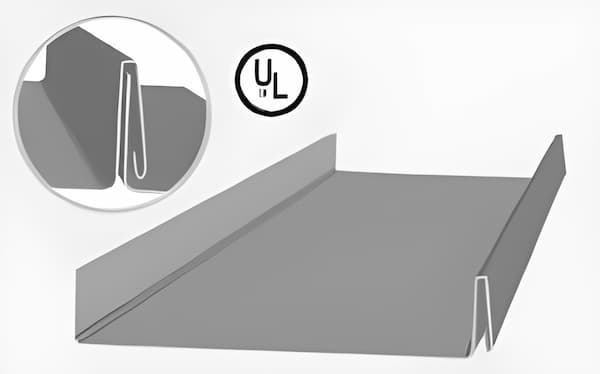
The SS450 from New Tech Machinery is a snap-lock standing seam panel with a 1.5-inch rib height, delivering a clean architectural look and dependable weather performance. Because the panel snaps together without mechanical seaming, contractors often choose it for jobs where installation speed matters. It runs in 22-gauge through 28-gauge steel, aluminum, or copper. See Roof Anchor Compatibility Chart for New Tech Machinery (NTM) 22 Gauge and 24 Gauge SS450 Snap-Lock Standing Seam Panels.
Fall Protection for SS450 Panels
Working safely on SS450 roofs comes down to selecting anchorage that grips the seam and keeps the roof free of penetrations. The SSRA1 anchors meet that need by clamping to the standing seam without disturbing the snap-lock.
- SSRA1 Standing Seam Roof Anchor: Clamps to the 22-gauge and 24-gauge steel standing seam without disturbing the snap-lock profile.
- SSRA2 Adjustable Roof Jack Adapter: Mount on top of the SSRA1 and supports a 10-foot board for steady footing on steep roofs.
- SSRA3 Anchor Plate: Ties into the SSRA1 and serves as a base for a temporary lifeline.
- SSRA HLL 100-foot Temporary Horizontal Lifeline Kit: Works seamlessly on standard commercial snap-lock layouts.
- Super Anchor 120-foot Permanent Horizontal Lifeline Kit: Provides maintenance personnel with a steel lifeline for recurring service work.
- Ridge Pro Steep Assist Anchor: Provides a secure tie-off at the ridge for thinner steel or aluminum on 6:12-12:12 slopes.
New Tech SS450SL Snap-Lock Panel (SSRA Compatible 22/24 gauge Steel)
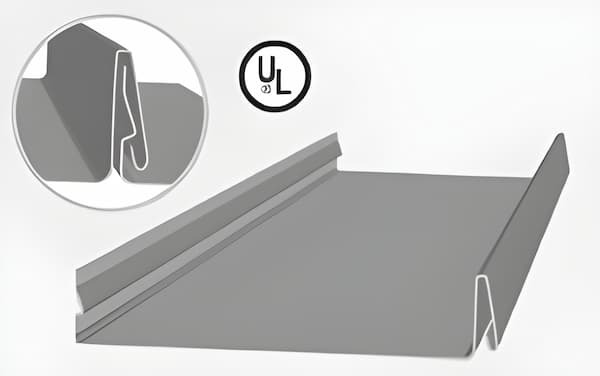
The SS450SL is a modified version of the SS450. It includes a small bump-out on the male leg that allows it to snap more securely, which helps on longer spans or roofs that see wider temperature swings. The SS450SL can be produced in steel, aluminum, or copper and is available in widths from 12 to 24 inches. The 1.5-inch seam height provides sufficient vertical strength for residential and light commercial projects while maintaining the clean look for which snap-lock systems are known. See Roof Anchor Compatibility Chart for New Tech Machinery (NTM) 22 Gauge and 24 Gauge SS450SL Snap-Lock Standing Seam Panels.
Fall Protection for SS450SL Panels
Using the right system on SS450SL roofs preserves panel performance, protects seams, and provides workers with dependable fall protection without guesswork.
- SSRA1 Standing Seam Roof Anchor: Creates a secure seam-mounted anchor point for 22-gauge and 24-gauge steel without breaking the weather seal.
- SSRA2 Adjustable Roof Jack Adapter: Mount on top of the SSRA1 and carries a 10-foot walkboard.
- SSRA3 Anchor Plate: Pairs with the SSRA1 to support temporary or permanent horizontal lifelines.
- SSRA HLL 100-foot Temporary Horizontal Lifeline Kit: Protects two workers moving laterally across the wide roof sections.
- Super Anchor 120-foot Permanent Horizontal Lifeline Kit: Gives crews a permanent steel lifeline path without damaging the seam profile.
- Ridge Pro Steep Assist Anchor: Hooks over the peak to avoid putting pressure on thinner metals from 6:12 to 12:12.
New Tech SSQ550 Snap-Lock Profile (SSRA Compatible 22/24 gauge Steel)
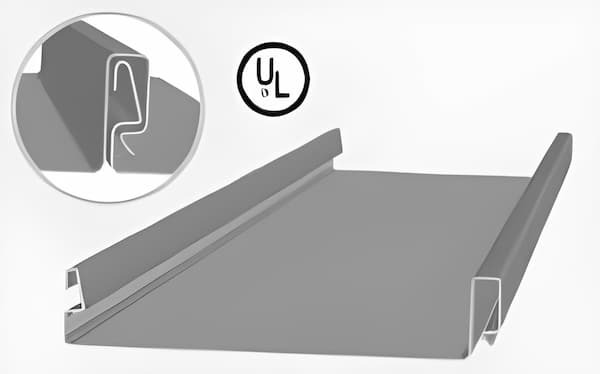
The SSQ550 snap-lock profile features a 1.5-inch seam height and is available in 22-gauge to 28-gauge steel, aluminum, or copper. Coverage ranges from 12 to 24 inches. This structural profile can span open purlins when panel width and material thickness permit, making it a practical option for projects requiring added strength. The snap-lock seam offers quick installation while still providing a weather-tight connection suited for low-slope conditions. See Roof Anchor Compatibility Chart for New Tech Machinery (NTM) 22 Gauge and 24 Gauge SSQ550 Snap-Lock Standing Seam Panels.
Fall Protection for SSQ550 Panels
The SSQ550 seam style accepts the same non-penetrating fall protection systems used on other NTM structural profiles. Due to the width of this seam, we recommend a test fit before commencing work.
- SSRA1 Standing Seam Roof Anchor: Attaches directly to the 22-gauge and 24-gauge seam in a non-penetrating configuration.
- SSRA2 Adjustable Roof Jack Adapter: Mounts on top of two SSRA1 anchors and supports a 10-foot walkboard.
- SSRA3 Anchor Plate: Serves as the connection point for horizontal mobility along the panel runs.
- SSRA HLL 100-foot Temporary Horizontal Lifeline Kit: Compatible with the SSQ550 for temporary construction safety.
- Super Anchor 120-foot Permanent Horizontal Lifeline Kit: Gives maintenance crews safe mobility without roof penetration.
- Ridge Pro Steep Assist Anchor: The safest option for aluminum, copper, and 26-gauge steel on slopes from 6:12 to 12:12.
New Tech SSQ675 Snap-Lock Panel (SSRA Compatible 22/24 gauge Steel)
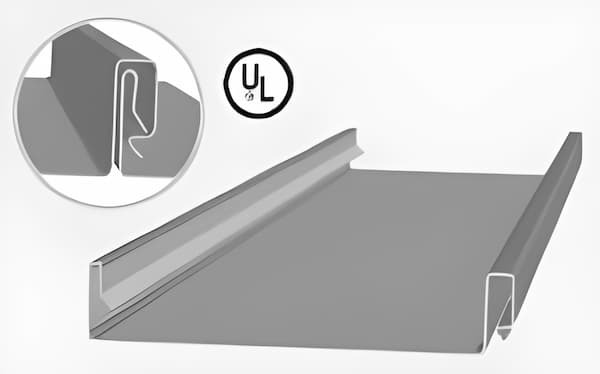
The SSQ675 profile from New Tech Machinery brings a taller 1.75-inch seam height to the lineup, giving this panel added strength and stiffness compared to lower-profile snap-lock options. It works well across a wide range of project types, from residential roofs to commercial systems. Because the SSQ675 is a structural snap-lock profile, it can span open purlins when the panel width and material thickness support that load. See Roof Anchor Compatibility Chart for New Tech Machinery (NTM) 22 Gauge and 24 Gauge SSQ675 Snap-Lock Standing Seam Panels.
Fall Protection for SSQ675 Panels
The SSQ675 accepts seam-mounted anchors on 22-gauge and 24-gauge steel for non-penetrating fall protection. Due to the width of this seam, we strongly recommend a test fit to determine proper attachment.
- SSRA1 Standing Seam Roof Anchor: Provides a secure, non-penetrating tie-off point that protects the seam finish.
- SSRA2 Adjustable Roof Jack Adapter: Mounts on top of the SSRA1 and carries a 10-foot walkboard without penetrating the roof.
- SSRA3 Anchor Plate: Creates the base connection for temporary horizontal lifelines.
- SSRA HLL 100-foot Temporary Horizontal Lifeline Kit: Allows maximum worker mobility on wider snap-lock roof areas.
- Super Anchor 120-foot Permanent Horizontal Lifeline Kit: A solution for buildings that require routine maintenance access.
- Ridge Pro Steep Assist Anchor: Required for aluminum or copper panels on 6:12 to 12:12 slopes.
New Tech SSQ275 Snap-Lock/Mechanical Panel (SSRA Compatible 22/24 gauge Steel)
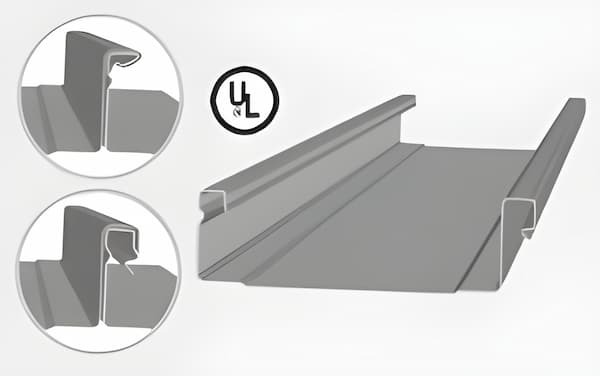
The SSQ275 profile is one of New Tech Machinery's most flexible designs because it can be produced as a snap-lock or as a mechanically seamed system. The panel features a 2-inch seam height and coverage widths from 12 to 24 inches. This versatility allows installers to match the panel to the project, whether a lightweight residential application or a more demanding commercial roof. It handles substrates from 22-gauge to 26-gauge steel and 0.024- to 0.040-inch aluminum. See Roof Anchor Compatibility Chart for New Tech Machinery (NTM) 22 Gauge and 24 Gauge SSQ275 Snap-Lock/Mechanical Standing Seam Panels.
Fall Protection for SSQ275 Panels
Using compatible fall protection prevents panel distortion and maintains the SSQ275's weather-tight seal. SSRA anchors remain the best option on 22-gauge and 24-gauge steel panels.
- SSRA1 Standing Seam Roof Anchor: Attaches directly to the structural seam using set screws that avoid penetrations.
- SSRA2 Adjustable Roof Jack Adapter: Mounts on top of the SSRA1 and supports 10-foot walkboards for a level work surface.
- SSRA3 Anchor Plate: Pairs with the SSRA1 to support temporary or permanent horizontal lifelines.
- SSRA HLL 100-foot Temporary Horizontal Lifeline Kit: Protects two workers without disturbing the roof assembly.
- Super Anchor 120-foot Permanent Horizontal Lifeline Kit: Provides lifeline safety for up to two maintenance workers.
- Ridge Pro Steep Assist Anchor: The preferred option for aluminum and thinner steel on 6:12 to 12:12 slopes.
New Tech FF100 Nailstrip Panel (Ridge Pro Only)
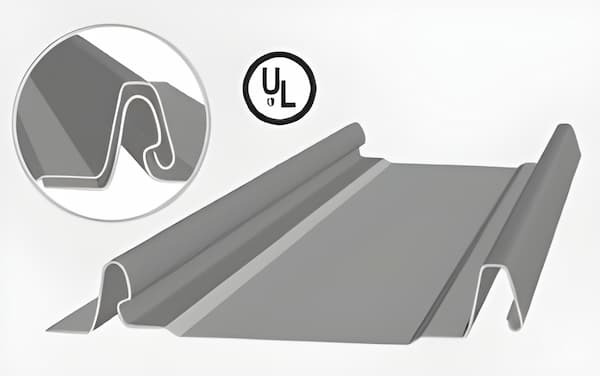
The FF100 panel from New Tech Machinery is a 1-inch-tall nail-flange standing-seam profile, built for fast installation and a clean architectural finish. The concealed fastener system gives the roof a smooth, modern appearance. Because the FF100 attaches through a nail strip rather than traditional clips, crews can install it directly onto the deck. Its low-profile 1-inch seam works well on roof slopes as low as 1:12. See Roof Anchor Compatibility Chart for New Tech Machinery (NTM) FF100 Nailstrip Standing Seam Panels.
Fall Protection for FF100 Panels
Nailstrip panels vary in finished seam shape from one rollforming machine to the next; therefore, seam-mounted anchors are not compatible. To preserve long-term performance, ridge-mounting is required.
New Tech FF150 Nailstrip Panel (Ridge Pro Only)
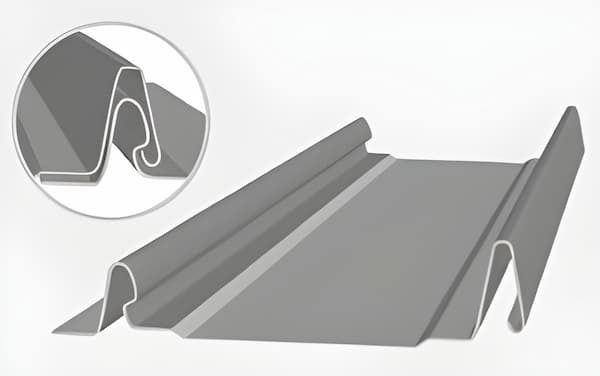
The FF150 panel from New Tech Machinery features a 1.5-inch-tall nailstrip seam and uses the same direct-fastening approach as the FF100. This profile fits naturally into residential work where a crisp, streamlined roof matters. Direct fastening via a nail flange speeds up production and keeps the layout simple for homes and light-commercial projects. See Roof Anchor Compatibility Chart for New Tech Machinery (NTM) FF150 Nailstrip Standing Seam Panels.
Fall Protection for FF150 Panels
Nailstrip seams vary slightly depending on the rollformer used, meaning no seam-mounted anchor can guarantee repeatable clamping. Ridge-mounting addresses the biggest gap in fall protection on residential nailstrip projects.
New Tech T-Panel (Ridge Pro Only)
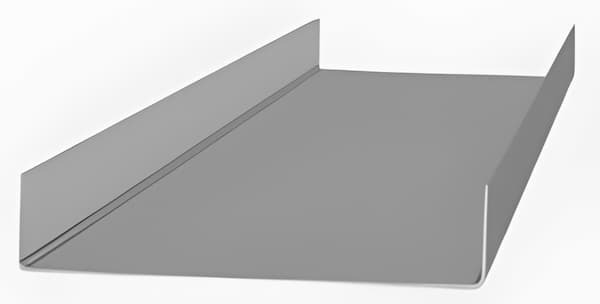
The T-Panel from New Tech Machinery uses a batten-style seam that creates a raised architectural profile. Seam height varies from 1/2 inch to 2 inches. This flexibility lets manufacturers build T-Panels for residential, commercial, or architectural projects that call for a bold batten aesthetic without exposed fasteners. It can be produced in steel from 28-gauge to 22-gauge, as well as in aluminum and copper. See Roof Anchor Compatibility Chart for New Tech Machinery (NTM) T-Panel Standing Seam Panels.
Fall Protection for T-Panels
The raised batten strip completely covers the attachment legs within the seam, thereby removing all seam-mounted anchors from consideration. A ridge-mounted solution avoids the risk of crushing the decorative batten or damaging the finish.
- Ridge Pro Steep Assist Anchor: Remains the only suitable temporary anchorage option for T-Panels on slopes from 6:12 to 12:12.
Choosing Confidence: The Value of Certified Safety Equipment
Investing in high-quality, American-engineered fall protection is one of the smartest decisions a contractor can make to protect both their crew and their professional reputation. While unbranded, low-cost import anchors may appear similar on the surface, they often lack the rigorous structural testing and documented material traceability required to meet strict American safety standards. By choosing safety hardware that ISO 17025-accredited laboratories have meticulously validated to exceed 5,000 pounds of breaking strength, you gain the peace of mind that comes with a proven track record of reliable performance.
You can view our complete library of independent laboratory test reports to see the data-driven results that set our safety solutions apart from unverified generic alternatives.
Standing Seam Roof Anchor Compatibility For 22 Gauge New Tech Machinery Panels
| TRQ250 (22 Ga.) | SS100 (22 Ga.) | SS150 (22 Ga.) | SSQ200 (22 Ga.) | SS210A (22 Ga.) | |
|---|---|---|---|---|---|
SSRA 1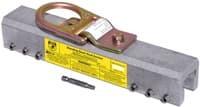 |
YES | YES | YES | YES | YES |
SSRA1 Nylon Tip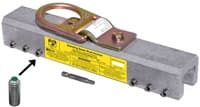 |
YES | YES | YES | YES | YES |
SSRA2 Roof Jack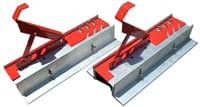 |
YES | YES | YES | YES | YES |
SSRA3 Anchor Plate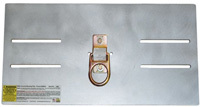 |
YES | YES | YES | YES | YES |
The Ridge Pro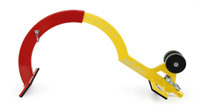 |
YES | YES | YES | YES | YES |
Standing Seam Roof Anchor Compatibility For 22 Gauge New Tech Machinery Panels Cont.
| SS450 (22 Ga.) | SS450SL (22 Ga.) | SSQ550 (22 Ga.) | SSQ675 (22 Ga.) | SSQ275 (22 Ga.) | |
|---|---|---|---|---|---|
| SSRA 1 |
YES | YES | YES | YES | YES |
| SSRA1 Nylon Tip |
YES | YES | YES | YES | YES |
| SSRA2 Roof Jack |
YES | YES | YES | YES | YES |
| SSRA3 Anchor Plate |
YES | YES | YES | YES | YES |
| The Ridge Pro |
YES | YES | YES | YES | YES |
Standing Seam Roof Anchor Compatibility For 24 Gauge New Tech Machinery Panels
| TRQ250 (24 Ga.) | SS100 (24 Ga.) | SS150 (24 Ga.) | SSQ200 (24 Ga.) | SS210A (24 Ga.) | |
|---|---|---|---|---|---|
| SSRA 1 |
NO | NO | NO | NO | NO |
| SSRA1 Nylon Tip |
YES | YES | YES | YES | YES |
| SSRA2 Roof Jack |
YES | YES | YES | YES | YES |
| SSRA3 Anchor Plate |
YES | YES | YES | YES | YES |
| The Ridge Pro |
YES | YES | YES | YES | YES |
Standing Seam Roof Anchor Compatibility For 24 Gauge New Tech Machinery Panels Cont.
| SS450 (24 Ga.) | SS450SL (24 Ga.) | SSQ550 (24 Ga.) | SSQ675 (24 Ga.) | SSQ275 (24 Ga.) | |
|---|---|---|---|---|---|
| SSRA 1 |
NO | NO | NO | NO | NO |
| SSRA1 Nylon Tip |
YES | YES | YES | YES | YES |
| SSRA2 Roof Jack |
YES | YES | YES | YES | YES |
| SSRA3 Anchor Plate |
YES | YES | YES | YES | YES |
| The Ridge Pro |
YES | YES | YES | YES | YES |
Standing Seam Roof Hook Compatibility For New Tech Machinery Metal Roof Panels
| FF100 NailStrip | FF150 NailStrip | T-Panel | |
|---|---|---|---|
| SSRA 1 |
NO | NO | NO |
| SSRA1 Nylon Tip |
NO | NO | NO |
| SSRA2 Roof Jack |
NO | NO | NO |
| SSRA3 Anchor Plate |
NO | NO | NO |
| The Ridge Pro |
YES | YES | YES |
Contact Us for Expert Standing Seam Fall Protection Advice
For expert guidance on standing-seam roof anchors, lifeline kits, and fall-protection systems that protect both your crew and your panels, contact us today at 863-703-4522 or visit www.StandingSeamRoofAnchor.com. Our safety specialists can help you match the right non-penetrating anchor to your specific roof profile and slope. Let's make your next metal roofing project safe, compliant, and built to last. For continued learning, download OSHA's 48-page Fall Protection Manual and our free Anchor Inspection Form once you've selected the ideal anchors for your roof system. Together, we'll help you stay ahead of OSHA standards while preserving your roof's weather-tight seal.
Metal Roof Safety Tips For Standing Seam Roofs
- Develop OSHA-Compliant Safety Plans: Workers know where tie-offs start, where the crew will place lifelines on the New Tech panels, and who is responsible for rescue. Panel style matters; a mechanical profile needs a different approach than a snap-lock or nailstrip roof.
- Use Anchor Systems Built for Standing Seam Roofs: New Tech profiles rely on engineered seams and concealed clips that need to move with temperature changes. Seam-mounted systems like the SSRA1 eliminate guesswork and clamp cleanly without drilling or stopping thermal movement.
- Ensure Proper Footwear for Stability: Standing seam metal can get slick long before it looks wet. Roofing-grade boots with dependable tread and firm ankle support help workers stay steady moving between anchor points.
- Equip Workers with High-Quality Safety Gear: A harness should fit snugly across the torso, with leg straps adjusted properly. SRLs like the Malta Dynamics Pygmy Hog or Edgehog deserve a quick pull-test to confirm smooth retraction before work begins.
- Promote a Culture of Safety: Discussing weather conditions, slick underlayment, and changing tie-off points avoids the overlooked hazards that cause most accidents. When workers feel comfortable raising concerns, fewer accidents happen.
- Encourage the Use of Trauma Straps: Suspension trauma sets in quickly. Trauma straps let a worker stand up within the harness to restore circulation while the rescue plan goes into effect.
- Set Up Protective Guardrails Near Hazards: Guardrails identify safe paths around skylights, eaves, and transition points. They eliminate a considerable amount of risk before anyone clips into a lifeline.
- Install Permanent Roof Anchor Systems: Commercial buildings with New Tech profiles see repeated service visits. A Super Anchor 120-foot Permanent Horizontal Lifeline removes the need to rebuild temporary systems and provides a predictable tie-off point.
- Prioritize Ladder Safety Training: Workers face risk during climbs. Inspect each rung, confirm feet sit firmly, set the proper 4-to-1 angle, and tie off the ladder at the top.
- Consult Experts for Curved Metal Panels: Curved roofs behave differently from straight panels. A fall protection specialist should evaluate the layout before anyone attaches a device to avoid structural damage or unsafe tie-off practices.
Disclaimer: The views, recommendations, and information presented in this blog are solely those of the author and do not necessarily reflect the opinions or positions of the featured panel manufacturer, its brands, subsidiaries, or parent companies. Customers are strongly encouraged to contact the roof panel manufacturer directly for inquiries regarding fall protection compatibility with their products and to address any potential warranty issues that may arise after installing our products.