Fall Protection Strategies for Appalachian Metal Sales
Posted by Howie Scarboro - CEO Fall Protection Distributors, LLC on Mar 4th 2026
See the Roof Anchor Compatibility Chart for Appalachian Metal Sales Standing Seam Panels.

Who Is Appalachian Metal Sales?
Appalachian Metal Sales is a regional source for metal roofing and building materials. With locations in Mooresburg, Tennessee, and Lexington, Virginia, the company serves customers across Tennessee, Virginia, Kentucky, West Virginia, North Carolina, and South Carolina. Their approach is simple: focus on quality materials and back them up with outstanding service.
The company opened its doors in 2016 and has grown steadily thanks to a leadership team with over 40 years of combined experience in the metal industry. Speed and precision define their production model. About three-quarters of their business comes from repeat clients, which demonstrates the high level of trust they have earned among contractors and homeowners.
Why Are Non-Penetrating Anchors Important for Standing Seam Roofs?
Standing seam roofs last for decades only when crews use the right fall protection systems to work safely and effectively. Protecting the seams from intentional penetrations and accidental punctures is critical. By preventing these issues, you safeguard the roof against leaks and warranty loss.
Non-penetrating anchors, such as the Standing Seam Roof Anchor (SSRA1), clamp directly onto the seam. They provide a secure tie-off point without leaving a single hole in the metal, protecting both the worker and the roof system. Pair these anchors with SSRA2 Adjustable Roof Jack Adapters to hold 10-foot walkboards firmly in place. For larger crews, the SSRA3 Anchor Plate connects multiple SSRA1 anchors to support 100-foot temporary horizontal lifelines. By pairing Appalachian Metal Sales standing seam panels with tested and proven non-penetrating anchor systems, you protect your crew and maintain the roof's long-term performance.
Fall Protection Systems for Appalachian Metal Sales Panels
To maintain the integrity of these high-performance systems, specialized fall protection is required. The following products provide the primary safety solutions for Appalachian Metal Sales installations:
- SSRA1 Standing Seam Roof Anchor: The foundation of the system. This anchor provides a non-penetrating, certified 5,000-pound tie-off point using 12 cupped-tip or nylon-tipped set screws.
- SSRA2 Adjustable Roof Jack Adapters: Mount directly to the SSRA1 anchors to create level work platforms on steep slopes using 10-foot wooden walkboards.
- SSRA3 Anchor Plates: Heavy-duty aluminum plates that secure across two SSRA1 anchors to serve as certified endpoints for horizontal lifelines.
- SSRA HLL 100-foot Temporary HLL Kit: A complete turnkey system providing continuous tie-off for up to two workers in fall arrest, allowing safe lateral movement across wide spans.
- 120-foot Super Anchor Permanent HLL Kit: An industry-exclusive galvanized-steel-cable solution for roofs requiring regular maintenance without penetrations.
- Ridge Pro Steep Assist: A peak-mounted system for slopes between 6:12 and 12:12, providing 100% tie-off from the ladder to the ridge.
Proper Attachment: Set-Screws and Torque Requirements
Worker safety and the holding power of the SSRA1 anchor depend entirely on correct set-screw application:
- Cupped-Tip Stainless Steel Set-Screws: Use these screws exclusively on 22-gauge steel panels. Torque these screws to 90 inch-pounds.
- Nylon-Tipped Set-Screws: Apply these tips to 22-gauge or 24-gauge steel panels to achieve certified holding power. Torque these screws to 180-200 inch-pounds for maximum strength.
Maintenance: Treat nylon tips as consumables. Replace these tips every 3 to 5 uses to maintain maximum grip strength.
Appalachian AppLok 100 Nailstrip Panels (Ridge Pro Only)
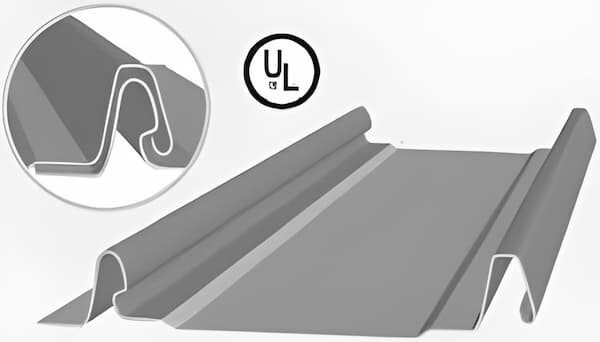
The AppLok 100 panel offers a 16-inch panel width and features a hidden fastener system that eliminates the need for clips. This nailstrip-style snaplock profile installs over solid substrates and requires no special tools. It preserves long-term visual appeal while meeting modern weather resistance standards. See the Roof Anchor Compatibility Chart for Appalachian Metal Sales AppLok 100 Nailstrip Standing Seam Panels.
- Material Build: Produced in 26-gauge steel.
- Dimensions: 16-inch width; lengths available from 5 to 45 feet.
- Aesthetics: Clean lines suit residential, commercial, and agricultural projects.
- Longevity: Backed by a paint warranty of up to 40 years.
Fall Protection for AppLok 100 Panels:
Ridge Pro Steep Assist: Because this panel uses 26-gauge steel, seam-clamping anchors like the SSRA1 are not compatible. The lighter material lacks the rigidity to support seam clamps safely. The Ridge Pro Steep Assist is the most reliable choice, installing over the ridge to keep workers tied off before they step onto the roof.
Appalachian AppLok 450 Snaplock Panels (Ridge Pro Only)
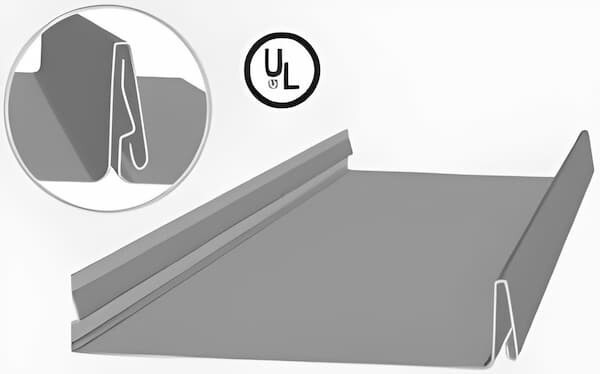
The AppLok 450 stands out with its 1.5-inch high seam and smooth, elegant appearance. These panels install over solid decking using hidden clips, allowing them to expand and contract naturally with temperature changes. Designers value the AppLok 450 for its flexibility and ability to reflect solar heat. See the Roof Anchor Compatibility Chart for Appalachian Metal Sales AppLok 450 Snaplock Standing Seam Panels.
- Dimensions: 1.5-inch seam height; panel widths range from 12 to 24 inches.
- Material Specs: Manufactured from 26-gauge steel.
- Performance: Strength to withstand harsh weather with a warranty of up to 40 years.
Fall Protection for AppLok 450 Panels:
Ridge Pro Steep Assist: The 26-gauge steel construction makes seam-mounted anchors, such as the SSRA1, incompatible. Roofers working on these panels should use ridge-mounted fall protection. The Ridge Pro Steep Assist sets securely over the ridge using a lightweight extension pole, keeping workers tied off without compromising the lighter gauge steel.
Verified Engineering: Why Domestic Standards Outperform Generic Imports
In the professional roofing industry, choosing safety hardware based solely on price is dangerous. Generic imports are often available at lower costs, but they rarely offer the documented performance pedigree required for OSHA compliance. These budget alternatives often lack the rigorous metallurgical testing and ISO 17025 lab verification needed to guarantee a 5,000-pound breaking strength.
Investing in American-engineered SSRA hardware provides you with a safety plan backed by verifiable data. We encourage you to review our official SSRA test reports to see the transparent performance benchmarks that set our professional-grade equipment apart.
Metal Roof Anchor Panel Compatibility For Appalachian Metal Sales Gauge
| AppLok 100 Nailstrip Panel | AppLok 450 Snaplock Panel | |
|---|---|---|
SSRA 1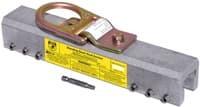 |
NO | NO |
SSRA1 Nylon Tip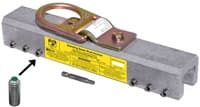 |
NO | NO |
SSRA2 Roof Jack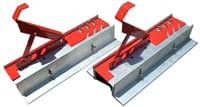 |
NO | NO |
SSRA3 Anchor Plate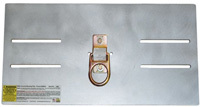 |
NO | NO |
The Ridge Pro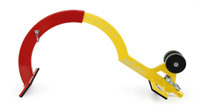 |
YES | YES |
Contact Us For More Information
For further details on roofing solutions and fall protection systems, contact us at 863-703-4522 or visit www.StandingSeamRoofAnchor.com. Let's work together to make your roofing projects safe, beautiful, and built to last. For more safety tips, refer to the OSHA 48-page Fall Protection Manual. Once you have determined the most suitable anchors for your roof system, download our free Anchor Inspection Form.
Safety Tips For Standing Seam Roofs
Use Specialized Anchor Systems for Standing Seam Roofs
Standing seam panels are an excellent choice for protecting buildings, but not for being drilled full of holes. Penetrating anchors damage the seams and void warranties. Choose non-penetrating anchors that clamp securely to provide OSHA-rated tie-off points while preserving roof performance.
Encourage the Use of Trauma Straps
Stopping a fall is only the beginning. Hanging in a harness can restrict circulation and quickly become life-threatening. Trauma straps provide a means for workers to shift their weight and restore blood flow until help arrives.
Equip Workers with High-Quality Safety Gear
The best plan falls apart without the trust of gear workers. Pair workers with lifelines, lanyards, and SRLs that comply with OSHA standards. Confirm that every component receives regular inspections to keep people alive.
Promote a Culture of Safety
Foster open communication by encouraging workers to speak up when they identify a risk. Quick morning huddles ensure the crew buys into safety, protects each other, and makes the entire jobsite run smoothly.
Prioritize Ladder Safety Training
Teach crews to follow the four-to-one setup rule and maintain three points of contact. Ladder safety prevents more accidents than most realize, as many falls start before a boot ever touches the roof.
Install Permanent Roof Anchor Systems
Commercial buildings with HVAC units or solar arrays benefit from permanent anchors. Once installed, they provide crews with immediate, secure tie-off points, eliminating the hassle of temporary setups.
Set Up Protective Guardrail Barriers for Work Zones
Guardrails provide a visible boundary and physical stop at roof edges, skylights, and access hatches. They provide constant protection without requiring specialized training, allowing crews to move with confidence.
Consult Experts for Curved Metal Panels
Radius and arched panels look incredible, but complicate fall protection. A trained specialist should evaluate the roof system and recommend anchors compatible with curved panels to preserve design integrity.
Ensure Proper Footwear for Stability
Roof-specific boots featuring non-slip treads help workers maintain stability on slick panels. Quality footwear prevents slips, reduces fatigue, and keeps crews sharp from the first climb to the final cleanup.
Develop OSHA-Compliant Safety Plans
A written plan acts as the playbook for keeping your crew alive. Each job needs a plan outlining hazards, anchor point locations, and rescue procedures. Update it regularly to avoid surprises and fines.
Disclaimer: The views, recommendations, and information presented in this blog are solely those of the author and do not necessarily reflect the opinions or positions of the featured panel manufacturer. Customers are strongly encouraged to contact the roof panel manufacturer directly for inquiries regarding fall protection compatibility and potential warranty issues.