Fall Protection Strategies For Inland Buildings Roof Systems
Posted by Howie Scarboro - CEO Fall Protection Distributors, LLC on Mar 20th 2026
See the Roof Anchor Compatibility Chart for Inland Building Systems Standing Seam Panels.

Who Is Inland Building Systems?
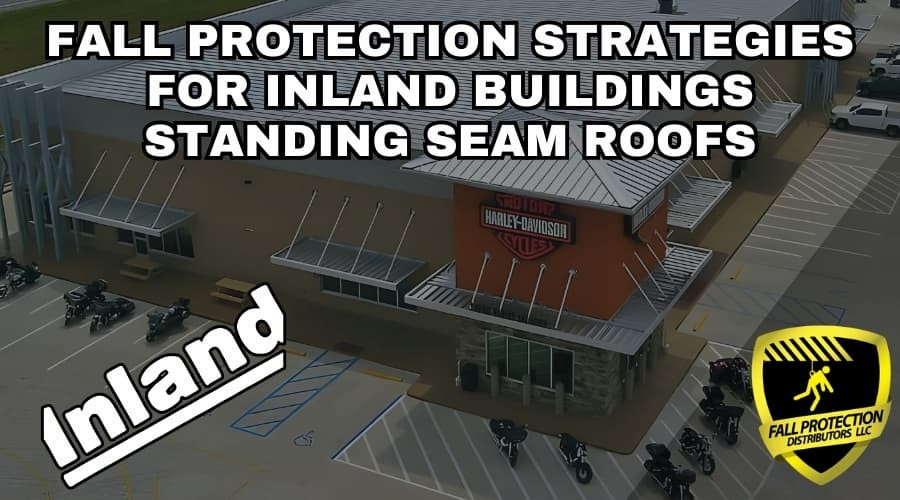
Inland Building Systems is one of the oldest names in the American metal building industry, with roots dating back to 1910. The company began as part of Inland Steel Corporation and built its early reputation supplying steel products for large industrial and infrastructure projects nationwide. A significant turning point came when Inland Steel merged its metal building division with Ryerson Corporation, forming Inland Ryerson, commonly known as INRYCO. That transition led to the opening of a dedicated manufacturing facility in Cullman, Alabama, in 1974, which remains central to Inland's operations today.
Today, Inland Building Systems operates as part of Schulte Building Systems, continuing its legacy of custom-engineered metal building solutions for commercial, industrial, and institutional projects. From early design coordination through final installation, Inland Building Systems focuses on delivering projects on time and within budget, aligned with long-term performance expectations. Their standing-seam roof systems play a key role in that promise, offering durability, clean architectural lines, and reliable weather resistance for decades of service.
What Is The Most Compatible Fall Protection For Inland Roofs?
Inland standing seam roof systems require fall protection that keeps workers safe without compromising the roof's engineered performance. Inland's standing seam panels rely on hidden clips and thermal expansion to achieve long-term weather resistance and structural reliability. Traditional penetrating anchors run counter to those design principles. Drilling through panels or seams introduces stress points, interferes with clip movement, and creates water leaks that often do not appear until years after installation.
Non-penetrating fall protection systems provide the safest and most compatible solution for Inland roofs. For steel 22-gauge and 24-gauge standing seam profiles that accept seam-mounted anchorage, the following products provide a complete safety solution:
- SSRA1 Standing Seam Roof Anchor: A universal non-penetrating anchor that attaches to the seam using 12 stainless-steel set screws, providing a 5,000-pound certified tie-off point without drilling.
- SSRA2 Adjustable Roof Jack Adapters: Adapters that mount to SSRA1 anchors to support a 10-foot walk board. These adapters provide adjustable height and roof pitch correction, creating a level surface to keep workers safe and provide a stable area for tools and equipment on steel metal roofs without penetrations.
- SSRA3 Anchor Plate: A heavy-duty aluminum plate that spans two SSRA1 anchors to create a certified attachment point for horizontal lifeline systems.
- SSRA HLL 100-foot Temporary Horizontal Lifeline Kit: A complete, portable lifeline system for up to two workers that allows safe lateral movement across wide roof sections without panel penetrations.
- Super Anchor 120-foot Permanent Horizontal Lifeline Kit: A long-term safety solution featuring galvanized steel cables and non-penetrating riser posts for facilities requiring frequent maintenance access.
- Ridge Pro Steep Assist Anchor: A ridge-mounted anchorage device that hooks over the peak to provide safe vertical lifeline access on pitches from 6:12 to 12:12.
Proper Attachment: Set-Screws and Torque Requirements
- Cupped-Tip Stainless Steel Set-Screws: Use these screws exclusively on 22-gauge steel panels. Torque these screws to 90 inch-pounds.
- Nylon-Tipped Set-Screws: Apply these tips to 22-gauge or 24-gauge steel panels to achieve certified holding power without marking the finish. Torque these screws to 180-200 inch-pounds.
- Maintenance: Treat nylon tips as consumables. Replace these tips every 3 to 5 uses to maintain maximum grip strength.
CRITICAL WARNING: NO IMPACT GUNS
Never use an impact gun to install set-screws. Over-torquing with an impact driver crushes the standing-seam rib, causing permanent panel deformation and compromising the anchor's certified holding power. This error damages the anchor hardware, compromises worker safety, and voids the manufacturer's warranty. Always use a calibrated torque wrench for final installation.
Inland Buildings TS-324 Mechanical Standing Seam Panel (SSRA Compatible 24 gauge Steel)
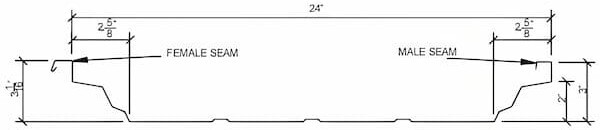
The TS-324 standing seam roof system delivers structural performance, weather resistance, and installation efficiency for demanding commercial and industrial applications. This panel features a 3-inch seam height and a 24-inch coverage width, providing the system with excellent uplift resistance and long-term durability across a wide range of roof loading conditions. TS-324 panels are roll-formed from standard 24-gauge steel and carry extensive third-party validation, including UL-90 Classification, ASTM E1592 uplift testing, and rigorous air and water penetration testing. The Roll-and-Lock, Triple-Lock, and Quadri-Lock seaming options allow the TS-324 to match site-specific wind zone demands. See the Roof Anchor Compatibility Chart for Inland Building Systems TS-324 Mechanical Standing Seam Panels.
Fall Protection for TS-324 Panels
- SSRA1 Standing Seam Roof Anchor: Clamps directly to the 24-gauge steel mechanically seamed rib without penetrating the panel, providing a secure single-worker tie-off point while allowing normal thermal movement.
- SSRA2 Adjustable Roof Jack Adapters: Mount atop the SSRA1 anchors to support a 10-foot walk board.
- SSRA3 Anchor Plate: Mounts on top of SSRA1 anchors and creates attachment points for horizontal lifeline systems, allowing continuous tie-off without frequent anchor relocation.
- SSRA HLL 100-foot Temporary Horizontal Lifeline Kit: Provides short-term lifeline protection for multiple workers.
- Super Anchor 120-foot Permanent Horizontal Lifeline Kit: Provides long-term tie-off locations that reduce repeated setup and help maintain consistent safety practices over the life of the roof.
- Ridge Pro Steep Assist: Offers a ridge-mounted, non-penetrating tie-off option for roof slopes ranging from 6:12 to 12:12.
Inland Buildings VS-216 Mechanical Standing Seam Panel (SSRA Compatible 24 gauge Steel)
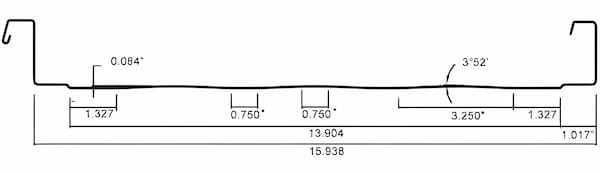
The VS-216, also known as the Vertical System, is a mechanically seamed standing seam roof panel engineered to deliver high wind and weather performance. VS-216 panels are available exclusively in 24-gauge steel with a 16-inch coverage width. The system uses Inland's TripleLok seam, formed by seaming the entire rib with an electric mechanical seamer, providing a unique 360-degree plus 90-degree seam shape. Coastal regions can use the QuadLok seam to increase the allowable uplift capacity. See the Roof Anchor Compatibility Chart for Inland Building Systems VS-216 Mechanical Standing Seam Panels.
Fall Protection for VS-216 Panels
- SSRA1 Standing Seam Roof Anchor: Clamps directly to the 24-gauge steel mechanically seamed rib without penetrating the panel, allowing for a secure tie-off point and thermal expansion.
- SSRA2 Adjustable Roof Jack Adapters: Mount on top of SSRA1 anchors to secure a 10-foot walkboard.
- SSRA3 Anchor Plate: Mounts atop SSRA1 anchors and provides attachment points for horizontal lifeline systems.
- SSRA HLL 100-foot Temporary Horizontal Lifeline Kit: Provides multi-worker protection across wider roof areas during construction.
- Super Anchor 120-foot Permanent Horizontal Lifeline Kit: Provides long-term tie-off locations for buildings that require regular rooftop service.
- Ridge Pro Steep Assist: Offers a ridge-mounted, non-penetrating tie-off option for roof slopes ranging from 6:12 to 12:12.
Engineered for Impact: Professional Safety vs. Generic Imports
Our US-built SSRA system is precision-machined from high-tensile 6061-T6 aluminum. While the industry standard requires a breaking strength of 5,000 pounds, our anchors have withstood loads exceeding 14,500 pounds without structural deformation. Generic, unverified imports often lack traceable OSHA-compliance testing documentation, leaving your crew's safety to guesswork. Choosing professional-grade hardware eliminates that risk and provides the documented reliability required for modern jobsite compliance.
You can review the full test reports to see why the SSRA component system is the trusted choice for professional roofers across the country.
Standing Seam Metal Roof Anchor Panel Compatibility For Inland Building Systems
| TS-324 (24 Ga.) | VS-216 (24 Ga.) | |
|---|---|---|
SSRA 1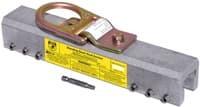 |
NO | NO |
SSRA1 Nylon Tip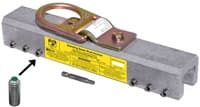 |
YES | YES |
SSRA2 Roof Jack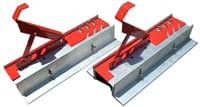 |
YES | YES |
SSRA3 Anchor Plate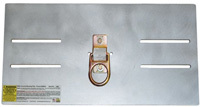 |
YES | YES |
The Ridge Pro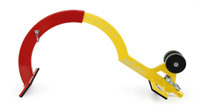 |
YES | YES |
Contact Us for Expert Standing Seam Fall Protection Advice
For expert guidance on standing-seam roof anchors, lifeline kits, and fall-protection systems that protect both your crew and your panels, contact us today at 863-703-4522 or visit www.StandingSeamRoofAnchor.com. Our safety specialists can help you match the right non-penetrating anchor to your specific roof profile and slope. Let's make your next metal roofing project safe, compliant, and built to last. For continued learning, download OSHA's 48-page Fall Protection Manual and our free Anchor Inspection Form once you've selected the ideal anchors for your roof system. Together, we'll help you stay ahead of OSHA standards while preserving your roof's weather-tight seal.
Safety Tips For Standing Seam Roofs
- Prioritize Ladder Safety Training: Most incidents happen before anyone steps onto the roof. Crews who take a moment to check the ladder's condition, confirm a solid footing, set the proper four-to-one angle, and secure the ladder at the top remove significant risk factors.
- Use Specialized Anchor Systems for Standing Seam Roofs: Seam-mounted anchors such as the SSRA1 protect compatible steel seams without crushing ribs or interfering with thermal movement.
- Develop OSHA-Compliant Safety Plans: A clear safety plan removes guesswork. It defines the tie-off and lifeline locations, as well as rescue responsibilities, before work begins.
- Equip Workers with High-Quality Safety Gear: Harnesses adjusted correctly, and SRLs such as the Pygmy Hog or Edgehog, tested for smooth operation, set the tone for the day.
- Ensure Proper Footwear for Stability: Standing-seam metal can become slick. Boots with aggressive tread, solid ankle support, and unworn soles help maintain traction.
- Promote a Culture of Safety: The safest job sites start with open conversations. Brief discussions about weather and access routes help crews anticipate hazards.
- Install Permanent Roof Anchor Systems: Permanent horizontal lifeline systems, such as the Super Anchor 120-foot kit, eliminate the need for repeated setup and reduce the temptation to improvise.
- Set Up Protective Guardrail Barriers for Work Zones: Guardrails create clear boundaries around skylights and roof edges, providing passive protection.
- Encourage the Use of Trauma Straps: Every worker should carry them. They allow a suspended worker to stand in the harness and maintain circulation while rescue procedures are underway.
- Consult Experts for Curved Metal Panels: Curved standing-seam roofs pose attachment challenges. A trained fall protection professional should review the panel design before work begins.
Disclaimer: The views, recommendations, and information presented in this blog are solely those of the author and do not necessarily reflect the opinions or positions of the featured panel manufacturer, its brands, subsidiaries, or parent companies. Customers are strongly encouraged to contact the roof panel manufacturer directly for inquiries regarding fall protection compatibility with their products and to address any potential warranty issues that may arise after installing our products.