Fall Protection Strategies For Steelway Standing Seam Roofs
Posted by Howie Scarboro - CEO Fall Protection Distributors, LLC on Mar 17th 2026
See the Roof Anchor Compatibility Chart for Steelway Building Systems Standing Seam Panels.

Who Is Steelway Building Systems?
Steelway Building Systems began in 1976 when Glen White started building steel trusses for local farms. What he created eventually grew into a respected manufacturer that supplies complete building systems for industrial, commercial, agricultural, and institutional projects across Canada and the United States. The company expanded steadily as customers demanded larger, more complex structures. Airplane hangars, grain-handling facilities, retail buildings, and farm operations all became part of Steelway's catalog as its capabilities expanded.
The company introduced its Spaceframe system early in its growth, giving customers a cost-effective alternative to all-wood buildings. Steelway maintained momentum by adding new fabrication equipment, expanding its design services, and focusing on long-term relationships with builders. In 2016, the White family founded Ardent Industries as the parent brand for their growing portfolio of companies. Steelway Building Systems remains a core operation, continuing to support contractors with dependable steel building solutions and strong technical detailing.
Non-Penetrating Fall Protection Solutions Are Critical For Steelway Standing Seam Roofs
Safe work on Steelway roof systems starts when anchors match the specific seam shape and protect the weather-tight design. Steelway's standing seam roofs provide structural strength and robust weather resistance across a wide range of building types. These benefits only hold up when the equipment attached to the roof is compatible with the seam shape and the panel's base metal. Any device that crushes the seam or pierces the metal can cause leaks, cosmetic damage, or warranty issues.
Choosing non-penetrating fall protection is the only responsible option for Steelway standing-seam profiles. This guide walks safety managers, installers, and building owners through each panel, explaining which fall protection systems best match the seam shape and substrate.
- SSRA1 Standing Seam Roof Anchor: A universal non-penetrating anchor that attaches to the seam using 12 stainless-steel set screws, providing a 5,000-lb certified tie-off point without drilling.
- SSRA2 Adjustable Roof Jack Adapters: Adapters that mount to SSRA1 anchors to support a 10-foot walk board, allowing workers to stand on a level surface on steep-slope roofs.
- SSRA3 Anchor Plate: A heavy-duty aluminum plate that spans two SSRA1 anchors to create a certified attachment point for horizontal lifeline systems.
- SSRA HLL 100-foot Temporary Horizontal Lifeline Kit: A complete, portable lifeline system for up to two workers that allows safe lateral movement across wide roof sections without panel penetrations.
- Super Anchor 120-foot Permanent Horizontal Lifeline Kit: A long-term safety solution featuring galvanized steel cables and non-penetrating riser posts for facilities requiring frequent maintenance access.
- Ridge Pro Steep Assist Anchor: A ridge-mounted anchorage device that hooks over the peak to provide safe vertical lifeline access on pitches from 6:12 to 12:12.
Proper Attachment: Set-Screws and Torque Requirements
- Cupped-Tip Stainless Steel Set-Screws: Use these screws exclusively on 22-gauge steel panels. Torque these screws to 90 inch-pounds.
- Nylon-Tipped Set-Screws: Apply these tips to 22-gauge or 24-gauge steel panels to achieve certified holding power without marking the finish. Torque these screws to 180-200 inch-pounds.
- Maintenance: Treat nylon tips as consumables. Replace these tips every 3 to 5 uses to maintain maximum grip strength.
CRITICAL WARNING: NO IMPACT GUNS
Never use an impact gun to install set-screws. Over-torquing with an impact driver crushes the standing-seam rib, causing permanent panel deformation and compromising the anchor's certified holding power. This error damages the anchor hardware, compromises worker safety, and voids the Steelway Building Systems manufacturer's warranty. Always use a calibrated torque wrench for final installation.
Steelway RTL-24 Trapezoidal Panels (SSRA Compatible 22/24 ga. Steel)
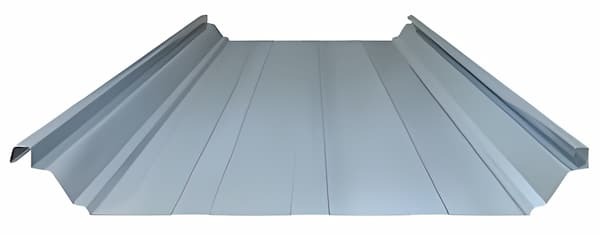
The RTL-24 panel is a structural powerhouse designed for demanding commercial and industrial projects. Featuring a wide 24-inch profile and a tall 3-inch seam, this system provides superior structural rigidity and wind uplift resistance. Steelway forms these panels from high-strength 50,000 PSI steel in both 22-gauge and 24-gauge. See the Roof Anchor Compatibility Chart for Steelway Building Systems RTL-24 Standing Seam Panels.
Fall Protection for RTL-24 Panels
- SSRA1 Standing Seam Roof Anchor: Clamps securely to the 22-gauge and 24-gauge trapezoidal seams without penetrating the metal or damaging the pre-caulked clips.
- SSRA2 Adjustable Roof Jack Adapters: Mount on top of SSRA1 anchors to support a 10-foot walkboard plank for stable footing on steep slopes.
- SSRA3 Anchor Plates: Attaches to SSRA1 anchors to create certified connection points for temporary horizontal lifeline systems.
- SSRA HLL 100-foot Temporary Horizontal Lifeline Kit: Enables safe lateral mobility for two workers across large RTL-24 roof spans.
- Super Anchor 120-foot Permanent Horizontal Lifeline Kit: Provides a non-penetrating, year-round tie-off solution for facilities requiring frequent HVAC or roof maintenance.
- Ridge Pro Steep Assist Anchor: The premier choice for vertical access on 6:12 to 12:12 pitches, providing a stable tie-off point from the ladder to the ridge.
CapLoc T-Seam Panels (SSRA Compatible 22/24 ga. Steel)
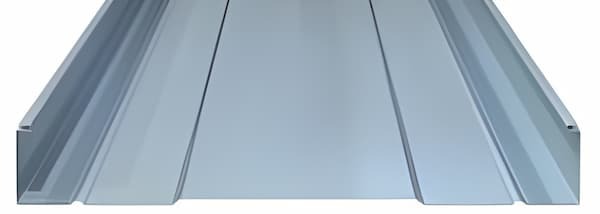
Steelway's CapLoc system delivers a combination of architectural clean lines and heavy-duty structural performance. Available in 16-inch, 18-inch, and 24-inch widths with a 2-inch seam height, CapLoc panels are available in 22-gauge or 24-gauge steel. The pre-caulked floating clips accommodate significant thermal expansion and contraction, making them an ideal choice for low-slope commercial and institutional buildings. See the Roof Anchor Compatibility Chart for Steelway Building Systems CapLoc T-Seam Standing Seam Panels.
Fall Protection for CapLoc Panels
- SSRA1 Standing Seam Roof Anchor: Grips the T-seam rib using low-torque stainless steel set screws, providing a 5,000-lb certified tie-off without drilling.
- SSRA2 Adjustable Roof Jack Adapters: Mount atop SSRA1 anchors to support level walkboard staging for crews working on steep panel runs.
- SSRA3 Anchor Plates: Attaches to SSRA1 anchors to serve as the structural base for temporary horizontal lifelines.
- SSRA HLL 100-foot Temporary Horizontal Lifeline Kit: Provides a complete, portable lifeline solution for two workers on large CapLoc roof areas.
- Super Anchor 120-foot Permanent Horizontal Lifeline Kit: A permanent, non-penetrating maintenance solution that preserves the Steelway manufacturer's warranty.
- Ridge Pro Steep Assist Anchor: Essential for safe ridge-top anchorage on CapLoc installations with pitches between 6:12 and 12:12.
Engineering Integrity: Why Certified Anchors Outperform Budget Imports
Choosing a Steelway building means investing in precision engineering and high-yield steel. Your fall protection equipment must meet those same rigorous standards. The current market is flooded with low-cost imported anchors that resemble professional gear but lack the traceable laboratory testing required for industrial safety. These generic alternatives often use inferior alloys that may fail or slip under the extreme forces of a fall event.
We eliminate this danger by providing total transparency on our dedicated testing page. Every component in our system is engineered in the USA and verified by an ISO 17025-accredited laboratory to withstand dynamic loads exceeding 5,000 lb. By insisting on anchorage backed by authentic lab reports, you protect your crew, your company's liability, and the structural integrity of the Steelway roof system.
Standing Seam Metal Roof Anchor Panel Compatibility Chart For Steelway Building Systems
| RTL-24 (24 Ga.) | RTL-24 (22 Ga.) | CapLoc T-Seam (24 Ga.) | CapLoc T-Seam (22 Ga.) | |
|---|---|---|---|---|
SSRA 1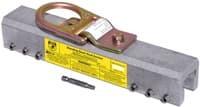 |
NO | YES | NO | YES |
SSRA1 Nylon Tip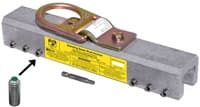 |
YES | YES | YES | YES |
SSRA2 Roof Jack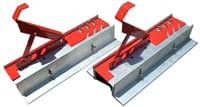 |
YES | YES | YES | YES |
SSRA3 Anchor Plate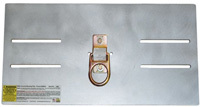 |
YES | YES | YES | YES |
The Ridge Pro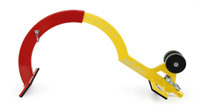 |
YES | YES | YES | YES |
Contact Us for Expert Standing Seam Fall Protection Advice
For expert guidance on standing-seam roof anchors, lifeline kits, and fall-protection systems that protect both your crew and your panels, contact us today at 863-703-4522 or visit www.StandingSeamRoofAnchor.com. Our safety specialists can help you match the right non-penetrating anchor to your specific roof profile and slope. Let's make your next metal roofing project safe, compliant, and built to last. For continued learning, download OSHA's 48-page Fall Protection Manual and our free Anchor Inspection Form once you've selected the ideal anchors for your roof system. Together, we'll help you stay ahead of OSHA standards while preserving your roof's weather-tight seal.
Metal Roof Safety Tips For Steelway Building System Roofs
- Promote a Culture of Safety: A Steelway job goes smoother when everyone talks through the plan before stepping onto the metal. A simple conversation about wind, slope, tie-off strategy, and the layout of an RTL-24 or CapLoc roof keeps the whole crew focused.
- Use Anchor Systems Built for Standing Seam Roofs: Steelway's RTL-24 and CapLoc systems rely on precision seams and floating clips that must remain undisturbed to maintain roof integrity. For 22-gauge and 24-gauge steel versions, the SSRA1 Standing Seam Roof Anchor gives teams a solid, seam-mounted tie-off point without drilling through the panels.
- Install Permanent Roof Anchor Systems: A permanent system, such as the Super Anchor 120-foot Permanent Horizontal Lifeline Kit, gives facility managers a year-round, ready-to-use tie-off system.
- Ensure Proper Footwear for Stability: Steelway's RTL-24 and CapLoc panel surfaces demand footwear that grips firmly and supports the ankle on long spans.
- Develop OSHA-Compliant Safety Plans: Every Steelway project benefits from a written safety plan that clearly specifies where tie-offs and lifelines will go and who will lead rescue operations.
- Encourage the Use of Trauma Straps: Trauma straps let a suspended worker shift weight, relieve pressure on the legs, and restore circulation during the critical minutes after a fall.
- Equip Workers with High-Quality Safety Gear: Workers need harnesses that fit their size, connectors that lock securely, and SRLs, such as the Malta Dynamics Pygmy Hog or Edgehog, that they inspect themselves at the start of every shift.
- Set Up Protective Guardrails Near Hazards: Guardrails serve as a simple way to control risk around skylights, eaves, and changes in roof elevation.
- Prioritize Ladder Safety Training: Reach the roof safely by maintaining the 4-to-1 ladder angle, ensuring a stable ground placement, and securing the ladder at the roof edge.
- Consult Experts for Curved Metal Panels: Curved roof systems require inspections by a trained fall-protection specialist. An expert evaluation ensures the chosen system protects workers while preserving the integrity of the curved steel panels.
Disclaimer: The views, recommendations, and information presented in this blog are solely those of the author and do not necessarily reflect the opinions or positions of the featured panel manufacturer, its brands, subsidiaries, or parent companies. Customers are strongly encouraged to contact the roof panel manufacturer directly for inquiries regarding fall protection compatibility with their products and to address any potential warranty issues that may arise after installing our products.