

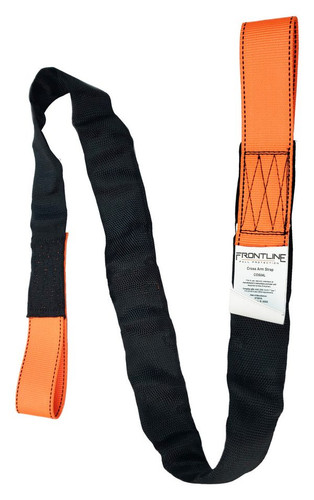
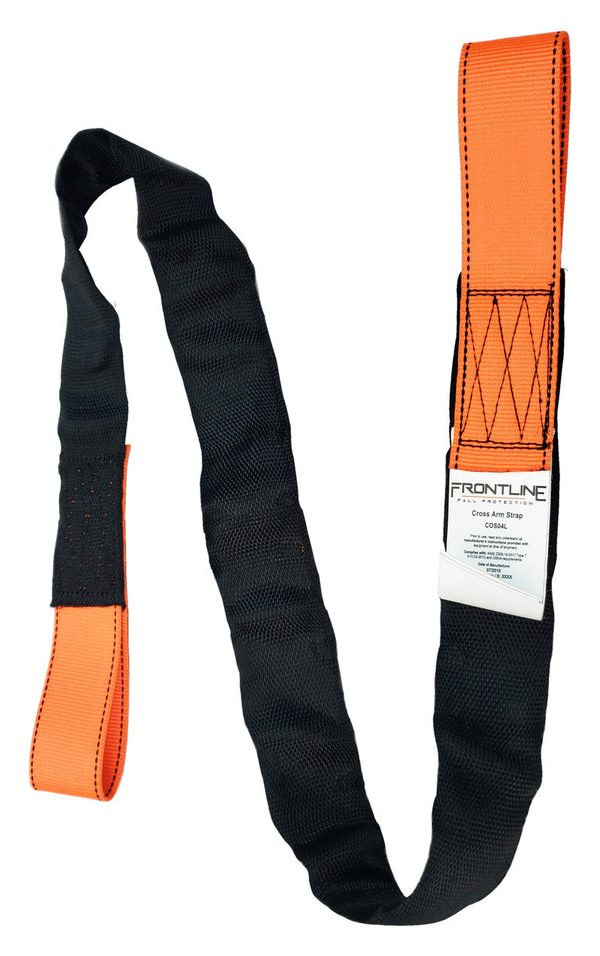
COS06L Concrete Embed Anchor Strap with Looped Ends, 6 ft
The COS06L is the 6 ft version of Frontline's cast-in-place concrete embed anchor strap - a quick, cost effective anchoring solution for building construction. The straps are placed and installed in the perimeter and work areas of the building during the concrete pour at each floor level, so that when the deck cures, the crews above already have multiple convenient tie-off points waiting for them.
Both ends are looped: one end is embedded in the structure per the Frontline manual, and the exposed loop becomes the anchorage connection point - the extra length over the 4 ft COS04L covers deeper embed details and longer reaches. The strap is sewn from polyester webbing - a 2.16 inch tubular layer over a 1.73 inch flat layer with high-tenacity polyester thread - delivering a 5,000 lb webbing breaking strength and a 310 lb user capacity. Per the spec sheet, it conforms to ANSI Z359.18-2017 Type T and ANSI A10.32-2004 and aligns with OSHA 1926.502 and 1910.140. Sold as a 12-pack — twelve 6 ft embed straps for $119, shipped together in one order.
Who Needs This Product
This product is a cast-in-place anchorage connector - an embedded tie-off point for personal fall arrest or restraint systems on concrete construction. Concrete contractors and GCs plan the strap layout before each pour so formwork, framing, and finishing crews always have an anchor within reach. Each worker still needs a full body harness and a compatible connecting device attached to the exposed loop.
Features
Cast-in-place simplicity
Install the straps during the pour and the tie-off points are ready when the concrete is - no drilling, no hardware.
Looped both ends
The embedded loop locks into the structure per the manual; the exposed loop is the connection point.
Two-layer polyester webbing
A 2.16 inch tubular sleeve over 1.73 inch flat webbing, sewn with high-tenacity polyester thread.
Cost effective by the dozen
Priced so the whole perimeter can be anchored at every floor level.
5,000 lb webbing strength
Full anchorage-grade breaking strength from a strap that weighs 0.75 lbs.
6 ft working length
The longer COSL strap for deeper embed details; a 4 ft version (COS04L) covers standard details.
Technical Specifications
| SKU | COS06L |
|---|---|
| Type | Concrete embed anchor strap, looped both ends (cast-in-place anchorage connector) |
| Material | Polyester webbing (2.16 in tubular + 1.73 in flat), high-tenacity polyester thread |
| Webbing breaking strength | 5,000 lbs |
| Max capacity | 310 lbs (one worker) |
| Length | 6 ft |
| Webbing width | 1.57 in |
| Strap weight | Approx. 0.75 lbs (spec sheet) |
| Application | Cast-in-place concrete embed anchorage at floor perimeters and work areas |
| Standards | ANSI Z359.18-2017 Type T; ANSI A10.32-2004; OSHA CFR 1926.502; OSHA CFR 1910.140 |
| Sold As | 12-Pack (12 per order) |
The embedment carries the load. The strap must be embedded in the concrete exactly as the Frontline manual specifies - placement, embedment depth, and concrete strength all matter, and the installation must be verified by a qualified person before anyone ties off. One worker per strap at 310 lbs maximum, and protect the exposed loop from damage during construction.
Compliance Standards
ANSI Z359.18-2017 Type T
American National Standard for anchorage connectors; Type T covers single-point anchorage connectors of this class.
ANSI A10.32-2004
Fall protection requirements for construction and demolition operations.
OSHA 29 CFR 1926.502
Federal construction fall protection criteria, including anchorage strength requirements.
OSHA 29 CFR 1910.140
General industry personal fall protection system requirements.
Typical Applications
Installation Overview
Follow the manufacturer's manual. The sequence below is an overview only.
- Plan. Lay out strap locations at the perimeter and work areas before the pour, per the engineer and the Frontline manual.
- Inspect. Check each strap for cuts, abrasion, and stitching damage before placement.
- Embed. Install the embedded loop in the formwork or around reinforcement exactly as the manual specifies.
- Pour. Place the concrete, keeping the exposed loop clean and protected above the finished surface.
- Verify. After cure, have a qualified person verify the installation before any tie-off.
- Connect. Attach the connecting device to the exposed loop and verify fall clearance before work begins.
Inspection and Retirement
Inspect before each use, with a documented competent-person inspection at least every 6 months. Pull the equipment from service for any of the conditions below.
- Webbing: cuts, fraying, abrasion, burns, or chemical damage on the exposed loop.
- Stitching: broken, pulled, or abraded threads at the sewn terminations.
- UV degradation: fading, stiffness, or surface chalking from sun exposure.
- Contamination: concrete slurry, oils, or solvents that have stiffened the webbing.
- Embedment: cracking or spalling of the concrete around the strap exit point.
Embed straps are not removable or reusable once cast. Retire the tie-off point immediately after any fall arrest event or any webbing, stitching, or embedment damage - cut the exposed loop so it cannot be used and establish a new anchor.
 Fall Protection
Distributors, LLC Free Tool · No Signup · OSHA 1926.502 Free Interactive Tool Fall Protection Calculator Pick your system. Run the math. Generate a plan. 1Pick Your SystemDetermine fall restraint vs. fall arrest based on your work surface, edge access, and clearance. 2Run the MathCalculate exact fall clearance required below the work surface for your SRL or lanyard setup. 3Generate a PlanGet a printable OSHA-compliant Fall Protection Plan structured around 29 CFR 1926.502(k).
Frequently Asked Questions
Frontline COS06L Submittals and Documentation
Frontline COSL Spec Sheet (PDF)Webbing strength, materials, and standards for the 4 ft and 6 ft COSL straps. Frontline COS User Manual (PDF)Embedment requirements, installation, inspection, and retirement procedures. Frontline COSL Test Report (PDF)Third-party test results documenting the rated performance of the COSL strap family.Compatible and Related Products
- Frontline COS04L Concrete Embed Anchor Strap, 4 ft. The 4 ft version of the same cast-in-place embed strap.
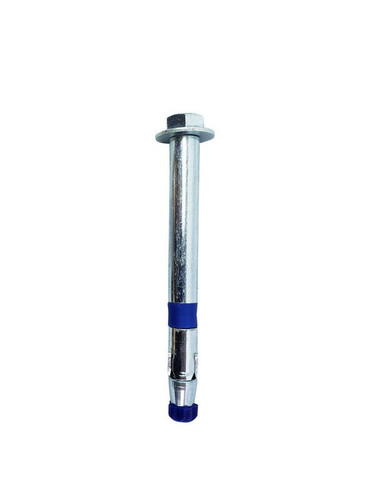
- Frontline COB345K Reusable 5K Concrete Anchor Bolt. A removable drilled-in anchor for tie-off points after the pour.
Planning Tie-Off Points Before the Pour?
Need help specifying the right system for your jobsite? Confirm your application, anchorage, and clearance with us and we will walk through the kit list so the right equipment ships together.
Call 863-703-4522 to talk to a fall protection specialist.