

RW Weld-On Commercial Roof Anchor
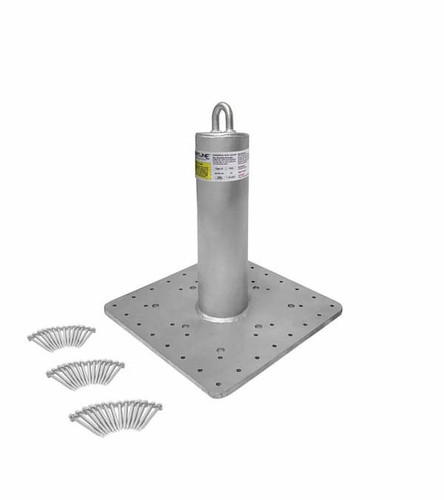
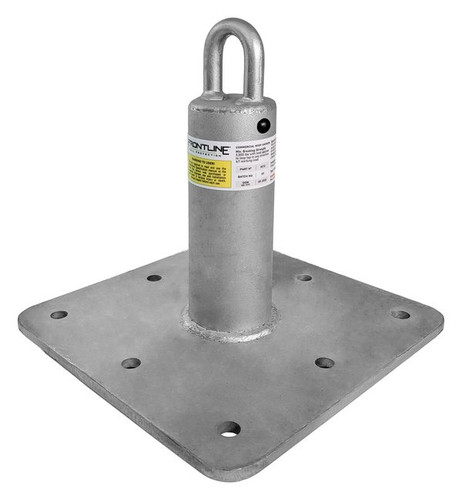
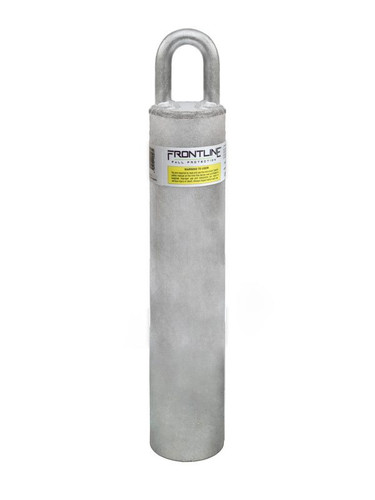
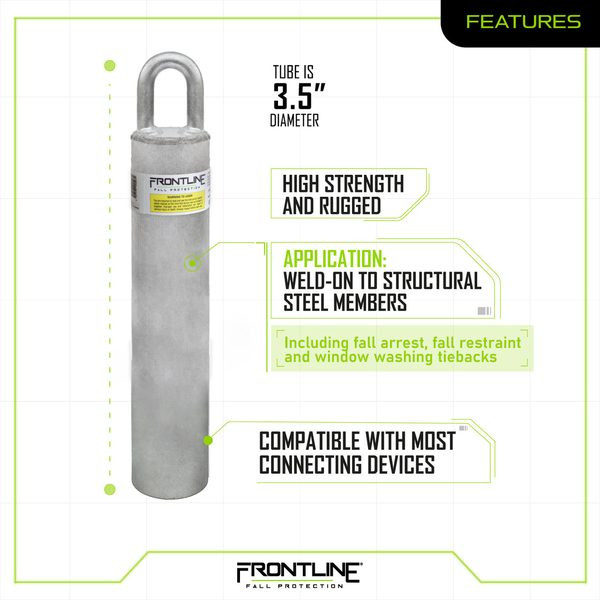
The RW is a permanent-grade weld-on commercial anchorage device for fall arrest, fall restraint, work positioning, and rescue operations - including window washing tiebacks. A 3.5 inch diameter ASTM rated steel tube carries a 5/8 inch U-rod connection point, and the whole anchor is hot dip galvanized to withstand the toughest jobsites indoors or out. It welds directly to structural steel members with a 5/16 inch field weld performed by a certified welder.
Choose a 12 inch (RW12) or 18 inch (RW18) height so the U-rod connection clears insulation and membrane build-ups. Tensile strength is 5,000 lbf (22 kN), rated for one worker at 310 lbs, and the anchor is compatible with an extensive range of connecting devices including self-retracting lifelines, shock-absorbing lanyards, and vertical and horizontal lifelines. Conforms to ANSI Z359.18 and A10.32 and aligns with OSHA 1926 and 1910.
Product Video

Before you weld one to your structure, see how Frontline fabricates and tests every RW commercial anchor post.
Who Needs This Product
This product is a weld-on commercial anchorage device for structural steel - the anchor point of a fall protection system, sized for permanent installation on commercial roofs and steel structures. Building owners and steel erectors specify it where a galvanized, permanent U-rod tie-off needs to live for the life of the structure. Each worker still needs a full body harness and a compatible connecting device attached to the U-rod.
Features
Two post heights
12 inch (RW12) or 18 inch (RW18) so the connection point clears insulation and membrane build-ups.
Weld-on permanence
5/16 inch field weld to structural steel members - no fastener pattern, no penetrating hardware.
Certified welder installation
Welding is required to be performed by a certified welder using approved processes.
Hot dip galvanized
Full HDG finish over ASTM rated steel for exterior or indoor service in any weather.
Four-mode rated
Fall arrest, fall restraint, work positioning, and rescue operations from one anchorage device.
Broad connector compatibility
Works with SRLs, shock-absorbing lanyards, and vertical and horizontal lifelines.
Configurations
| Length | SKU | Price |
|---|---|---|
| 12" | RW12 | $175.99 |
| 18" | RW18 | $224.99 |
Technical Specifications
| SKUs | RW12 (12 in); RW18 (18 in) |
|---|---|
| Type | Weld-on steel anchorage device, high strength and rugged |
| User capacity | 310 lbs (one worker including clothing and tools) |
| Tensile strength | 5,000 lbf / 22 kN |
| Tube | 3.5 in diameter |
| U-rod cross section | 0.625 in |
| Available heights | 12 in or 18 in |
| Anchor weight | 6.8 lbs (RW12); 10.6 lbs (RW18) per spec sheet |
| Field weld | 5/16 in, performed by a certified welder |
| Material / finish | ASTM rated steel, hot dip galvanized |
| Application | Weld-on to structural steel members, exterior or indoor |
| Standards | ANSI Z359.18; A10.32; OSHA 1926; OSHA 1910 |
Structure and weld carry the load. The anchor attachment point must be structurally capable of supporting 5,000 lbs or 2 times the intended fall protection load per OSHA 1910.140, verified by a qualified person, and welding must be performed by a certified welder. One worker per anchor at 310 lbs maximum - calculate fall clearance before tying off.
Compliance Standards
ANSI Z359.18
American National Standards Institute standard for anchorage connectors.
ANSI/ASSP A10.32
Fall protection systems for construction and demolition operations.
OSHA 29 CFR 1926
Federal construction fall protection criteria, including anchorage strength requirements.
OSHA 29 CFR 1910
General industry walking-working surfaces and personal fall protection rules, including the anchorage criteria of 1910.140.
Typical Applications
Installation Overview
Follow the manufacturer's manual. The sequence below is an overview only.
- Inspect. Check the tube, U-rod, galvanizing, and label before installation.
- Verify structure. Confirm the steel member supports 5,000 lbs or 2 times the intended load per OSHA 1910.140, verified by a qualified person.
- Position. Place the anchor at the engineered location in the fall protection or tieback plan.
- Weld. Have a certified welder apply the 5/16 inch field weld per the user manual.
- Inspect the weld. Verify the completed weld and finish before the anchor enters service.
- Connect. Attach the connecting device to the U-rod and verify fall clearance before work begins.
Inspection and Retirement
Inspect before each use, with a documented competent-person inspection at least every 6 months. Pull the equipment from service for any of the conditions below.
- U-rod: bending, cracks, nicks, or wear at the connection point.
- Weld: cracks, undercut, corrosion, or any visible weld defect at the base.
- Tube: deformation, dents, or damage to the post.
- Galvanizing: breached coating with active corrosion underneath.
- Markings: missing or illegible product label.
Retire the anchor immediately after any fall arrest event, any deformation or weld damage, or any condition where it cannot be verified as safe for service.
 Fall Protection
Distributors, LLC Free Tool · No Signup · OSHA 1926.502 Free Interactive Tool Fall Protection Calculator Pick your system. Run the math. Generate a plan. 1Pick Your SystemDetermine fall restraint vs. fall arrest based on your work surface, edge access, and clearance. 2Run the MathCalculate exact fall clearance required below the work surface for your SRL or lanyard setup. 3Generate a PlanGet a printable OSHA-compliant Fall Protection Plan structured around 29 CFR 1926.502(k).
Frequently Asked Questions
Frontline RW Submittals and Documentation
Frontline RW Spec Sheet (PDF)Heights, strengths, materials, weld callout, and compliance summary. Frontline RW Test Report (PDF)Third-party test results documenting the rated performance. Frontline RW User Manual (PDF)Welding, installation, inspection, and retirement procedures.Compatible and Related Products
- Frontline RW-CAL Weld-On Commercial Anchor. The same weld-on anchor family certified to CAL-OSHA Title 8 for California jobs.
- Frontline RO Commercial Roof Anchor. The bolt-down base plate version for concrete, metal, or wood substrates.
- Frontline RO-CAL Commercial Roof Anchor. The bolt-down commercial anchor certified to CAL-OSHA Title 8.
- Frontline RO4W Multifunction 4-Way Anchor. A multifunction anchor for concrete, metal, and wood substrates.
Specifying Weld-On Roof Anchors?
Need help specifying the right system for your jobsite? Confirm your application, anchorage, and clearance with us and we will walk through the kit list so the right equipment ships together.
Call 863-703-4522 to talk to a fall protection specialist.