

RO4W Multifunction 4-Way Anchor
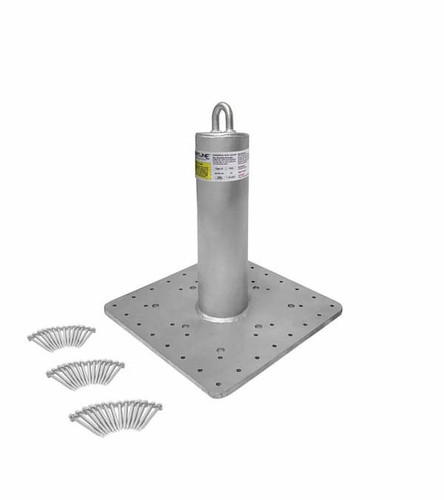
The RO4W is a pre-engineered, multi-directional anchor point for metal, wood, and concrete structures - one plate that handles one worker in fall arrest or two workers in fall restraint. The 11 x 11 inch zinc-plated steel base lays flat on the structure with dedicated fastener patterns for wood/metal (#14 x 2.5 inch Type A milled point deck screws recommended) and for concrete, and its raised 4-way connection points accept carabiners and snap hooks loaded from any direction of the work.
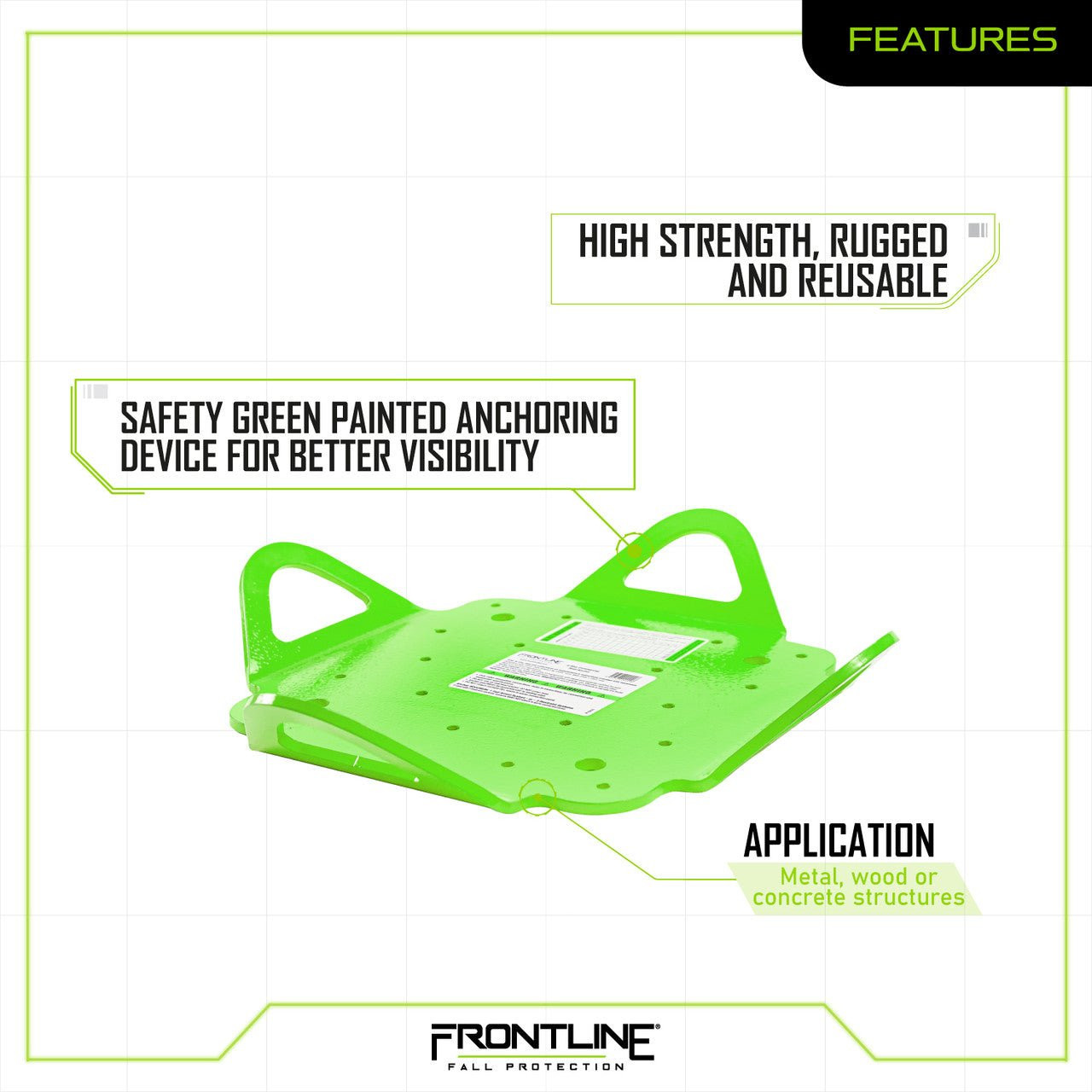
Tensile strength is 5,000 lbf (22 kN) with a 130 to 420 lb user capacity range. Compatible with self-retracting lifelines, shock-absorbing lanyards, and vertical and horizontal lifelines. Conforms to ANSI Z359.18 and A10.32 and aligns with OSHA 29 CFR 1926 and 1910. High strength, rugged, and reusable.
Who Needs This Product
This product is a fastened anchorage connector - the anchor point of a fall protection system for crews working on metal decking, wood framing, or concrete. Each connected worker still needs a full body harness and a compatible connecting device (SRL, shock-absorbing lanyard, or lifeline). One anchor serves a single worker in fall arrest or two workers in fall restraint - never both modes at once.
Features
One anchor, three substrates
Pre-engineered fastener patterns for metal, wood, and concrete mean one SKU covers the whole jobsite.
True 4-way loading
Raised multi-directional connection points take load from any direction, so the work can move around the anchor.
Arrest or restraint
Rated for one worker in fall arrest or two workers in fall restraint - pick the mode the job needs.
Broad connector compatibility
Works with SRLs, shock-absorbing lanyards, and vertical and horizontal lifelines.
Zinc-plated steel
Corrosion-resistant plating over high strength steel stands up to reuse across jobs.
Wide capacity range
Rated for users from 130 to 420 lbs including clothing and tools - covers more of the crew than 310 lb anchors.
Technical Specifications
| SKU | RO4W |
|---|---|
| Type | Painted anchorage device, multifunction 4-way, reusable |
| Users | 1 in fall arrest, or 2 in fall restraint |
| User capacity | 130 to 420 lb per user (including clothing and tools) |
| Tensile strength | 5,000 lbf / 22 kN |
| Base | 11 in x 11 in square, 3/8 in thick |
| Material | Zinc-plated steel |
| Substrates | Metal, wood, or concrete structures |
| Recommended fasteners | #14 x 2.5 in Type A milled point deck screws (wood/metal); see manual for concrete |
| ANSI standards | Z359.18; A10.32 |
| OSHA alignment | 29 CFR 1926; 29 CFR 1910 |
Fasteners and structure carry the load. The RO4W is only as strong as what it is screwed to - use the manual's fastener schedule and pattern for your substrate, and verify the structure itself can take a 5,000 lb anchorage load. Never mix arrest and restraint on the same anchor, and calculate fall clearance before tying off.
Compliance Standards
ANSI Z359.18
American National Standards Institute standard for anchorage connectors.
ANSI/ASSP A10.32
Fall protection systems for construction and demolition operations.
OSHA 29 CFR 1926
Construction industry fall protection, Subpart M - anchorage requirements under 1926.502(d).
OSHA 29 CFR 1910
General industry walking-working surfaces and personal fall protection systems.
Typical Applications
Installation Overview
Install per the Frontline user manual. The sequence below is an overview only.
- Inspect. Check the plate, connection points, plating, and label before each use.
- Verify structure. Confirm the member can carry a 5,000 lb anchorage load, verified by a qualified person.
- Position. Place the base flat on the structure at the manual's specified location for your application.
- Fasten. Use the fastener pattern for your substrate - wood/metal holes with #14 x 2.5 in deck screws, or the concrete pattern per the manual. Fill the pattern completely.
- Connect. Clip the connecting device to a connection point - one worker in arrest or up to two in restraint.
- Verify clearance. Confirm fall clearance below the work surface before work begins.
Inspection and Retirement
Inspect before each use, with a documented competent-person inspection at least every 6 months under ANSI Z359.2. Pull the anchor from service for any of the conditions below.
- Plate: bending, cracks, elongated fastener holes, or corrosion beyond surface discoloration.
- Connection points: deformation, nicks, sharp edges, or wear.
- Fasteners: stripped, loose, missing, or corroded - re-fasten per the manual before use.
- Plating: deep gouges exposing bare steel to rust.
- Labels: legible and intact.
Retirement triggers: any fall event on the anchor, any plate or connection point deformation, or any condition where the inspector cannot positively verify the anchor is fit for service.
 Fall Protection
Distributors, LLC Free Tool · No Signup · OSHA 1926.502 Free Interactive Tool Fall Protection Calculator Pick your system. Run the math. Generate a plan. 1Pick Your SystemDetermine fall restraint vs. fall arrest based on your work surface, edge access, and clearance. 2Run the MathCalculate exact fall clearance required below the work surface for your SRL or lanyard setup. 3Generate a PlanGet a printable OSHA-compliant Fall Protection Plan structured around 29 CFR 1926.502(k).
Frequently Asked Questions
Frontline RO4W Submittals and Documentation
Frontline RO4W Spec Sheet (PDF)Base dimensions, fasteners, capacity, materials, and the full compliance summary. Frontline RO4W Independent Lab Test Report (PDF)Third-party test results for your submittal package. Frontline RO4W User Instruction Manual (PDF)Fastener schedules by substrate, installation, inspection, and retirement.Compatible and Related Products
- Standing Seam Roof Anchor SSRA1. Non-penetrating anchor for standing seam metal roofs.
- Frontline RK5PTB Combat Roofer Kit. Harness, anchor, and vertical lifeline in one bag.
- Frontline HLK1004 4-Person 100 ft Horizontal Lifeline Kit. Rope HLL the RO4W can anchor per the manual.
- Frontline HCLL260 Elite 2-Person 60 ft Cable Horizontal Lifeline. Retractable cable HLL with built-in winch.
Buying Anchors for a Crew?
Need help specifying the right system for your jobsite? Confirm your application, anchorage, and clearance with us and we will walk through the kit list so the right equipment ships together.
Call 863-703-4522 to talk to a fall protection specialist.