

RO-BKRPLT Multifunction Anchor Backer Plate
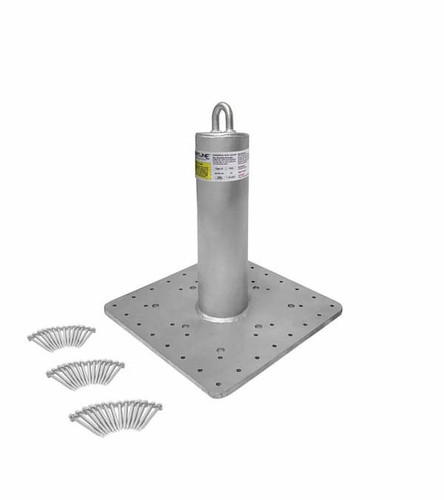
The RO-BKRPLT is the structural backer plate companion for Frontline RO commercial roof anchors. Made for through-bolt (sandwich) mounting, the plate sits on the opposite side of the structure from the anchor base and works with threaded rod assemblies to clamp the installation tight. It is a backing component of a complete personal fall arrest system installation.
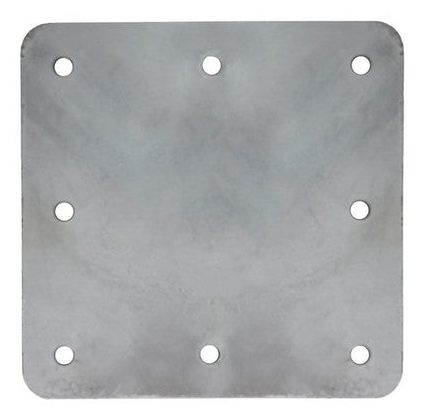
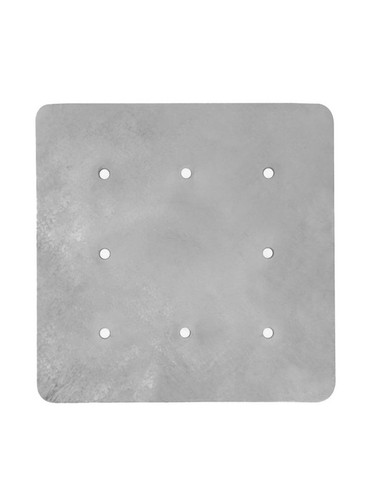
Cut from ASTM A36 steel at 16 x 16 inches and 0.35 inches thick, then hot dip galvanized, the plate matches the 16 x 16 inch base of the RO12 and RO18 anchors. Frontline lists it as the I-beam hardware for the RO anchor: reduces localized stress on roof and steel beam installations. Mounting hardware is not included. The installation requires six 1/2 inch ASTM A307 threaded rods with nuts and lock washers.
Who Needs This Product
This product is a structural backing component, not a standalone anchor. Roofing contractors, facility managers, and engineers specify it when an RO roof anchor is through-bolted to a steel beam instead of fastened into a deck or concrete slab. The plate spreads the clamping load on the far side of the beam. The RO anchor, threaded rod hardware, harness, and connecting device complete the system.
Features
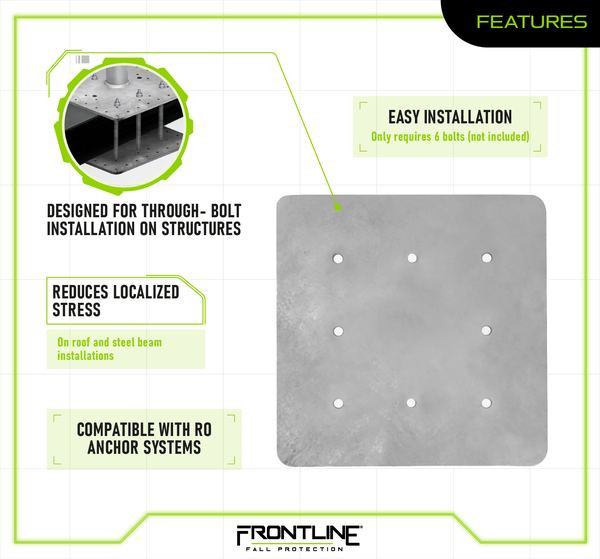
Through-bolt (sandwich) mounting
Backs the RO anchor from the opposite side of the structure, clamped by threaded rod assemblies.
Reduces localized stress
Spreads the clamping load across a 16 x 16 inch plate on roof and steel beam installations.
ASTM A36 steel, 0.35 inch
A full 0.35 inch thick structural plate sized to match the 16 x 16 inch RO anchor base.
Hot dip galvanized
Corrosion protection that matches the galvanized RO anchor for long service indoors or out.
RO series companion
The Frontline manual lists the RO-BKRPLT as the backing plate for I-beam installations of the RO anchor.
Standard threaded rod hardware
Nine 0.59 inch holes accept the (6) 1/2 inch A307 rods, nuts, and lock washers you source to suit the beam.
Technical Specifications
| SKU | RO-BKRPLT |
|---|---|
| Type | Multifunction anchor backer plate for RO roof anchors (structural component) |
| Material | ASTM A36 steel, hot dip galvanized |
| Dimensions | 16 in x 16 in x 0.35 in thick |
| Hole pattern | Nine 0.59 in diameter holes on a 3 x 3 grid, 8.75 in between outer rows, 3.57 in from each edge to the nearest hole |
| Min anchorage strength | 5,000 lbf / 22.2 kN (installed system requirement) |
| Required hardware | (6) 1/2 in ASTM A307 threaded rods, (12) lock washers, and (12) hex nuts - not included |
| Shipping weight | Approx. 26 lbs |
| Application | Through-bolt (sandwich) backing for RO anchors on roof structures and steel beams |
| Beam flange | 6 in minimum to 8 in maximum width per the Frontline manual, or as approved by a qualified person |
| Compatibility | Frontline RO12 / RO18 roof anchors |
Hardware is not included. The RO-BKRPLT ships as the plate only. The installation requires six 1/2 inch ASTM A307 threaded rods with twelve hex nuts and twelve lock washers, sourced to the beam depth. The complete through-bolt assembly must be verified by a qualified person for the intended fall protection load before use.
Compliance Standards
Structural component
The RO-BKRPLT spec sheet lists no standalone compliance standards. It is a backing plate that performs as part of a complete RO anchor installation rather than as an anchorage connector on its own.
Qualified person review
As with any anchorage installation, the complete through-bolted assembly (anchor, plate, rods, and beam) must be evaluated and approved by a qualified person before workers tie off.
Typical Applications
Installation Overview
Follow the manufacturer's manual. The sequence below is an overview only.
- Inspect. Check the plate for deformation, cracks, and finish damage before installation.
- Verify the beam. Confirm the I-beam is structurally sound, fully secured to the building, and approved by a qualified person for the 5,000 lb load. The manual calls for a 6 to 8 inch flange, or as approved by a qualified person.
- Source hardware. Obtain six 1/2 inch ASTM A307 threaded rods, twelve lock washers, and twelve hex nuts sized to the beam. They are not included.
- Position. Set the RO anchor flat on the top of the beam and the RO-BKRPLT on the underside, aligned with the anchor base.
- Clamp and torque. Install the rods through both plates and fully tighten the nuts and washers on both sides.
- Secure and verify. Secure or deform the thread ends to prevent loosening, then have the qualified person confirm the installation before any tie-off.
Inspection and Retirement
Inspect before each use, with a documented competent-person inspection at least every 6 months. Pull the equipment from service for any of the conditions below.
- Plate: bending, cracks, gouges, or deformation.
- Galvanized finish: corrosion or damage that exposes bare steel.
- Rod assemblies: corrosion, thread damage, or loss of tightness.
- Bearing surfaces: crushing or movement at the beam interface.
- Alignment: the plate remains centered under the RO anchor base.
Remove the plate from service after any fall arrest event on the anchor it backs, any deformation or crack, or any condition where the installation cannot be verified as safe by a qualified person.
 Fall Protection
Distributors, LLC Free Tool · No Signup · OSHA 1926.502 Free Interactive Tool Fall Protection Calculator Pick your system. Run the math. Generate a plan. 1Pick Your SystemDetermine fall restraint vs. fall arrest based on your work surface, edge access, and clearance. 2Run the MathCalculate exact fall clearance required below the work surface for your SRL or lanyard setup. 3Generate a PlanGet a printable OSHA-compliant Fall Protection Plan structured around 29 CFR 1926.502(k).
Frequently Asked Questions
Frontline RO-BKRPLT Submittals and Documentation
Frontline RO-BKRPLT Spec Sheet (PDF)Plate material, dimensions, hole pattern, and required hardware. Frontline RO/RW/RC User Manual (PDF)I-beam installation, fastening, inspection, and retirement for the Frontline roof anchor family.Pairs With These Frontline RO Anchors
- Frontline RO Commercial Roof Anchor (RO12 and RO18). The 12 and 18 inch RO posts this plate backs on I-beam installations.
- Frontline RO-CAL Commercial Roof Anchor. The CAL-OSHA compliant RO anchor with the same 16 x 16 inch base footprint.
- Frontline RC-BKRPLT Concrete Anchor Backer Plate. The matching backer plate for RC concrete roof anchor posts.
Through-Bolting an RO Anchor to Steel?
Need help specifying the right system for your jobsite? Confirm your application, anchorage, and clearance with us and we will walk through the kit list so the right equipment ships together.
Call 863-703-4522 to talk to a fall protection specialist.