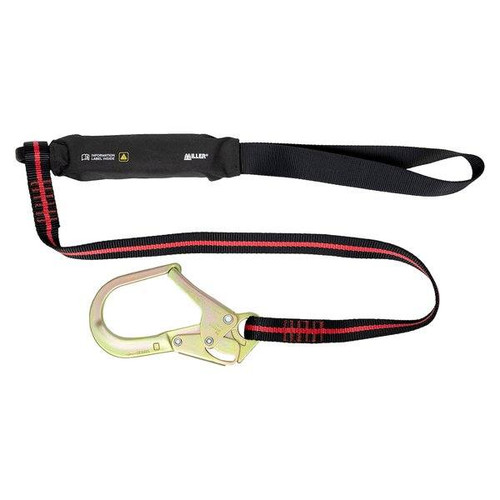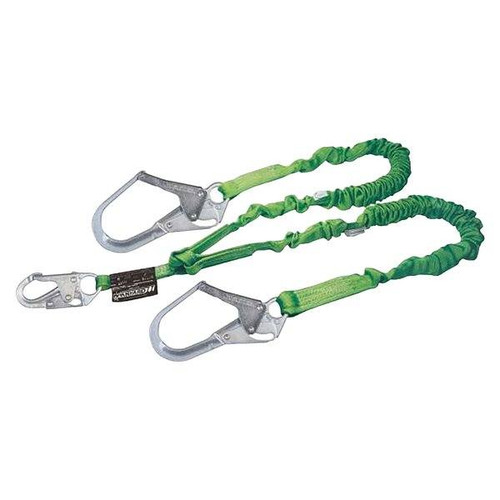

Kevlar Arc-Rated Lanyard with Rebar Hook
The 913KR is the arc-rated lanyard for structure anchors: Kevlar webbing and a Kevlar-core SofStop absorber take the heat and arc exposure, while the large-throat locking rebar hook closes directly over bar, angle, and pipe at the anchor end.
Certified to ANSI Z359.13 and compliant with OSHA 1926.502 and 1910.140, rated for a 310 lb worker with 5,000 lb steel hardware.
Who Needs This Product
Kevlar webbing takes arc flash and high heat that would destroy polyester, making this the lanyard for energized and hot environments. Like every energy absorbing lanyard, it trades clearance for economy: generous overhead anchors are its home field, and the TurboLite+ PFL takes over when heights get tight.
Features
Kevlar Web and Absorber
Both the webbing and the SofStop core are Kevlar, keeping the whole load path arc- and heat-tolerant.
Locking Rebar Hook
The large-throat hook closes over rebar and angle iron that defeat standard snap hooks.
Energy Absorber
The absorber core expands under load, limiting average arrest force to 900 lb and capping deceleration at 3.5 ft per ANSI Z359.13.
Warning Flag
A visual indicator shows if the lanyard has been loaded in a fall, flagging it for immediate retirement.
Locking Hooks
Double-action locking hooks at both ends cannot open accidentally against a D-ring or anchor.
Steel Hardware
Hooks rated to 5,000 lb tensile keep the connections stronger than the standard requires.
Technical Specifications
| SKU | 913KR-Z7/6FTBK |
|---|---|
| Product | Kevlar Arc-Rated Lanyard with Rebar Hook |
| Stocked lengths | 6 ft |
| Working length | 6 ft |
| Webbing | Arc-rated Kevlar |
| Absorber | Kevlar SofStop core |
| Connectors | Locking rebar hook (anchor); locking snap hook (harness) |
| Color | Black |
| Capacity | 310 lb including all clothing, tools, and equipment |
| Hardware | Steel, 5,000 lb tensile rated |
| Standards | ANSI Z359.13; OSHA 1926.502; OSHA 1910.140; ASTM F887 arc rated |
| Warranty | Miller Limited Lifetime Warranty against defects in workmanship and materials |
Mind the clearance. A 6 ft energy absorbing lanyard needs roughly 17 to 18 ft of clearance below the anchor after free fall, deceleration, harness stretch, and safety margin. Run your numbers with our fall protection calculator before the first connection.
Compliance Standards
ANSI Z359.13
Certified as an energy absorbing lanyard, limiting average arrest forces to 900 lb with a maximum 3.5 ft deceleration distance.
OSHA 1926.502 and 1910.140
Meets OSHA connecting device requirements for personal fall arrest systems.
310 lb Capacity
Rated for a 310 lb worker including clothing and tools; hardware rated to 5,000 lb tensile.
ANSI Z359.2
Kept in service through pre-use checks and documented competent person inspections at least annually.
Typical Applications
Setup Overview
- Inspect the lanyard, absorber, and both hooks before use.
- Connect the absorber end snap hook to the harness dorsal D-ring and verify the gate locks.
- Connect the anchor end to an anchorage or anchorage connector rated for fall arrest.
- Verify the anchor is at or above the dorsal D-ring wherever possible to limit free fall.
- Confirm total fall clearance below the work level before starting work.
Full use instructions ship with the lanyard.
Inspection and Retirement
Inspect the lanyard before each use, and have a competent person inspect it at least annually per ANSI Z359.2.
- Webbing and jacket: cuts, frays, burns, chemical damage, UV fading, or broken stitching.
- Energy absorber: no deployment, tearing, elongation, or exposed core; warning flag not showing.
- Hooks: gates close and lock; no cracks, corrosion, or distortion.
- Labels: present and legible, including capacity and standards.
Retirement triggers: any fall arrest event, any deployed absorber or warning flag, or any failed inspection.
 Fall Protection
Distributors, LLC Free Tool · No Signup · OSHA 1926.502 Free Interactive Tool Fall Protection Calculator Pick your system. Run the math. Generate a plan. 1Pick Your SystemDetermine fall restraint vs. fall arrest based on your work surface, edge access, and clearance. 2Run the MathCalculate exact fall clearance required below the work surface for your SRL or lanyard setup. 3Generate a PlanGet a printable OSHA-compliant Fall Protection Plan structured around 29 CFR 1926.502(k).
Frequently Asked Questions
Miller 913KR-Z7 Lanyard Submittals and Documentation
913KR-Z7 Specification Sheet (PDF)Technical data, materials, and SKU-level UPC information. Miller Fall Protection Catalog (PDF)The full Miller line: body wear, connecting devices, anchors, and rescue. 913KR-Z7 Lanyard Inspection Form (PDF)Printable pass/fail checklist for documented lanyard inspections.Compatible and Related Products
- Miller T4500 Titan II Non-Stretch Harness. The harness at the other end of the lanyard.
- Miller TurboLite+ PFL, Carabiner and Snap Hook. The PFL alternative that arrests in inches.
- Miller 8183 Cross-Arm Strap. The anchor strap the snap hook clips to.
Matching Lanyards to Your Anchors?
Hook style, length, and clearance decide the right lanyard. Confirm your setup with us and we will make sure the right equipment ships together, based on the delivery location.
Call 863-703-4522 to talk to a fall protection specialist.
Miller Limited Lifetime Warranty
Miller Fall Protection products are covered by the Miller Limited Lifetime Warranty. In the manufacturer's words: "We sincerely believe that our fall protection equipment is the best in the world. Our products endure rigorous tests to ensure that the fall protection equipment you trust is manufactured to the highest standards. Miller fall protection products are tested to withstand normal wear and tear, but are not indestructible and can be damaged by misuse."
In the unlikely event that you should discover defects in either workmanship or materials, under the Limited Lifetime Warranty, Miller will repair or replace the product at the manufacturer's expense. If a replacement is necessary and your product is no longer available, a comparable product will be substituted. The Limited Lifetime Warranty does not apply to normal wear and tear or abusive treatment of the product.
Miller is a brand of Protective Industrial Products, Inc. (PIP). Should a product issue surface, contact Fall Protection Distributors, LLC and we will coordinate the warranty claim with the manufacturer.