Fall Protection Strategies for Metallic Building Systems Roofs
Posted by Howie Scarboro – CEO Fall Protection Distributors, LLC on Apr 23, 2026

See the Roof Anchor Compatibility Chart for Metallic Building Systems Standing Seam Panels.
Who Is Metallic Building Systems?
With over 75 years of industry leadership, Metallic Building Systems is a premier supplier of custom-engineered metal buildings across North America, serving as a flagship brand of Cornerstone Building Brands. Metallic leverages a massive manufacturing footprint to deliver high-performance solutions for industrial, commercial, and agricultural sectors. Headquartered in Houston, Texas, Metallic specializes in meeting the rigorous demands of the Southern United States and Mexico markets. Their deep local knowledge of regional wind-uplift requirements and Southwestern environmental stressors makes them a trusted partner for elite builders from Albuquerque to Monterrey. Every Metallic profile is engineered for durability, precision, and sustainability, defining the modern industrial building envelope.
Why Specialized Fall Protection is Crucial for Metallic Roofs
Safety is paramount when working on high-performance standing seam panels. Because Metallic Building Systems utilizes concealed fasteners and floating designs to manage thermal expansion, traditional penetrating anchors are not compatible. Drilling into these panels causes immediate leaks and voids the manufacturer's warranty. Contractors must utilize specialized, non-penetrating anchors that clamp to the standing seams to preserve structural integrity while providing a certified tie-off. To ensure a 100 percent tie-off without voiding manufacturer warranties, we recommend the modular SSRA system.
The following products provide a complete safety solution for Metallic Building Systems profiles:
- SSRA1 Seam Anchor: The foundational component. It features a robust, one-piece body with no moving parts and a patented design that fits approximately 95% of today's standing seam profiles, providing a certified 5,000-lb tie-off.
- SSRA2 Adjustable Roof Jack Adapters: These mount directly to the SSRA1 to support 10-foot wooden walk-boards for stable footing on steep slopes.
- SSRA3 Anchor Plates: High-strength plates that connect two SSRA1 anchors into a single assembly to create heavy-duty endpoints for horizontal lifelines.
- 100-foot SSRA Horizontal Lifeline Kit: A temporary mobility solution including four anchors and a 100-foot kernmantle rope rated for two workers.
- 120-foot Super Anchor Permanent HLL: A reliable, long-term solution using non-penetrating 5-inch riser posts that allow the floating roof to move naturally.
- Ridge Pro Steep Assist: The essential First-Man-Up solution that secures to the roof peak before the worker leaves the ladder on pitches between 6:12 and 12:12.
Keep in mind that OSHA and ANSI standards limit horizontal lifeline systems to a maximum pitch of 4:12. OSHA recognizes that workers can lose their footing and slide on steeper roofs, leading to dangerous swing falls that are not suitable for horizontal lifeline setups.
Proper Attachment: Set-Screws and Torque Requirements
For Metallic standing seam projects, you have two primary fastening options to maintain certified holding power while protecting the substrate:
- Cupped Tip Stainless Steel Set Screws: Use these for 22-gauge steel panels. The cupped tip creates a solid mechanical lock on the seam. You must torque these to 90 inch-pounds using a calibrated torque wrench.
- Nylon-Tipped Set Screws: Use these for 22- or 24-gauge steel panels where preserving the paint finish is the priority. You must torque these to 180-200 inch-pounds.
- Maintenance: Treat nylon tips as consumables. Replace these tips every 3 to 5 uses to maintain maximum grip strength and safety compliance.
CRITICAL WARNING: NO IMPACT GUNS
Warning: Always use a calibrated torque wrench for final installation. Never use an impact gun to install set-screws. Impact guns can quickly over-tighten the screws, resulting in permanent damage to the standing seam panel or the anchor itself. This error compromises the anchor's certified holding power and voids the hardware warranty.
Double-Lok Mechanical Trapezoidal Panels (SSRA Compatible 22/24 ga. Steel)
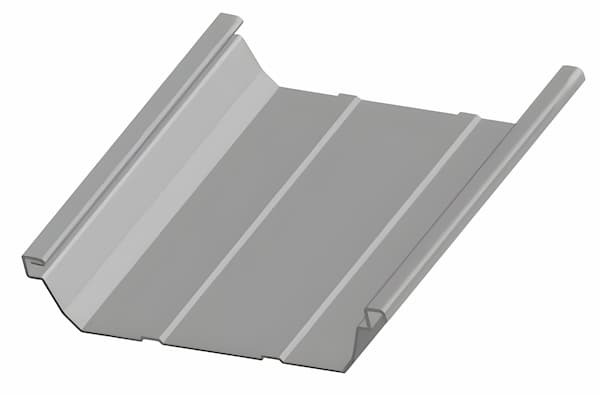
The Double-Lok is a structural, mechanical standing-seam system featuring a 3-inch seam height and 18-inch or 24-inch panel widths. Fabricated from heavy-duty 22-gauge and 24-gauge steel, these panels utilize a trapezoidal seam profile. This system is engineered for industrial and retrofit projects, using interlocking clips to manage thermal movement on slopes as low as 1/4:12. This system is available in Galvalume Plus, Signature 200, and Signature 300 finishes. See the Roof Anchor Compatibility Chart for Metallic Building Systems 24 Gauge and 22 Gauge Double-Lok Mechanical Trapezoidal Standing Seam Panels.
Fall Protection for Double-Lok
- This panel is fully compatible with the entire SSRA modular product line. The SSRA1 Seam Anchor clamps directly to the 3-inch trapezoidal rib, providing a certified 5,000-lb tie-off.
- On steep industrial slopes, SSRA2 Adjustable Roof Jack Adapters mount to the anchors to support 2x10 walk-boards for stable footing and material staging.
- For projects requiring maximum worker mobility, SSRA3 Anchor Plates connect two anchors to support the 100-foot SSRA Horizontal Lifeline Kit.
- For permanent maintenance access, this profile is compatible with the 120-foot Super Anchor Permanent HLL and uses non-penetrating 5-inch riser posts.
- The Ridge Pro ensures a 100 percent tie-off for the first man up on pitches ranging from 6:12 to 12:12, allowing for safe transition from the ladder.
SuperLok Mechanical Panels (SSRA Compatible 22/24 ga. Steel)
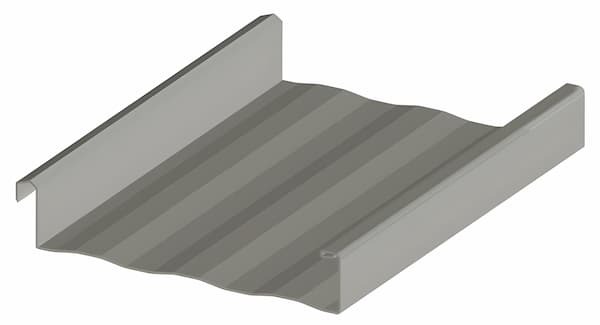
The SuperLok is a high-performance mechanical standing seam panel with a 2-inch vertical rib and panel widths of 12 inches or 16 inches. Available in 22-, 24-, and 26-gauge steel, this vertical leg profile is designed for extreme weather resistance. SuperLok requires a minimum roof pitch of 1/2:12 and is compatible with both open framing and solid substrates. See the Roof Anchor Compatibility Chart for Metallic Building Systems 24 Gauge and 22 Gauge SuperLok Mechanical Standing Seam Panels.
Fall Protection for SuperLok
- For 22-gauge and 24-gauge versions, the SSRA1 Seam Anchor clamps securely to the vertical rib, providing a certified tie-off point without damaging the finish.
- SSRA2 Adjustable Roof Jack Adapters mount to SSRA1 anchors to support level walk-boards for material staging on commercial pitches.
- For lateral mobility, SSRA3 Anchor Plates enable the installation of the 100-foot SSRA Horizontal Lifeline Kit across the structural vertical legs.
- For facilities requiring regular access, the 120-foot Super Anchor Permanent HLL provides a non-penetrating long-term safety solution.
- For 26-gauge panels or pitches between 6:12 and 12:12, the Ridge Pro Steep Assist is the required alternative for safe ridge-mounted protection.
Ultra-Dek Snaplock Panels (SSRA Compatible 22/24 ga. Steel)
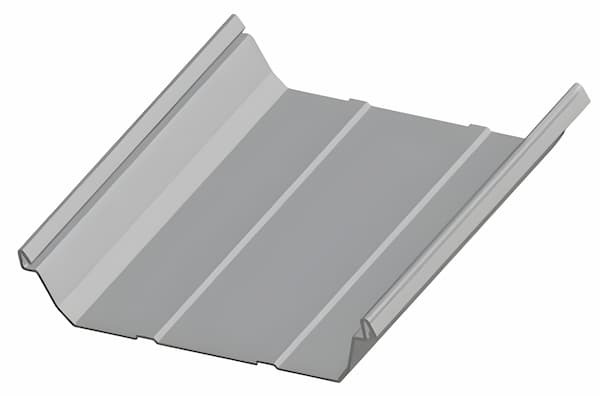
The Ultra-Dek system features a snap-together trapezoidal standing seam with coverage widths of 18 inches and 24 inches. With a 3-inch seam height and availability in 22 and 24-gauge steel, this panel eliminates the need for mechanical seaming tools. Ultra-Dek is optimal for slopes as low as 1/4:12 and features a unique upper rib shape for a secure, streamlined seal. See the Roof Anchor Compatibility Chart for Metallic Building Systems 24 Gauge and 22 Gauge Ultra-Dek SnapLock Trapezoidal Panel Standing Seam Panels.
Fall Protection for Ultra-Dek
- The SSRA1 Seam Anchor attaches directly to the snap-together trapezoidal seam without penetrating the surface, providing a robust 5,000-lb tie-off.
- SSRA2 Adjustable Roof Jack Adapters mount to the anchors to support level walk-boards and material staging on low-slope snap-lock roofs.
- SSRA3 Anchor Plates bridge anchors to support the 100-foot SSRA Horizontal Lifeline Kit for lateral mobility across large commercial spans.
- The 120-foot Super Anchor Permanent HLL provides a long-term safety solution that accommodates the floating panel's thermal movement.
- The Ridge Pro provides the necessary peak-mounted tie-off for pitches between 6:12 and 12:12, ensuring worker safety from the start of the climb.
BattenLok HS Structural Panels (SSRA Compatible 22/24 ga. Steel)
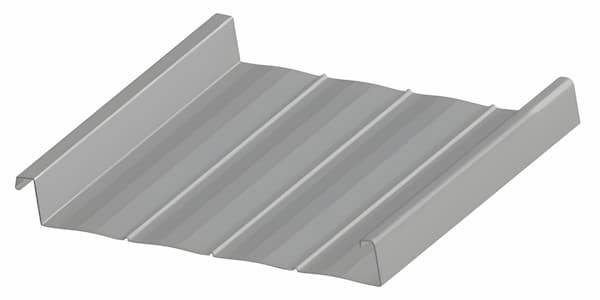
The BattenLok HS is a structural mechanical standing seam system featuring a 2-inch vertical seam and coverage widths of 12 inches and 16 inches. Crafted from 22-gauge and 24-gauge steel, this vertical leg profile is for high-wind environments and fascia transitions. BattenLok HS requires a minimum roof pitch of 1/2:12 and can be field-curved for unique architectural designs. See the Roof Anchor Compatibility Chart for Metallic Building Systems 24 Gauge and 22 Gauge BattenLok HS Structural Standing Seam Panels.
Fall Protection for BattenLok HS
- Non-curved BattenLok HS panels are fully compatible with the SSRA1 Seam Anchor, which fits the 2-inch vertical leg rib perfectly for a certified tie-off.
- SSRA2 Adjustable Roof Jack Adapters mount to anchors to provide level platforms for material staging and safe footing on high-wind structural sections.
- SSRA3 Anchor Plates enable installation of the 100-foot SSRA Horizontal Lifeline Kit to protect multiple workers traversing large structural envelopes.
- The 120-foot Super Anchor Permanent HLL provides a maintenance-safety solution that uses non-penetrating riser posts to preserve panel integrity.
- The Ridge Pro Steep Assist ensures safety during the initial ladder-to-roof transition on pitches ranging from 6:12 to 12:12.
- CRITICAL WARNING: BattenLok HS profiles are often utilized for curved or convex rooflines. Standard anchoring methods are not certified for curved panels unless a specialized on-site safety audit by a qualified professional accounts for variable swing-fall hazards.
Standing Seam Roof Anchor Panel Compatibility For 24 Gauge Metallic Building Systems
| Double-Lok (24 Ga.) | SuperLok (24 Ga.) | Ultra-Dek (24 Ga.) | BattenLok HS (24 Ga.) | |
|---|---|---|---|---|
SSRA 1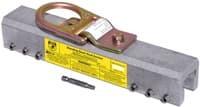 |
NO | NO | NO | NO |
SSRA1 Nylon Tip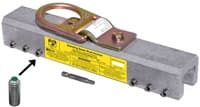 |
YES | YES | YES | YES |
SSRA2 Roof Jack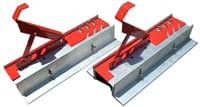 |
YES | YES | YES | YES |
SSRA3 Anchor Plate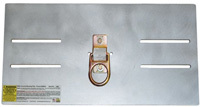 |
YES | YES | YES | YES |
The Ridge Pro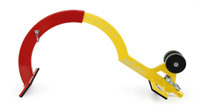 |
YES | YES | YES | YES |
Standing Seam Roof Anchor Panel Compatibility For 22 Gauge Metallic Building Systems
| Double-Lok (22 Ga.) | SuperLok (22 Ga.) | Ultra-Dek (22 Ga.) | BattenLok HS (22 Ga.) | |
|---|---|---|---|---|
| SSRA 1 |
YES | YES | YES | YES |
| SSRA1 Nylon Tip |
YES | YES | YES | YES |
| SSRA2 Roof Jack |
YES | YES | YES | YES |
| SSRA3 Anchor Plate |
YES | YES | YES | YES |
| The Ridge Pro |
YES | YES | YES | YES |
Mitigating Corporate Liability: The High Cost of Uncertified Fall Protection
A Metallic Building Systems building represents a premium investment in engineering, and your fall protection must meet that same professional standard. Deploying unbranded or generic imported anchors is a direct threat to your firm’s financial and legal standing. Regulatory inspectors now actively target non-serialized hardware that lacks verifiable, third-party engineering data. Failure to produce a certified test report confirming compliance with OSHA 1926.502 and ANSI standards during a site inspection can trigger immediate, severe penalties.
If an anchor lacks a documented third-party paper trail, it is a liability that has no place on a professional job site. American-made SSRA1 Standing Seam Roof Anchors provide a documented contrast. Precision-machined from solid 6061-T6 aluminum and validated at independent laboratories, our hardware has withstood test loads exceeding 14,500 pounds—nearly triple the OSHA 5,000-lb requirement. Review our full results in our independent laboratory test reports.
Contact Us for Expert Standing Seam Fall Protection Advice
For expert guidance on standing-seam roof anchors and fall-protection systems that safeguard both your crew and your panels, contact us today at 863-703-4522 or visit www.StandingSeamRoofAnchor.com. Our safety specialists can help you match the right non-penetrating anchor to your specific roof profile. For continued learning, download OSHA's 48-page Fall Protection Manual and our free Anchor Inspection Form once you've selected the ideal anchors for your roof system.
10 Essential Safety Guidelines for Metallic Building Systems Projects
- Enforce First-Man-Up Protocol: On pitches between 6:12 and 12:12, never step onto the roof without The Ridge Pro. This device ensures the worker is 100 percent tied off the moment they transition from the ladder to the peak.
- Verify Torque Settings Daily: Set-screw tension is not a set-and-forget task. Use a calibrated torque wrench before each use to ensure anchors remain at their required specifications.
- Eliminate Clip-Location Guesswork: Traditional anchors force contractors to search for hidden clips beneath the panel to ensure a secure hold. The SSRA1 eliminates this frustration by securing directly to the seam, providing a certified 5,000-pound tie-off point regardless of clip location.
- Stop No-Name Liability: Avoid unbranded, imported knock-off anchors. If an anchor lacks a verifiable 3rd-party test report demonstrating compliance with OSHA 1926.502, it poses a liability risk that could lead to a Willful Violation and a 100,000 dollar fine.
- Neutralize the Pendulum Effect: Always calculate your dynamic sag and fall distance. Keep the work zone within a 30-degree arc of the anchor point to prevent dangerous swing falls that could result in collisions with the ground or structure.
- Preserve Thermal Flexibility: Standing-seam panels float to accommodate extreme temperature swings. Only use non-penetrating clamps that allow for this natural thermal expansion, preventing the panels from buckling or oil-canning.
- Defend Against Galvanic Corrosion: Never mix incompatible metals. Use only Stainless Steel set screws on steel panels to prevent chemical reactions that lead to rust and structural failure.
- Mitigate Suspension Trauma Risks: Equip every worker's harness with trauma relief straps to prevent suspension trauma while waiting for rescue teams to arrive.
- Protect the Panel's Structural Integrity: High-torque, two-piece anchors can crush standing seams, damaging the roof and voiding warranties. Prioritize the SSRA1 low-torque design, which requires only 90 inch-pounds on 22g steel to achieve a full-strength lock.
- Consult Pros for Complex Roof Shapes: Custom projects often feature curved, serpentine, or convex rooflines. A qualified safety professional must perform a mandatory on-site inspection of these specialized profiles before deploying any fall protection hardware.
Disclaimer: The views, recommendations, and information presented in this blog are solely those of the author and do not necessarily reflect the opinions or positions of the featured panel manufacturer, its brands, subsidiaries, or parent companies. Customers are strongly encouraged to contact the roof panel manufacturer directly for inquiries about fall protection compatibility with their products and to address any potential warranty issues that may arise after installing our products.