

1010 2x4 Safety Bar for Open Framing
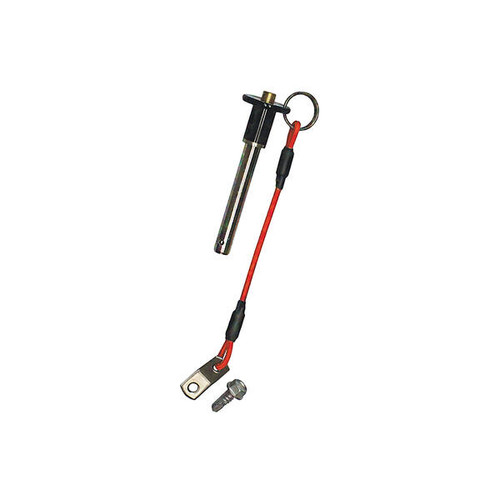
The Super Anchor 1010 Safety Bar is temporary fall protection for open framing: a red powder coated 1-1/2 x 1-1/2 x 1/8 inch square steel tube cross-bar with 2 x 1/8 inch steel legs that drop over 2x4 truss or stick framed top chords at 24 inch centers. Stainless 3/8 inch detent pins rated at 14,770 lb lock it to the chords in seconds, tethered on shock cords so they never leave the bar.
Up to 2 workers in fall arrest or fall restraint per bar at 310 lb each including tools, with 1.0 inch connector holes in the stems for snaphook tie-off. Open-end legs let the next truss roll into place with the bar installed. Compliant with ANSI Z359.1 and OSHA 1926.502, certified for use in Canada.
Who Needs This Product
Safety Bars protect framing crews during the most exposed phase of the build: setting trusses and sheathing open framing before any deck exists. Bars install in series as top chord framing advances, with workers connected by personal energy absorber, SRL with integral absorber, or leading edge SRL. A maximum of 2 workers attach per bar with a minimum 55 inch setback from gable edges, and cross-bracing below the bar position is mandatory. Not for work positioning.
Features
Locks on in seconds
Drop the legs over the top chords and set the stainless detent pins; a 5/16 x 2-1/4 inch hex bolt can substitute for a pin.
Open-end legs
Roll the third truss into place without removing the bar, reversible for framing that starts from either end.
Two tie-off stems
Two stems with 1.0 inch connector holes; Super Anchor recommends one worker on the gable-side stem for edge setback.
Tethered pins
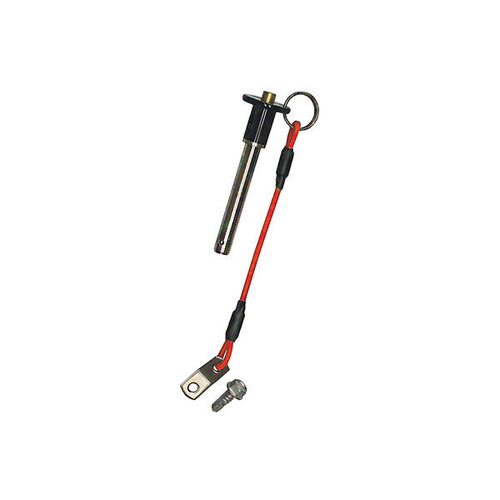
Detent pins ride stainless brackets on shock cord tethers, so pins stay with the bar between moves.
Anti-skid provisions
Top chord centering holes at 24 inch OC take duplex nails to prevent skidding above bracing.
Moves up the roof
With sheathing in place, bars move upslope row by row as the deck advances.
Technical Specifications
| Model | No. 1010 for 2x4 top chords |
|---|---|
| Cross-Bar | 1-1/2 x 1-1/2 x 1/8 inch square steel tube, red powder coated |
| Legs/Stems | 2.0 x 1/8 inch steel plate; 1.0 inch diameter connector holes |
| Leg Spacing | 24 inch on center; 48 inch bar length |
| Detent Pins | 3/8 inch stainless, 14,770 lb tensile (No. 2015-2.2-6 and No. 2015-4.4-6), shock cord tethers |
| Capacity | Maximum 2 persons fall arrest or fall restraint per bar; 310 lb per user including tools |
| Maximum Free Fall | 6 ft with required personal energy absorber, integral-absorber SRL, or leading edge SRL |
| Bar Weight | 12.5 lb |
| Framing Requirement | 5,000 lb or 2 times the intended load per OSHA 1926.502(d)(15); trusses fully braced per the manufacturer or engineer |
| Mandatory Bracing | Cross-bracing below the bar position; anti-skid duplex nails above bracing or sheathing |
| Service Zone | Maximum 30 degrees from vertical center recommended |
| Compliance | ANSI Z359.1; OSHA 1926.502; certified for Canada by l'Ordre des ingenieurs du Quebec |
Cross-bracing and correct orientation are required. Never use bars without cross-bracing in place below the bar position, never install in the opposite direction of the slope, and never place bars over top chord splices, truss plates, truss webs, or unbraced bottom chords. Secure legs against skidding with duplex nails when installed above cross-bracing or sheathing, and keep all detent pins in place before use.
Compliance Standards
ANSI Z359.1 / OSHA 1926.502
Safety and Truss Bar compliance per the 2023 manual.
Quebec Certified
Certified by a member of l'Ordre des ingenieurs du Quebec for use in Canada.
14,770 lb Detent Pins
3/8 inch stainless detent pins with stainless mounting hardware and shock cord tethers.
Engineered Framing Basis
Framing must support 5,000 lb or 2 times the intended load per OSHA 1926.502(d)(15).
Typical Applications
Installation Overview
Full figures, model tables, and bracing rules are in the manual linked below. The basics:
- Confirm framing is fully braced per the truss manufacturer or project engineer and capable of 5,000 lb or 2 times the intended load.
- Set the bar over the 2x4 top chords with cross-bracing in place below the bar position.
- Install all detent pins (or equivalent hex bolts) and confirm they are seated before any tie-off.
- Secure legs with duplex nails through the centering holes when the bar sits above cross-bracing or sheathing.
- Connect a maximum of 2 workers with personal energy absorbers, integral-absorber SRLs, or leading edge SRLs, minimum 55 inches from gable edges.
- Move the bar upslope in series as framing or sheathing advances, and never load it opposite the slope direction.
Inspection and Retirement
Inspect before installation and each use, with documented annual inspections. Remove the anchor from service when any of the following apply:
- The cross-bar, stem, or legs are bent or deformed.
- Detent pins are missing, damaged, or replaced with uncertified hardware.
- Tethers or mounting hardware are broken.
- The bar was subjected to a fall; remove it from service and inspect the framing.
- The PID or warning label is missing or illegible.
Tag anchors removed from service to prevent further use until inspected by a qualified or competent person.
 Fall Protection
Distributors, LLC Free Tool · No Signup · OSHA 1926.502 Free Interactive Tool Fall Protection Calculator Pick your system. Run the math. Generate a plan. 1Pick Your SystemDetermine fall restraint vs. fall arrest based on your work surface, edge access, and clearance. 2Run the MathCalculate exact fall clearance required below the work surface for your SRL or lanyard setup. 3Generate a PlanGet a printable OSHA-compliant Fall Protection Plan structured around 29 CFR 1926.502(k).
Frequently Asked Questions
Super Anchor 1010 Submittals and Documentation
Safety/Truss Bar Instruction/Specification Manual 2023 (PDF)Materials, model and detent pin tables, cross-bracing requirements, service zones, and inspection criteria. Super Anchor Warranty and Compliance Statement (PDF)Manufacturer warranty terms for Super Anchor fall protection equipment.Compatible and Related Products
- Super Anchor 3006 Hinged Anchors. Temporary ridge anchors once sheathing is on.
- Super Anchor 4020 3-Strand Value Lifeline. Lifelines for bar tie-off in 25 to 100 ft lengths.
- Super Anchor SuperGrab 4015 Rope Grabs. Fall arresters for lifeline rigging off bars.
- Super Anchor 1001 ARS Anchor Kits. Permanent anchors for when the roof deck goes on.
Protecting Framing Crews Before the Deck Goes On?
Tell us your framing spacing and crew size and we will spec bars, lifelines, and grabs so everything ships together, based on the delivery location.
Call 863-703-4522 to talk to a fall protection specialist.
Super Anchor Safety Manufacturer Warranty
Super Anchor Safety (SAS) warrants to the purchaser that all products are free from defect in material and workmanship at the time of shipment. This warranty is limited to product replacement for a period of one (1) year from the date of installation or use by the owner, provided that this period shall not exceed two (2) years from the date of shipment. This warranty only covers defects in material and workmanship. It does not cover conditions resulting from normal wear, neglect, abuse, or accident. This product warranty does not cover oxidation of zinc, dacromet, or powder coatings used on permanent and temporary anchors that results from connector abrasion unless the coating can be shown to be defective at the time of purchase. This warranty is non-transferable. Any unused defective product will be replaced at no charge by returning the product to Super Anchor Safety or to the distributor the product was purchased from.
Permanent Anchor Warranty
Super Anchor Safety warrants to the purchaser that all anchors sold as a permanent fixture with Hot Dip Galvanizing, Stainless Steel, and Thermo-Plastic finishes are fully warranted against failure due to defects in materials or workmanship for a period of five (5) years from the date of initial installation. SAS does not warranty the installation or flashing system used to waterproof the anchors. The SAS factory warranty is void if the product has been modified or has not been used in accordance with SAS specifications and instructions for that product. Anchors that have been removed from service due to re-roofing or remodel of the structure they were originally attached to must be inspected by an SAS factory representative or a competent person before being reinstalled.
See the Super Anchor Warranty and Compliance Statement (PDF) for the full manufacturer document.