Fall Protection For Rok-Bilt Steel Roofs
Posted by Howie Scarboro - CEO Fall Protection Distributors, LLC on Apr 24th 2026

See the Roof Anchor Compatibility Chart for Rok-Bilt Steel Standing Seam Panels.
Who Is Rok-Bilt Steel?
Rok-Bilt Steel, based in Broussard, Louisiana, is a premier veteran-owned company with nearly five decades of elite experience in metal building systems. The company's founder has an extensive background spanning all 50 U.S. states and over 39 countries, reflecting a level of expertise in pre-engineered metal building kits virtually unmatched in the industry.
All Rok-Bilt buildings are manufactured in IAS 472-accredited facilities and meet rigorous global standards, including certifications from Factory Mutual, Underwriters Laboratory, and ENERGY STAR®. Their systems comply with the MBMA, ICC, AISC, AISI, and AWS guidelines. Whether you are a homeowner in Louisiana or a large-scale industrial developer, Rok-Bilt Steel provides hands-on guidance and high-quality, custom solutions tailored to agricultural, aviation, and commercial industries.
Why Compatible Seam Anchors are Critical for Standing Seam Roofs
Standing-seam roofs are known for their extreme durability and weather-tight performance, but these features rely entirely on maintaining the roof's structural integrity. Drilling holes through a finished panel destroys the watertight seal, invites hidden rust, and instantly voids manufacturer warranties. Furthermore, rigid penetrating anchors "pin" the metal to the deck, preventing the thermal expansion and contraction these panels require to stay functional and leak-free in the Louisiana heat. To ensure a 100 percent tie-off without compromising the build, we recommend the modular SSRA system.
The following products provide a complete safety solution for Rok-Bilt Steel profiles:
- SSRA1 Seam Anchor: The foundational component. This patented, universal-fit anchor fits approximately 95% of today's standing-seam profiles, providing a certified 5,000-lb tie-off for non-curved 22-gauge and 24-gauge steel panels.
- SSRA2 Adjustable Roof Jack Adapters: Mount directly to the anchors to hold 10-foot wooden walk-boards, providing stable footing on steep slopes.
- SSRA3 Anchor Plates: High-strength spanner plates that connect two SSRA1 anchors into a single assembly to serve as structural endpoints for horizontal lifelines.
- 100-foot SSRA Horizontal Lifeline Kit: Allows two workers to move the entire length of the roof field while remaining 100 percent tied off on short-term projects.
- 120-foot Super Anchor Permanent HLL: A reliable maintenance solution using non-penetrating 5-inch riser posts that protect the roof's weather-tight seal.
- Ridge Pro Steep Assist: The essential First-Man-Up tool for pitches between 6:12 and 12:12, providing immediate tie-off before the worker leaves the ladder.
Keep in mind that OSHA and ANSI standards limit horizontal lifeline systems to a maximum pitch of 4:12. OSHA recognizes that workers can lose their footing and slide on steeper roofs, leading to dangerous falls, which is not suitable for horizontal lifeline setups.
Proper Attachment: Set-Screws and Torque Requirements
To ensure certified holding power while protecting the steel substrate, installers must select the appropriate fastener and torque setting based on the panel gauge:
- Cupped-Tip Stainless Steel Set Screws: Use these exclusively on 22-gauge steel panels and torque to 90 inch-pounds using a calibrated torque wrench.
- Nylon-Tipped Set Screws: These are required for 24-gauge steel to achieve certified holding power. Torque these fasteners to 180-200 inch-pounds.
- Maintenance: Treat nylon tips as consumables. Replace these tips every 3 to 5 uses to maintain maximum grip strength and ensure compliance with safety standards.
CRITICAL WARNING: NO IMPACT GUNS
Warning: Always use a calibrated torque wrench for final installation. Never use an impact gun to install set-screws. Impact guns can quickly over-tighten the screws, resulting in permanent damage to the standing-seam panel or the anchor itself. This error compromises the anchor's certified holding power and voids the hardware warranty.
Double-Lok Mechanical Trapezoidal Panel (SSRA Compatible — 22/24-gauge Steel)
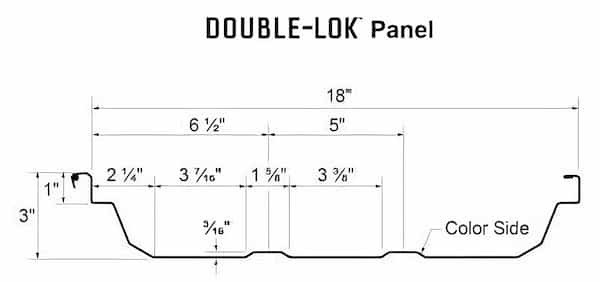
The Double-Lok is a mechanically field-seamed system featuring 18-inch widths and 2-inch seam heights. Manufactured from 22- and 24-gauge steel, it excels in industrial and architectural applications that require a watertight barrier. See the Roof Anchor Compatibility Chart for Rok-Bilt Steel 22 Gauge and 24 Gauge Double-Lok Mechanical Standing Seam Panels.
Fall Protection for Double-Lok Panels
- For 22- and 24-gauge steel substrates, the SSRA1 Seam Anchor, SSRA2 Adjustable Roof Jack Adapter, and SSRA3 Anchor Plate provide a complete non-penetrating safety solution.
- The 100-foot SSRA Temporary HLL Kit and 120-foot Super Anchor Permanent HLL Kit allow for multi-worker coverage across the mechanical seams (limited to 4:12 pitch or less).
- For steeper sections between 6:12 and 12:12, use The Ridge Pro Steep Assist for mandatory peak-mounted protection.
SuperLok Mechanical Panels (SSRA Compatible — 22/24-gauge Steel)
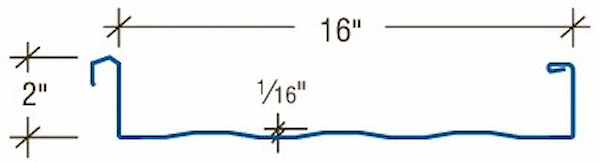
SuperLok combines robust structural performance with a modern vertical-leg design, featuring 12-inch and 16-inch widths and a 2-inch rib height. Fabricated from 22- and 24-gauge steel, these panels are engineered for superior uplift resistance. See the Roof Anchor Compatibility Chart for Rok-Bilt Steel 22 Gauge and 24 Gauge SuperLok Mechanical Standing Seam Panels.
Fall Protection for SuperLok Panels
- The SSRA1 Seam Anchor, SSRA2 Adjustable Roof Jack Adapter, and SSRA3 Anchor Plate act as the foundation for fall arrest on non-curved steel runs.
- Crews can deploy the 100-foot SSRA HLL Kit and 120-foot Super Anchor Permanent HLL Kit for extensive lateral mobility across the vertical-leg field.
- The Ridge Pro Steep Assist is the suggested alternative for safe peak transitions on steeper pitches.
BattenLok HS Mechanical Panels (SSRA Compatible — 22/24-gauge Steel)
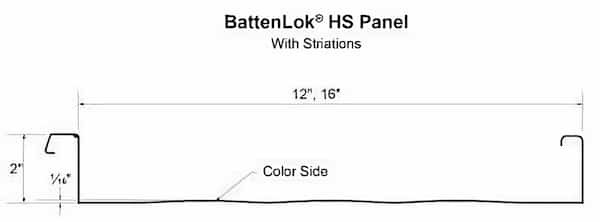
BattenLok HS features a robust 2-inch vertical seam in 12-inch and 16-inch widths. Constructed from 22- and 24-gauge steel, it accommodates thermal movement with a concealed fastening system. See the Roof Anchor Compatibility Chart for Rok-Bilt Steel 22 Gauge and 24 Gauge BattenLok HS Standing Seam Panels.
Fall Protection for BattenLok HS Panels
- For straight steel runs, the SSRA1, SSRA2, and SSRA3 component systems provide a certified tie-off foundation that preserves the watertight finish.
- Lifeline safety is supported via the 100-foot SSRA Temporary HLL Kit and 120-foot Permanent HLL Kit on roofs up to 4:12 pitch.
- The Ridge Pro Steep Assist provides essential First-Man-Up security for pitches from 6:12 to 12:12.
- CRITICAL WARNING: Curved BattenLok HS roof projects present unique technical challenges. A mandatory in-person inspection by a trained safety expert is recommended to determine the safest fall protection plan.
Ultra-Dek Snaplock Trapezoidal Panels (SSRA Compatible — 22/24-gauge Steel)
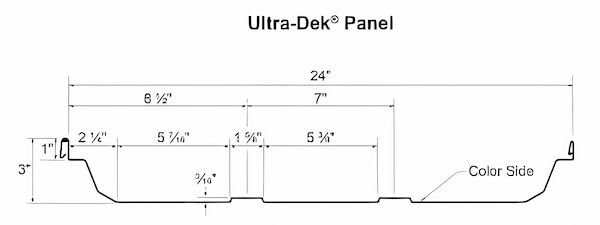
Ultra-Dek features a specialized snap-together trapezoidal leg with 18-inch and 24-inch widths and a 3-inch rib height. Ideal for low-slope industrial applications, these panels are fabricated in 22- and 24-gauge steel. See the Roof Anchor Compatibility Chart for Rok-Bilt Steel 22 Gauge and 24 Gauge Ultra-Dek Snaplock Trapezoidal Standing Seam Panels.
Fall Protection for Ultra-Dek Panels
- The SSRA1 Seam Anchor clamps securely to the 3-inch trapezoidal ribs of 22/24-gauge steel without penetrating the panels.
- Integrate the SSRA2 Adjustable Roof Jack Adapter for stable walking pathways and the SSRA3 Anchor Plate for horizontal lifeline termination.
- The 100-foot SSRA HLL Kit and 120-foot Super Anchor Permanent HLL Kit allow safe movement across wide low-slope spans.
- Ridge Pro Recommendation: Use The Ridge Pro Steep Assist for peak-anchored protection on steeper transitions from 6:12 to 12:12.
Standing Seam Roof Anchor Panel Compatibility For 22 Gauge Rok-Bilt Steel
| Double-Lok (22 Ga.) | SuperLok (22 Ga.) | BattenLok HS (22 Ga.) | Ultra-Dek (22 Ga.) | |
|---|---|---|---|---|
SSRA 1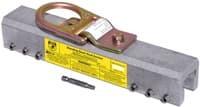 |
YES | YES | YES | YES |
SSRA1 Nylon Tip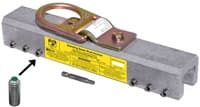 |
YES | YES | YES | YES |
SSRA2 Roof Jack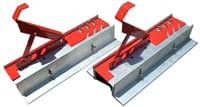 |
YES | YES | YES | YES |
SSRA3 Anchor Plate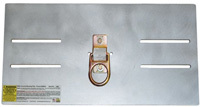 |
YES | YES | YES | YES |
The Ridge Pro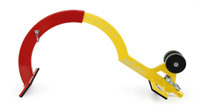 |
YES | YES | YES | YES |
Standing Seam Roof Anchor Panel Compatibility For 24 Gauge Rok-Bilt Steel
| Double-Lok (24 Ga.) | SuperLok (24 Ga.) | BattenLok HS (24 Ga.) | Ultra-Dek (24 Ga.) | |
|---|---|---|---|---|
| SSRA 1 |
NO | NO | NO | NO |
| SSRA1 Nylon Tip |
YES | YES | YES | YES |
| SSRA2 Roof Jack |
YES | YES | YES | YES |
| SSRA3 Anchor Plate |
YES | YES | YES | YES |
| The Ridge Pro |
YES | YES | YES | YES |
Veteran-Grade Integrity vs. The Shadow Market: The Risk of Generic Fall Protection
A Rok-Bilt Steel system represents a significant commitment to structural durability from a veteran-owned company with nearly 50 years of domestic and international expertise. Your fall protection strategy should align with the standard of integrity set by your manufacturer in Broussard, Louisiana. Choosing unbranded, anonymous, or generic imported anchors is a gamble with your firm's professional reputation and financial future. Secondary-market "clones" typically bypass the rigorous, serialized laboratory validation required to meet OSHA 1926.502 and ANSI standards.
Operating without a traceable domestic paper trail is an unacceptable liability that frequently leads to regulatory shutdowns and severe legal consequences. Secure your project with American-engineered SSRA hardware—machined from solid 6061-T6 aluminum and backed by ironclad performance data. Review our full independent laboratory test reports to ensure your crew is protected by a certified bond that honors your high standards.
Contact Us For More Information
For further details on roofing solutions and fall protection systems for your specific Rok-Bilt profile, contact our specialists today at 863-703-4522 or visit www.StandingSeamRoofAnchor.com. We are here to help you protect both your workers and your roof's warranty. For continued learning, you can download OSHA's 48-page Fall Protection Manual and our interactive Anchor Inspection Form once you have selected the ideal anchors for your system.
10 Pro Safety Tips for Standing Seam Roofs
- Develop Site-Specific Safety Plans: Never step onto a job site without a written plan outlining fall protection strategies and rescue procedures tailored to the Rok-Bilt panel profile.
- Strictly Enforce the 4-to-1 Ladder Rule: For every 4 feet of height, pull the ladder base out by 1 foot. Secure the ladder at the eave to prevent "kick-outs" during entry and exit.
- Use Specialized Non-Penetrating Anchors: Protect the building owner's investment and your warranty by using only non-penetrating, clamp-on anchor systems like the SSRA1 and Ridge Pro.
- Equip Every Harness with Trauma Relief Straps: Suspension trauma can become life-threatening in minutes. Pre-install relief straps on every harness to prevent blood pooling while awaiting rescue.
- Mandate High-Traction Footwear: Metal roofs are notoriously slick. Ensure every crew member wears boots designed specifically for metal roofing traction to move safely across vertical-leg or trapezoidal panels.
- Factor "Dynamic Sag" into Fall Clearance: Account for the physical stretch of horizontal lifelines during a fall. Always add a 2-to-3-foot safety margin to your Total Fall Clearance (TFC) calculation.
- Deploy Leading Edge (LE) Rated SRLs: Sharp vertical ribs on standing-seam panels can shear standard ropes. Always equip your crew with Leading Edge (LE) rated equipment.
- Define Work Zones with Guardrails: On expansive roofs, use guardrails or warning lines to reduce edge-related risks and define safe work parameters.
- Cultivate a Zero-Compromise Safety Culture: Conduct daily safety talks and encourage open reporting of hazards to ensure the entire crew stays protected.
- CRITICAL WARNING: Curved or radiused metal panels present unique technical challenges. A mandatory in-person inspection by a trained safety expert is recommended to determine the safest fall protection plan.
Disclaimer: The views, recommendations, and information presented in this blog are solely those of the author and do not necessarily reflect the opinions or positions of the featured panel manufacturer, its brands, subsidiaries, or parent companies. Customers are strongly encouraged to contact the roof panel manufacturer directly for inquiries about fall protection compatibility with their products and to address any potential warranty issues that may arise after installing our products.