Fall Protection Strategies for BEMO USA Standing Seam Roofs
Posted by Howie Scarboro - CEO Fall Protection Distributors, LLC on Apr 22nd 2026

See the Roof Anchor Compatibility Chart for BEMO USA Standing Seam Metal Roofing.
Who Is BEMO USA?
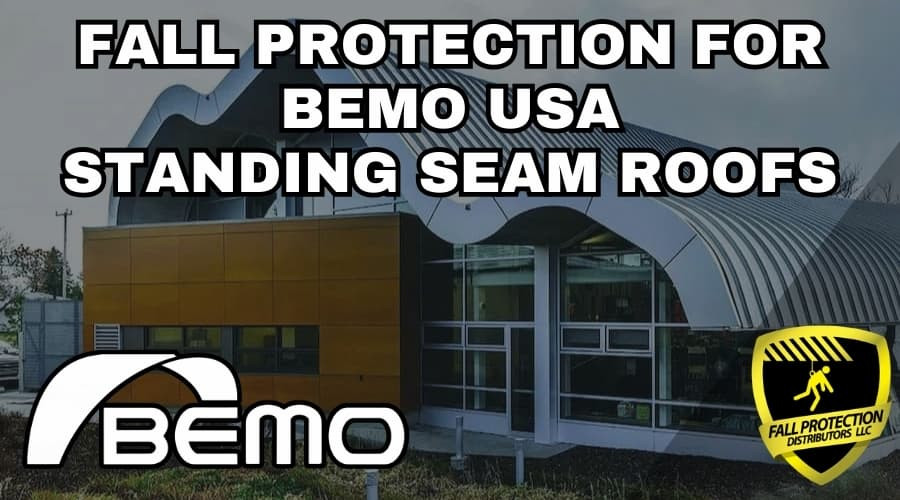
BEMO USA is a top-tier manufacturer of high-performance metal roofing and wall panel systems, recognized worldwide for architectural ingenuity. Headquartered in Mesa, Arizona, BEMO specializes in complex building envelopes for industrial and commercial projects worldwide.
A core advantage of BEMO USA is its BEMO-Mobile Factory Mills. This technology allows for on-site roll forming of panels at speeds up to 150 feet per minute. By manufacturing directly at the project site, BEMO avoids transportation damage on long-span panels and enables the creation of unique shapes, including tapered, serpentine, and curved profiles. Whether utilizing galvanized steel, stainless steel, aluminum, or copper, BEMO panels meet the most demanding structural and aesthetic requirements in modern construction.
Why Is Compatible Fall Protection So Critical for BEMO USA Roofs?
BEMO USA panels utilize a specific mechanically seamed bulb seam design. Unlike standard vertical ribs, the bulb seam requires a seam anchor that can lock on securely without compressing or distorting the metal. Using an incompatible anchor on these specialized seams can compromise the roof's thermal expansion capabilities. The BEMO 305, 400, and 500 series feature a seam height of 2-9/16 inches. This industrial scale is significantly larger than residential systems. To protect both the worker and the roof warranty, contractors must use non-penetrating anchors tested explicitly for these high-profile bulb seams. The following products provide a complete safety solution for BEMO profiles:
- SSRA1 Seam Anchor: The foundation of the system. It features a one-piece body and a 12-point set screw system that fits the BEMO bulb-seam series without disassembly or clip hunting.
- SSRA2 Adjustable Roof Jack Adapters: Mount directly to the SSRA1 anchors to support 10-foot wooden walk-boards, providing level working surfaces on steep industrial roofs.
- SSRA3 Anchor Plates: High-strength plates that connect two SSRA1 anchors into a single assembly for horizontal lifeline endpoints.
- 100-foot SSRA HLL Kit: A temporary mobility solution including four anchors and a 100-foot kernmantle rope rated for two workers.
- 120-foot Super Anchor Permanent HLL: A long-term maintenance solution using non-penetrating riser posts that allow the floating bulb seams to move naturally.
- Ridge Pro Steep Assist: The first-man-up tool for pitches between 6:12 and 12:12, ensuring workers are tied off before leaving the ladder.
Keep in mind that OSHA and ANSI standards limit horizontal lifeline systems to a maximum pitch of 4:12. OSHA recognizes that workers can lose their footing and slide on steeper roofs, leading to dangerous swing falls that are not suitable for horizontal lifeline setups.
Proper Attachment: Set-Screws and Torque Requirements
To ensure certified holding power on BEMO bulb seams while protecting the high-end architectural finish, installers must use the correct fastener and torque settings:
- Cupped-Tip Stainless Steel Set Screws: Use these exclusively for 22-gauge (and thicker) steel panels. Torque these screws to 90 inch-pounds.
- Nylon-Tipped Set Screws: For use with 22-gauge or 24-gauge steel panels. Torque these fasteners to 180-200 inch-pounds.
- Maintenance: Treat nylon tips as consumables. Replace these tips every 3 to 5 uses to maintain maximum grip strength.
CRITICAL WARNING: NO IMPACT GUNS
Warning: Always use a calibrated torque wrench for final installation. Never use an impact gun to install set-screws. Impact guns can quickly over-tighten the screws, resulting in permanent damage to the bulb seam or the anchor body. This error compromises the anchor's certified holding power and voids the hardware warranty.
BEMO 305 Mechanical Bulb Seam Panels (SSRA Compatible 22/24 ga. Steel)
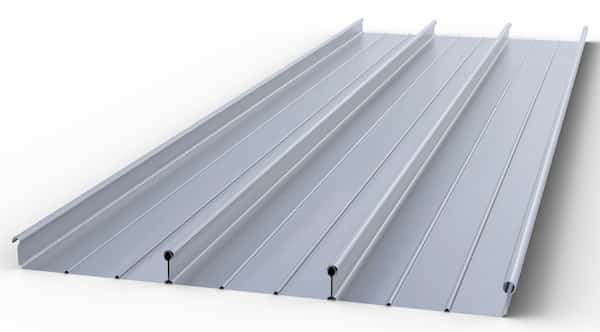
The BEMO 305 panel features a width of 12 inches and a seam height of 2-9/16 inches. This narrower profile features structural resilience and architectural versatility. It is available in 20-, 22-, and 24-gauge galvanized or stainless steel, aluminum, and copper. See the Roof Anchor Compatibility Chart for BEMO USA 305 Mechanical Bulb Seam Standing Seam Metal Roofing.
Fall Protection for BEMO 305
- For straight BEMO 305 applications, the SSRA1 Seam Anchor is the primary solution, providing a certified 5,000-lb tie-off without compressing the rib.
- On steeper slopes, use SSRA2 Roof Jack Adapters to provide 10-foot wooden walkboards for material staging and stable footing.
- For lateral mobility, the SSRA3 Anchor Plate assembly and 100-foot SSRA HLL Kit allow two workers to cover large areas while remaining 100% tied off.
- The 120-foot Super Anchor Permanent HLL kit provides a long-term, non-penetrating solution that accommodates the panel's floating design.
- The Ridge Pro Steep Assist ensures safety during the initial ladder-to-roof transition on pitches ranging from 6:12 to 12:12.
- CRITICAL WARNING: Curved BEMO 305 systems (including serpentine or convex configurations) pose unique fall-protection challenges. Neither the SSRA system nor the Ridge Pro are certified for curved sections without a specialized on-site safety inspection and engineered fall protection plan.
BEMO 400 Mechanical Bulb Seam Panels (SSRA Compatible 22/24 ga. Steel)
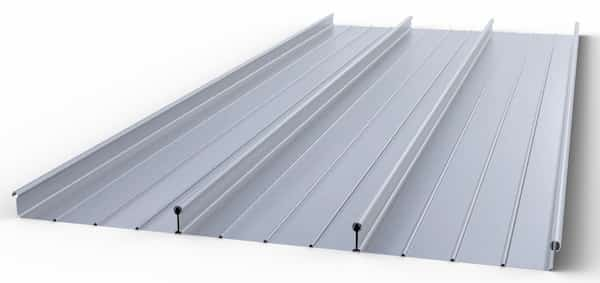
The BEMO 400 offers a 15.75-inch width and a 2-9/16-inch seam height. This panel is a popular choice for large commercial roofs, providing a balance between installation speed and structural performance. It is available in 20-, 22-, and 24-gauge steel, as well as multiple aluminum thicknesses and copper. See the Roof Anchor Compatibility Chart for BEMO USA 400 Mechanical Bulb Seam Standing Seam Metal Roofing.
Fall Protection for BEMO 400
- The SSRA1 Seam Anchor provides a secure, non-penetrating fit on the BEMO 400 industrial bulb seam.
- To cover a larger commercial surface area, the 100-foot SSRA HLL Kit, mounted on SSRA3 Anchor Plates, allows two workers to move laterally across wide spans.
- SSRA2 Roof Jack Adapters allow for walkboard mounting without penetrations. For regular facility maintenance, the 120-foot Super Anchor Permanent HLL is the ideal choice.
- The Ridge Pro Steep Assist provides the necessary peak-mounted anchor for secure ridge access on roofs with pitches of 6:12 to 12:12.
- CRITICAL WARNING: If the BEMO 400 system features curved or tapered panel runs, you must consult a qualified safety professional for a specialized on-site audit before deploying any fall protection hardware.
BEMO 500 Mechanical Bulb Seam Panels (SSRA Compatible 22/24 ga. Steel)
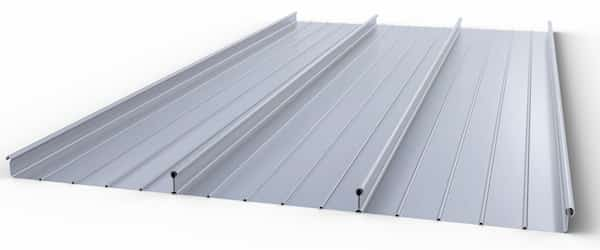
The BEMO 500 is the widest standard profile at 19.75 inches, with a 2-9/16-inch seam height. Material options include 20-, 22-, and 24-gauge galvanized or stainless steel, aluminum (.032 to .050), and copper. See the Roof Anchor Compatibility Chart for BEMO USA 500 Mechanical Bulb Seam Standing Seam Metal Roofing.
Fall Protection for BEMO 500
- Because the BEMO 500 panels are nearly 20 inches wide, stable walking surfaces are vital. Use SSRA1 anchors with SSRA2 Roof Jack Adapters to install 2x10 walk-boards across these spans.
- For maximum worker mobility on large roofs, utilize the 100-foot SSRA HLL Kit mounted on SSRA3 Anchor Plates.
- The 120-foot Super Anchor Permanent HLL provides a non-penetrating permanent solution for frequent maintenance access.
- The Ridge Pro Steep Assist provides immediate tie-off at the roof peak for slopes between 6:12 and 12:12.
- CRITICAL WARNING: A qualified safety professional must conduct an on-site evaluation to establish fall protection guidelines for curved, serpentine, or tapered BEMO 500 systems. Standard anchoring methods may not account for variable swing-fall hazards on curved profiles.
Standing Seam Metal Roof Anchor Panel Compatibility Chart For BEMO USA
| BEMO 305 (20-22 Ga.) | BEMO 305 (24 Ga.) | BEMO 400 (20-22 Ga.) | BEMO 400 (24 Ga.) | BEMO 500 (20-22 Ga.) | BEMO 500 (24 Ga.) | |
|---|---|---|---|---|---|---|
SSRA 1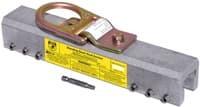 |
YES | NO | YES | NO | YES | NO |
SSRA1 Nylon Tip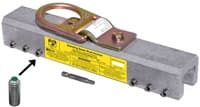 |
YES | YES | YES | YES | YES | YES |
SSRA2 Roof Jack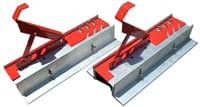 |
YES | YES | YES | YES | YES | YES |
SSRA3 Anchor Plate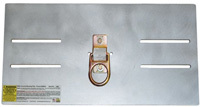 |
YES | YES | YES | YES | YES | YES |
The Ridge Pro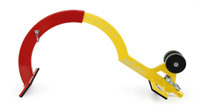 |
YES | YES | YES | YES | YES | YES |
Certified Protection: American Engineering vs. High-Risk Imports
Securing a high-performance architectural BEMO USA building envelope requires safety hardware that matches its global engineering standard. Unbranded, generic imports often lack documented load ratings, verifiable alloy certifications, and the traceable testing data required for industrial life-safety compliance. These inexpensive substitutes pose a substantial liability to both the work crew and the employer, as they cannot provide the structural confidence required for high-profile standing-seam panels.
In contrast, the American-made SSRA1 Standing Seam Roof Anchor provides documented reliability. Precision-machined from solid 6061-T6 aluminum and validated at independent ISO 17025-accredited laboratories, our hardware is designed for total transparency. While OSHA mandates a 5,000-pound breaking strength, our system has withstood test loads exceeding 14,500 pounds without structural failure. By investing in certified domestic hardware, contractors prioritize data-driven performance over high-risk guesswork. Review our results in our independent laboratory test reports.
Contact Us for Expert Standing Seam Fall Protection Advice
For expert guidance on standing-seam roof anchors, lifeline kits, and fall-protection systems that protect both your crew and your panels, contact us today at 863-703-4522 or visit www.StandingSeamRoofAnchor.com. Our safety specialists can help you match the right non-penetrating anchor to your specific roof profile and slope. Let's make your next BEMO metal roofing project safe, compliant, and built to last. For continued learning, download OSHA's 48-page Fall Protection Manual and our free Anchor Inspection Form once you've selected the ideal anchors for your roof system.
10 Essential Safety Guidelines for BEMO USA Projects
Staying safe on a BEMO roof requires more than just the proper anchors; it requires total commitment to safety culture. Here are ten essential strategies to keep your team protected while preserving the integrity of these high-performance systems.
1. Curved & Specialized Profiles Require Expert Review
Standard seam anchors are compatible with straight BEMO panels. Before deploying fall protection on curved, serpentine, or convex roof systems, a qualified safety professional must conduct an on-site inspection.
2. Respect Thermal Expansion & The "Floating" Design
Always use non-penetrating clamps that grip the bulb-style seam without piercing the metal. This design allows the panels to float naturally during thermal movement, maintaining the roof's watertight integrity.
3. Manage the "Pendulum Effect" & Dynamic Sag
Always calculate for cable deflection and potential swing falls. Ensure the work zone remains within a 30° arc of the anchor to prevent workers from swinging into lower structures during a fall-arrest event.
4. Protect Panel Finishes with Material-Specific Fasteners
To prevent galvanic corrosion, match your hardware to the roof material. Use Stainless Steel set screws with steel panels to avoid corrosion and maintain the architectural finish.
5. Daily Torque Calibration
Safety is only as good as the last anchor inspection. Use a torque wrench to verify that all set screws remain at their required settings, ensuring the system is ready for a 5,000-lb impact.
6. Prevent Suspension Trauma with Trauma Straps
OSHA requires a prompt rescue, but suspension trauma can set in within minutes. Equip every harness with trauma straps to allow a fallen worker to stand up and relieve lethal pressure on the femoral arteries.
7. Prioritize Low-Torque Seam Attachment
The SSRA1 meets industry safety standards with only 90 inch-pounds of torque on 22-gauge steel. Low-torque set screws prevent deformation of the BEMO bulb seam, preserving the panel's structural strength.
8. Mandate "First-Man-Up" Protection
The transition from a ladder to the peak is high-risk. For pitches between 6:12 and 12:12, mandate the use of The Ridge Pro to ensure workers are 100% tied off from the start of the shift.
9. Eliminate the Search for Hidden Clips
Traditional anchors often require mounting over hidden clips. SSRA1 anchors lock directly to the standing seam rib, providing a certified anchor point without the dangerous guesswork.
10. Reject Unverified Imports
Never gamble with uncertified safety hardware. Use only 3rd-party-tested SSRA1 anchors to ensure your BEMO project stays compliant and your workers stay safe.
Disclaimer: The views, recommendations, and information presented in this blog are solely those of the author and do not necessarily reflect the opinions or positions of the featured panel manufacturer, its brands, subsidiaries, or parent companies. Customers are strongly encouraged to contact the roof panel manufacturer directly for inquiries regarding fall-protection compatibility with their products and to address any potential warranty issues that may arise after installing our products.