Fall Protection Strategies For Miller Buildings Standing Seam Roofs
Posted by Howie Scarboro - CEO Fall Protection Distributors, LLC on Apr 27th 2026

See the Roof Anchor Compatibility Chart for Miller Buildings Standing Seam Panels.
Who Is Miller Buildings?
Miller Steel Buildings is a premier provider of custom-engineered metal building solutions with over 30 years of industry leadership. Based in Flourtown, Pennsylvania, Miller specializes in the design, supply, and installation of durable steel structures tailored for industrial facilities, corporate offices, and recreational centers. Their reach extends to both domestic and international markets, delivering high-performance structures that meet precise local code requirements.
Supported by a veteran team of engineers and plant technicians, Miller Steel Buildings partners with clients to develop cost-efficient and structurally optimized designs. Whether a project requires rigid-frame straight columns or specialized gable systems, custom engineering prioritizes structural integrity and long-term utility throughout the building envelope's lifetime.
Why Compatible Fall Protection Anchors are Critical for Miller Standing Seam Roofs
Miller Buildings engineers standing-seam roofs for extreme durability and weather performance. However, the wrong safety equipment can compromise these benefits. Implementing non-penetrating, compatible anchors remains the only way to protect the roof's structural integrity while ensuring worker safety. Drilling or puncturing a weather-tight panel risks leaks, restricts thermal movement, and typically voids manufacturer warranties. To ensure a 100 percent tie-off without compromising the build, we recommend the modular SSRA system.
The following products provide a complete safety solution for Miller Buildings profiles:
- SSRA1 Seam Anchor: The foundational component. This patented, universal-fit anchor fits approximately 95% of today's standing-seam profiles, providing a certified 5,000-lb tie-off for non-curved 22-gauge and 24-gauge steel panels.
- SSRA2 Adjustable Roof Jack Adapters: Mount directly to the anchors to hold 10-foot wooden walk-boards, providing stable footing on steep slopes.
- SSRA3 Anchor Plates: High-strength spanner plates that connect two SSRA1 anchors to serve as structural endpoints for horizontal lifelines.
- 100-foot SSRA Horizontal Lifeline Kit: Allows two workers to move the entire length of the roof field while remaining 100 percent tied off on short-term projects.
- 120-foot Super Anchor Permanent HLL: A reliable maintenance solution using non-penetrating 5-inch riser posts that protect the roof's weather-tight seal.
- Ridge Pro Steep Assist: The essential First-Man-Up tool for pitches between 6:12 and 12:12, providing immediate tie-off before the worker leaves the ladder.
Keep in mind that OSHA and ANSI standards limit horizontal lifeline systems to a maximum pitch of 4:12. OSHA recognizes that workers can lose their footing and slide on steeper roofs, leading to dangerous falls, which is not suitable for horizontal lifeline setups.
Proper Attachment: Set-Screws and Torque Requirements
To ensure certified holding power while protecting the Miller Buildings steel substrate, installers must select the appropriate fastener and torque setting based on the panel gauge:
- Cupped-Tip Stainless Steel Set Screws: Use these exclusively on 22-gauge steel panels and torque to 90 inch-pounds using a calibrated torque wrench.
- Nylon-Tipped Set Screws: Apply these to 22- or 24-gauge steel panels. Torque these to 180-200 inch-pounds to achieve certified holding strength.
- Maintenance: Treat nylon tips as consumables. Replace these tips every 3 to 5 uses to maintain maximum grip strength and ensure compliance with safety standards.
CRITICAL WARNING: NO IMPACT GUNS
Warning: Always use a calibrated torque wrench for final installation. Never use an impact gun to install set-screws. Impact guns can quickly over-tighten the screws, resulting in permanent damage to the standing-seam panel or the anchor itself. This error compromises the anchor's certified holding power and voids the hardware warranty.
Ultra-Dek Snaplock Trapezoidal Panels (SSRA Compatible — 22/24-gauge Steel)
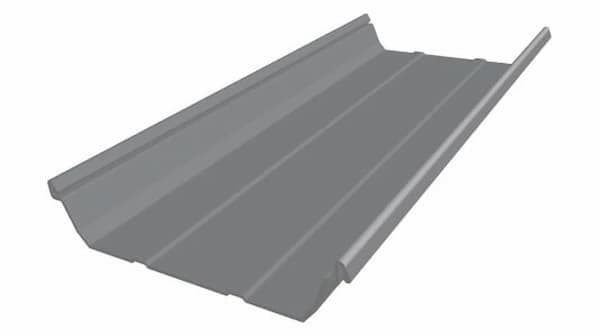
The Ultra-Dek profile features a 3-inch trapezoidal leg standing seam, available in 18-inch and 24-inch widths. Fabricated from 22- or 24-gauge steel, it excels in low-slope applications with a minimum pitch requirement of just 1/4:12. See the Roof Anchor Compatibility Chart for Miller Buildings 22 Gauge and 24 Gauge Ultra-Dek Standing Seam Panels.
Fall Protection for Miller Buildings Ultra-Dek
- For 22- and 24-gauge steel versions, the SSRA1 Seam Anchor, SSRA2 Adjustable Roof Jack Adapter, and SSRA3 Anchor Plate provide a complete non-penetrating safety solution.
- Crews can deploy the 100-foot SSRA HLL Kit and the 120-foot Super Anchor Permanent HLL Kit to safely traverse the 3-inch seams.
- For 26-gauge steel versions, utilize The Ridge Pro Steep Assist for mandatory peak-mounted protection on steeper pitches.
Double-Lok Mechanical Panels (SSRA Compatible — 22/24-gauge Steel)
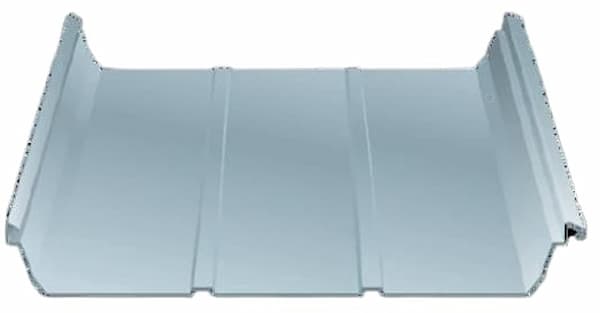
Double-Lok panels feature a mechanically seamed trapezoidal system with 18-inch and 24-inch widths and a 3-inch seam height. Manufactured in 22- or 24-gauge steel, this system utilizes sliding clips to accommodate natural thermal movement. See the Roof Anchor Compatibility Chart for Miller Buildings 22 Gauge and 24 Gauge Double-Lok Standing Seam Panels.
Fall Protection for Miller Buildings Double-Lok
- The SSRA1 Seam Anchor establishes an OSHA-compliant tie-off on 22/24-gauge steel mechanical seams without drilling.
- Pair with the SSRA2 Adjustable Roof Jack Adapter for stable staging and the SSRA3 Anchor Plate for horizontal lifeline termination.
- Fully compatible with the 100-foot SSRA Temporary HLL Kit and 120-foot Super Anchor Permanent HLL Kit for facilities requiring frequent industrial access.
BattenLok HS Mechanical Panels (SSRA Compatible — 22/24-gauge Steel)
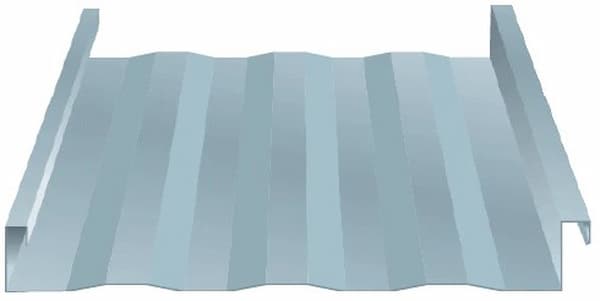
BattenLok HS features a robust 2-inch vertical seam in 12-inch and 16-inch widths. Crafted from 22- or 24-gauge steel, this structural system requires a minimum slope of 1/2:12. See the Roof Anchor Compatibility Chart for Miller Buildings 22 Gauge and 24 Gauge BattenLok HS Standing Seam Panels.
Fall Protection for Miller Buildings BattenLok HS
- For straight steel runs, the SSRA1 Seam Anchor, SSRA2 Adjustable Roof Jack, and SSRA3 Anchor Plate create a high-strength tie-off foundation.
- Multi-worker safety is supported via the 100-foot SSRA Temporary HLL Kit and 120-foot Permanent HLL Kit across the structural vertical seams.
- Ridge Pro Recommendation: For roof slopes between 6:12 and 12:12, use The Ridge Pro Steep Assist for safe peak-mounted protection.
- CRITICAL WARNING: Curved or radiused BattenLok HS panel designs present unique technical challenges. A mandatory in-person inspection by a trained safety expert is recommended to determine the safest fall protection plan.
Standing Seam Metal Roof Anchor Panel Compatibility Chart For Miller Buildings
| Ultra-Dek (22 Ga.) | Ultra-Dek (24 Ga.) | Double-Lok (22 Ga.) | Double-Lok (24 Ga.) | BattenLok HS (22 Ga.) | BattenLok HS (24 Ga.) | |
|---|---|---|---|---|---|---|
SSRA 1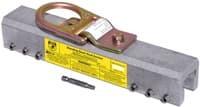 |
YES | NO | YES | NO | YES | NO |
SSRA1 Nylon Tip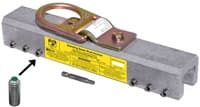 |
YES | YES | YES | YES | YES | YES |
SSRA2 Roof Jack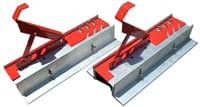 |
YES | YES | YES | YES | YES | YES |
SSRA3 Anchor Plate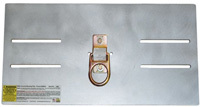 |
YES | YES | YES | YES | YES | YES |
The Ridge Pro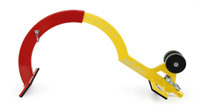 |
YES | YES | YES | YES | YES | YES |
Protecting a Custom-Engineered Legacy: The Danger of Anonymous Hardware
A Miller Buildings roofing system represents over 30 years of custom engineering and structural optimization. Your safety strategy should be an extension of that standard. Opting for unverified, generic, or imported anchors is a high-stakes gamble with your professional reputation and crew’s safety. "Look-alike" imported hardware frequently bypasses the serialized laboratory validation required to meet OSHA 1926.502 and ANSI standards.
Operating without a traceable domestic paper trail is a massive liability that often leads to work stoppages and severe financial penalties. Secure your investment with American-engineered SSRA hardware—machined from solid 6061-T6 aluminum and backed by ironclad results. Review our independent laboratory test reports to ensure your project meets the highest standards of structural bonding.
Contact Us For More Information
For further details on roofing solutions and fall protection systems for your specific Miller Buildings profile, contact our specialists today at 863-703-4522 or visit www.StandingSeamRoofAnchor.com. We are here to help you protect both your workers and your roof's warranty. For continued learning, you can download OSHA's 48-page Fall Protection Manual and our interactive Anchor Inspection Form once you have selected the ideal anchors for your system.
Safety Tips For Standing Seam Roofs
- Define Physical Work Zones: On expansive roofs, use guardrails or warning lines to identify edge hazards and keep workers focused on the task at hand.
- Stick to Non-Penetrating Anchors: Protect the Miller warranty and the building's watertightness by using non-penetrating clamps exclusively. Never drill into the panel to install temporary hardware.
- Implement Site-Specific Safety Plans: Every project should have a documented plan outlining fall-arrest methods and clear emergency rescue protocols tailored to the roof geometry.
- Prioritize High-Traction Footwear: Metal surfaces are notoriously slick. Mandate roofing-specific boots with non-slip soles for safe movement across Ultra-Dek or Double-Lok panels.
- Cultivate a Safety-First Mindset: Hold daily crew briefings and encourage open reporting of hazards to ensure the entire team stays protected.
- Factor "Dynamic Sag" into Fall Clearance: Account for the physical stretch of horizontal lifelines during a fall. Always add a 2-to-3-foot safety margin to your Total Fall Clearance (TFC) calculation.
- Equip Personnel with Trauma Relief Straps: Suspension trauma can become life-threatening in minutes. Pre-install relief straps on every harness to prevent blood pooling while awaiting rescue.
- Strictly Adhere to the 4-to-1 Ladder Rule: Ensure all access ladders are stable. Pull the base out 1 foot for every 4 feet of height to prevent "kick-outs" during the transition to the roof.
- Deploy Leading Edge (LE) Rated SRLs: standing-seam vertical ribs feature sharp edges that can shear standard ropes. Always equip your crew with Leading Edge (LE) rated equipment.
- CRITICAL WARNING: Curved or radiused metal panels present unique technical challenges. A mandatory in-person inspection by a trained safety expert is recommended to determine the safest fall protection plan.
Disclaimer: The views, recommendations, and information presented in this blog are solely those of the author and do not necessarily reflect the opinions or positions of the featured panel manufacturer, its brands, subsidiaries, or parent companies. Customers are strongly encouraged to contact the roof panel manufacturer directly for inquiries about fall protection compatibility with their products and to address any potential warranty issues that may arise after installing our products.